Category Archives: Bücher

Book review: “Private Empire: ExxonMobil and American Power” – Steve Coll

In my quest to learn more about the oil industry, I came across this book. It is a quite long book with about 700 pages and is covering basically the time between the Exxon Valdez accident in 1989 until around the time the book was written in 2012.

The chapters are to a certain extent random, jumping between how Exxon influenced politics to problems they encountered in various countries, among others Indonesia, Nigeria, French Guinea and Iraq.

The book itself has a rather critical tone, for instance they make a pretty good point that Exxon denied global warming for a long time, even when evidence and opinion even within the company pointed to the opposite. The ties from Exxon especially to the Bush administration are critically commented. The author claims that Exxon to a certain extent was (or still is) a kind of state within a state and using the US Government facilities only when it fits them.

Most interesting for me were the chapters about Exxon itself and its corporate culture, as well as the merger with Mobil and the later acquisition of fracker XTO.

Overall one gets the impression, that Exxon, especially before the Mobil merger was a true “outsider company”, doing business very differently than other oil companies.

Under the old CEO Lee Raymond for instance, Exxon abandoned any oil price forecasts for its planning starting in 2004 as the CEO judged all efforts to do so completely worthless. The book even quotes Exxon that they couldn’t figure out why oil prices went up so much in 2008 despite putting a lot of effort in to do so. This might be a very important message from the book: Do you still believe in all those incredibly sexy conspiracy theories about oil price manipulation if even the largest private oil company in the world cannot predict the oil price ?

Other examples of “outsider behaviour” are:

– military like control style with regard to safety, expenses and purchasing
– purely engineering driven culture, no “swashbuckling” oil wildcatters
– total discipline in allocating capital to projects

This was especially true under the old CEO, Lee Raymond.

But less so under the current CEO who, among other spent 41 bn on XTO and had to admit later that the deal was not a very good one.

Another interesting aspect was the continuous struggle of Exxon to be able to book new reserves. For a time they used a different reserve definition to the one allowed by the SEC, similar what frackers seem to do now.

All in all, despite the length of the book, I found it very interesting. To me, it offered new insides into an Oil giant like Exxon and the oil industry in general. Although it does not offer any “actionable investment advice”, the book is a good read for anyone interested in the Oil industry and Exxon.

Book review: “Built to Last: Successful Habits of Visionary Companies” – Jim Collins

“Built to last” is a managment literature classic, first published in 1994. It has been reviewed and critized many times already,so I just want to provide a very short summary:

The author analyzes 18 companies which were succesfull for a very long time and compares them to less succesful companies in order to find out what set them apart. The most important point seems to be that the company is a “visionary company”, meaning that the company has a clear mission which is not only earning as much money as possible but somthing in the way of “We want to make people happy” (Disney). Combined with “core values” and “really big goals”, this, according to the author is the secret sauce for a long term succesfull organization.

Looking at those 18 companies clearly shows that since the book was written, not all the companies were great successes for their shareholders. Citigroup, Ford, Motorola were clearly not performance stars, on the other hand, a couple of o the companies (AMEX, Wal-Mart, IBM) are long-term successes and core holding of our value investing Hero Warren Buffett.

Is the book relevant for investing and if yes how ?

I think the answer is clearly “YES” and those are the 3 major points in my opinion:

1. Many current CEOs have read this book (and many future CEOs will read it) and try to act accordingly

For instance the “3G story” of the Brazilians who now run Ambev, Heinz and Burger King seem to have clearly taken this book as blueprint for their strategy. “Dream Big”, core values such as meritocracy, honesty etc. were clearly inspired by this. Edit: And yes, Jim Collins has actually written the foreword to “dream Big” and he seems to have worked with “mastermind” Leman for a long time.

Interestingly, in the book it is clearly said that just writing down those statements is clearly not enough, you have to live them every day which is not easy to achieve. So just when you see something like this written on an annual report, you know that they have read the book but you cannot be sure if a company actually follows those vision and values.

2. A strong vision and core values compared with a good alignment of management and investors might result in great shareholder returns

Many critics use the failed companies of the book as a proof, that success is more depending on luck than on any vision and core values. I would argue that they are missing one point: In many of the failed cases, there happened a serious disconnect between shareholders and management. The most obvious case is Citigroup, which at least since the 2000s was run to the benefits of the employees rather than for all stakeholders. The same could be said of Ford, where the Ford family did not really exercise the owner’s influence as it would have been necessary.

I think it is not random, that especially the companies which were held for instance by Berkshire (Amex, Procter) or where the founder / founding family has a strong tie to the business (Wal-Mart) did well. Both, the influence of a significant investor or a founder with a large ownership can ensure that a visionary company can be also a big success for shareholders. It is clearly not a 100% “hit ratio” but I think the chances for long-term success are clearly above 50%.

For me, Google for instance is a fantastic “visionary company”, but in Google’s case I am not fully convinced that their goals are fully aligned with me as potential minority shareholder.

3. Non-visionary companies can be very good investments as well but it might be harder to sustain success in the long run

The prime example for a non-visionary company in my opinion is Berkshire Hathaway. Buffett’s target has always been to compound shareholder’s wealth. That the company did this for so long and so successful in my opinion is clearly the result of Warren’s and Charlie’s genius and their long and healthy lives. Interestingly, now close to the end of their careers, they seem to be on the “Vision” and “core value” track. At least that is how I interpret the rebranding of many subsidiaries as “Berkshire Energy” and Buffett’s speeches about Berkshire core values which at least to my knowledge were not so prominent years ago.

I think it has become clear to Buffett, that a conglomerate formed by two geniuses might be hard to sustain when those two are not around anymore.Additionally it will be interesting to see how the interests of a future Berkshire CEO who will not own half of the company, will be aligned with the shareholders.

Summary:

Despite having some lengths, I think the book is a good and relevant read for investors who want to look a little bit outside typical investment literature. Some people might say that the book is too old to be relevant, but I personally think that the content of the book is pretty timeless.

Book review: “Only the paranoid survive” – Andy Grove

Andy Grove was senior manager and CEO at Intel for a very long time and was one of the architects of the spectacular rise of Intel as microprocessor powerhouse. The book was written by Andy grove in 1997, one year before he stepped down as CEO of Intel.

He outlines how he dealt with what he called “inflection points” at Intel. An inflection point is in his definition a point where business changes so profoundly that either the business changes as well or the company will be killed by competitors. For Intel, this was the case when in the 1980ties, the Japanese suddenly were able to produce better and cheaper memory chips which were until then Intel’s main business.

Grove managed then to shut down the memory business and concentrate the efforts on the microprocessor business which was until then only a small part of the business. His first person (CEO) perspective is very interesting to read as change doesn’t come naturally to large and succesful companies.

I also found the book especially interesting because Intel is one of the famous cases for a “size moat” in Bruce Greenwald’s “Competition demystified”. Greenwald there argues that Intel’s success in microprocessors was more or less given because they had such a size advantage compared to AMD, their major competitor. Reading the book, I got the impression that Prof. Greenwald greatly simplified this. There seemed to have been several junctions on the way where Intel easily could have went “of course”, such as the rise of the RISC processors or the question at that time if multimedia will be won by PCs or TV sets. For me, one of the lessons o f the book is that Moats, at least in technology are always “weak moats” as the development is just too dynamic.

The most powerful concept of the book in my opinion is the following concept from Andy Grove: If you see someone coming up with a new idea or a competing product, then you should ask yourself the question: Is this a thread to the business if this gets 10 times bigger or better or faster ? His theory (and paranoia) was that if it is a thread at 10x bigger/better/faster than the probability of this actually happening is very big and you have to do something about it. And fast…

If I use this concept for instance for electrical cars, then as a traditional car manufacturer I should ask the question: What if electrical cars have 10 times better reach, 10 times more charging stations, charge 10 times quicker then now ?. Would I have a problem with this ? The answer would clearly be yes.

Grove also observes that you only have a chance to survive such inflection points if you start early, so when the old stuff is still selling well. Once the company is in real trouble, then change is much much more difficult.

The final chapter in the book deals with how Grove thought about the internet. One should remind that this book was written in 1997, but it is fascinating how Grove already identified industries which would be badly effected by the internet. He already was aware that for instance a lot of ad revenues would flow from print into the internet. One should not forget that this book was written a year before Google was even founded !!!

Another interesting aspect was that at that time Apple was considered by Grove a failed company as they did not change their vertical business model to a “Horizontal” one. Clearly , mobile was not on his radar screen at that time. As a final observation: Without the great run up in the stock price this year, Intel’s stock would have been more or less flat against the time when Grove stepped down as CEO in 1998. So even a great company as intel might not be a great investment at any price….

Anyway, in my opinion this is a truly great book. I think both, investors and managers can profit a lot from this book. I do like “first person perspective” books a lot, especially if you can compare them against articles and theories about the same company written by other people.

Book review: “The Go Go years” – John Brooks

“The Go Go years” was how the late 1960ties were called at Wall Street. Although covering a time almost 50 years ago and written in the early 1970ties, this book is still a very good read as a lot of things that happened and a lot of things invented in the 1960ties still influence capital markets.

Among the innovations of the 1960ties were Mutual funds, conglomerates, earnings per share games via acquisitions, financial “innovation” like convertibles, letter stocks etc. etc. Especially the interaction between the new and red-hot Mutual funds and the acquisition hungry conglomerates pushed up stock market levels significantly over the 60ties.

The book gives a very good account especially how stocks were actually traded back then. Paper certificates had to e moved from seller to buyer and due to the increasing trading levels, a lot of transactions wer not correctly settled. Also woman were rarely seen in “real” finance jobs and were denied entry to most of the restaurants around Wall street.

The book contains also some amusing side stories about the beginning the Hippy movement, for instance that many of the back office guys were pretty much on drugs all the time which further added to the back office problems.

There is also good coverage on some of the most “notorious” conglomerates and early “Raiders” like Saul Steinberg, who, finally unsuccessfully tried to take over one of the biggest banks back then, Chemical Bank.

Although this isn’t mentioned in the book we all know that Warren Buffett closed his partnership in 1969 because he didn’t find anything interesting to invest in, but he was definitely not a houshold name back then. Funnily enough, Buffet’s Berkshire itself became the most succesful conglomerate ever over the next 50 years, although with a clearly more conserative structure then the “Go go” guys.

The whole story culminates in the “almost fail”of two of the biggest brokerage houses at that time, Goodbody and Du Pont in the early 1970ties. Du Pont was actually rescued by Ross Perot, founder of EDS and future billionaire presidential candidate.

This part of story almost reads like a 1:1 copy to Bear Stearns and Lehman Brothers 40 years later. Too much leverage, aggressive deals etc. Interestingly, the partnership structures did not prevent those problems as “partners” could take out their capital with a 30 day notice. of course those institutions “had to be saved”, a 1970ties version of to big to fail. Goodbody by the way was “saved” by Merril Lynch, which as we all know now had to be saved 40 years later by Bank of America. Other than now, no tax payer money was involved though.

There is a pretty good Wikipedia entry about the author John Brooks, a “New Yorker” staff writer who has written a couple of other interesting sounding books.

Overall I found this a very very good book and a “must read” for anyone interested in the history of Wall Street and the stock markets in general.

Some lessons to be learned are from my point of view:

1. On Wall Street and in finance generally, “innovation” very often means gains for the guys who run them and big risks and big pain in the long-term for investors

2. Brokerage houses and banks are naturally unstable institutions. Even the best regulation will not make them stable businesses

3. Investors forget quickly, only 10-15 years after that episode, the junk bond mania broke out. After 10-15 years it seems one can run the same schemes again. The current startup, social media etc “craze” is taking place 15 years after the first dot.com boom

4. Whenever the “plumbing” of the market is not working, it gets dangerous. Something similar was happening in 2007/2008 with unsettled CDS contracts

5. Business stratgies relying on ongoing and ever biiger acquisitions are risky and most often do not end well (Valleant anyone ?)

The author closes the book with the expectation that Wall Street will never be the same. To a certain extent he was right as future events were not “The same” but the basic patterns were very similar. Boom bust, speculation, greed, fraud belong to Wall Street, only their appearance changes slightly.

P.S.: The “go go” years were called so because quite often, people would stand before stock tickers in brokerage offices and shouting “Stock x – go go go stock x”….

Book review: “Dream Big” (The 3G story) – Christiane Correa

To be honest, when Waren Buffet last year announced his intention to team up with the Private Equity company 3G in order to buy Heinz, I didn’t know anything about those Brazlian guys behind that company. Especially, the “Mastermind” Jorge Paolo Lemann who is now the 28th richest guy in the world with a net worth of around 25 bn USD was amlmost completely unknown to me.

During the Berkshire AGM, someone (I don’t know who it was, maybe Buffet ?) mentioned that they are selling 250 hard copies of the book which describes how those Brazilian guys got so succesful. However when I went to the bookstore, the copies were already sold out.

So as a kind of additional research when I looked at GP Investments, I downloaded the available Kindle verison of the book.

Jorge Paolo Lemann started his business carreer as a classical banker/trader. Relatively soon, he was able to buy a small brokerage which he renamed to “Garantia”. Over 20 years or so, Garantia was one of the most succesful investment banks in Brazil. The book lacks a little bit in detailed description what they actually did at Garantia, however it seemed to have been a mixture of investment bank and hedge fund, generating huge profits especially in those times when the Brazilian currency was in trouble.

One of Lemann’s key strategies was that he tried to hire “hungry” people and motivated them via huge bonuses which were distributed based on actual results and not, as with many other Brazilian companies based on seniority etc. So to a certain extent, Garantia seemed to have been not unsimilar to a typical “wolf of Wallstreet” boiler room where young and aggressive traders could get rich very quickly.

However the main differentiator of Garantia was the fact that Lemann didn’t pay out the bonuses but required his employees to use the bonus in order to buy shares in Garantia from the founders. So the most susccesful employees also became very quickly major shareholders and partners. In theory and practice, this aligned the interests very well. Lemann is cited several times that he wanted his employees to remain “cash hungry” which doesn’t work well when you pay high cash bonuses.

Relatively early, he also became interested in investing in “real” companies. The first succesful attempt was the Brazilian Retailer Lojas Amricanas. Especially when more and more cash piled up at Garantia, he didn’t want to pay out huge dividends, but used the cash to buy the then struggling Brazilian brewer Brahma for an amount of 60 mn USD. The story about that transaction sounds quite funny. The didn’t do a real due dilligence and only found out afterwards that the company had a 250 mn USD pension hole. Without knowing anything about breweries, they managed to turn around the company pretty quickly.

While being occupied with Brahma, Lemann seemed to have lost interest in banking. While he was still on the board, Garantia almost went belly up and was finally sold for 675 mn USD to Credit Suisse, however the Brahma shares were spinned off before that to the partners. In the book, at thwo instances he seems to have complained about his younger partners that they paid out themselves too much cash instead of adhering to his beloved partnership model.

Going forward, Brahma managed to acquire their biggest rival in Brazil, Antarctica. Further “rolling up” the beer industry, they “merged” with Belgian Interbrew and then finally, in 2008 made the all debt financed acquisition of Anheuser Bush for a whopping 50 bn USD, creating the largest brewing group in the world.

Overall, by only reading the book, it was hard for me to understand if Lemann and his close associates (Telles, Sicupira) are really genius and visionary business men and investors or if they are just aggresive “financiers” who got lucky.

In the time when they build up Garantia for instance, a lot of financial institutions in Brazil prospered, sometimes through questionable ways of information gathering. Also the essential Brahma and Antarctica merger, creating a dominating Brewery in Brazil with 70% market share would have not worked that well in a country with a tougher anti-monopoly regulation.

At least they were more cautious than another former Brazilian superstar, Eike Batista, who stayed in Brazil with his investments and almost lost it all in the last 2 years or so.

For me, the most crucial part of the “Lemann” story is his view on how to align Management and owners. Its seems that in the long term, the owner/manager model where managery invest their salaries back into the company is able to generate exceptional value compared to a “cash bonus/option” model for management.

Interestingly, there was a story earlier this year the Brito, the Brazilian AB Imbev CEO seems to have “gamed” his targets in order to earn a massive bonus. This would not be in line with Lemann’s philosophy. Still it doesn’t seem to have impacted the stock price of AB Inbev which has trippled over the last 5 years.

Overall, the book is written OK, not exceptional like Michael Lewis but still interesting to read. I think it is worth a read especially if one is interested in the Brazilian market and its history and in the alignment of management and shareholders. It is clearly not an “how to invest” book.

Other sources:
Bloomberg story on Lemann & 3G

Book review: “Funny Money” – Mark Singer

“Funny Money” is a rather “old” book, originally from 1984, covering the story of the Oklahoma Oil boom in the early 80ties and the subsequent bakruptcy of Penn Square Bank.

The most interesting thing about the book is that nothing is ever new in finance and history always repeats although not exactly but in similar fashion.

Penn Square Bank was a small Bank in Oklahoma City which was lending to local Oil and Gas companies. When a big well was found (the “Tomcat”), prices in that area exploded and a great boom started. Very similar to the real estate boom many years later, Penn Square was lending against market values, which in boom times looks always good.

Penn Square could do even more harm via “syndication”, in many cases they did pocket the arrangers fee but only kept 1% of the loan and “upstreamed” the other 99% to bigger banks. One of those banks, Continental Illinois, one of the largest commercial lenders in the US at that time went under 1 or 2 years after Penn Square and had to be bailed out by the US Government. Although the instrument is different, this is exactly what happened with all the CDO structures 25 years later in our socalled “Financial crisis”.

The book also offers a lot of insight into the Oil and Gas explorer industry which I think is still relevant today. MLPs for instance were very popular already back then, but as always, mostly only some of the promoters became rich.

Funnily, one of the most notourious promoters at that time, Robert A. Hefner IV, seems to be still around.

The author originally covered the events as a reporter for the “New Yorker” and then packaged the stories into a book. So its a pretty good “real time” description of a classic boom & bust cycle fulled by credit and credit derivatives. It is also proof that you don’t need to combine investment banks and commercial banks to screw up, commercial banks can do that on their own pretty well. Interestingly in the book, one senator gets quoted that “bank deregulation had gone too far” back then in the early 80ties. But this was a time what we would consider now as “tightly regulated”.

Another similarity to modern cases is the fact, that none of the “big guys” had to go to prison, only “lower level” guys got sentenced and one of them only because his employer needed to cash in the fraud insurance policy. Finally, the main players of the Oil Boom behaved very similar to Investment bankers in the 2000s and Internet entrepreneurs today. Private planes, helicopters, 1000 USD dinners etc. were already standard for the high rollers back then.

I think the main take-away from the book is that boom and busts will always occur and banks are inherently instable especially when there is a lot of credit growth. As an investor, it usually pays to stay out of such areas, unless you are very close to the promoters, otherwise the risk to get “fleeced” is very high.

Summary: I can highly recommend the book to anyone who is interested in the history of capital markets, especially boom and bust stories. This is one of the “classics”. As an add-on it gives some insight into the Oil and Gas explorer/drilling industry.

Book review: “Flash Boys” – Michael Lewis

Following the current hype, I read over the weekend the new book “Flash boys” from Micheal Lewis.

Michael Lewis is most likely the best “writer” of finance books and the new book is now exception. As in most of his books, he focuses on specific person who are usually some kind of outsiders.

In this book, the focus is mostly on an equity trader named Brad Katsuyama who stumbles over the fact that he is not able to make a profit any more in equity block trading at his old job at Royal Bank of Canada (RBC).

Step by step he discovers more and more details how so-called “High Frequency traders” (HFT) are able to exploit tiny timing advantages to squeeze out riskless profits from big orders. This goes as far as HFT companies paying loads of money for direct fiber connections and for the privilege to put their machines directly next to the stock exchange computers in order to get any “micro second” advantage they can get.

In HFT, suddenly knowledge about how computer signals are being transmitted are becoming more important than any kind of fundamental knowledge about stocks, so he assembles a team of TelCo and computer experts in order to understand what is going on.

AFter Katsuyama discovers that the markets are pretty unfair, he decides to quit RBC and starts to build a new, slower and fairer stock exchange called IEX which does not allow HFT to conduct their strategies.

Lewis weaves in 2 other stories, one from an entrepreneur who digs out a fiber optic line between Chicago and the east cost and the other, which Lewis had already published separately in 2013 about Serge Aleinikov, the Russian born Goldman Sachs programer who got tracked down and arrested for stealing computer code.

In my opinion, the book is written very well and despite being an easy read, is pretty helpful to understand what is going on in the HFT area.

Lewis covers specifically the time difference arbitrage between the fragmented US exchanges, which interestingly became only possible because of regulation which was targeted to prevent abuse but backfired.

To a lesser extend, he also touches the issue that at US exchanges, professional players can use hundreds of different order types which gives them a big advantage. SOme f them seem to work that they seem to offer a certain price but when you want to buy, they suddenly disappear and/or get more expensive. Finally, he also looks at the so-called “dark pools” of the banks where a lot of trades are made without any transparency for clients.

Personally, I do think that HFT creates certain issues as seen in the Flash Crash some years ago. But overall, I do not have the feeling that HFT is the only reason why the market is “rigged” as Lewis implies in many parts of the book.

For instance, algorithmic or program trading is much older than high frequency trading. People atbank equity desks like Katsuyama used those algos to trade their large orders before. Those programs created nice profits for the banks without much risk. Usually, a client would give a “VWAP” order to the broker, who then would bill the client the VWAP, but would execute the trade via an intelligent algo who would make sure that the bank would make a profit. I actually met I guy once who had programmed such an algo for Lehman in the 90ties. The profits from this algos and the resulting bonuses for him allowed him to retire in his 40ties.

What those HFT shops seem to do is to “sniff out” the algos of the banks and then trade against them with lightning speed and exploit their weaknesses. In my opinion this is also one of the reasons why the banks created their “dark pools”.

As a little guy, I do not care that much of an extra penny or so per trade.I pay substantial fees in any case and trade once or twice a month. A flash crash for me is a non-event as I just sit it out. For me, “market rigging” comes much more in the form of things like low ball take-overs from Private Equity shops with CEO consenting and getting big bonuses, unfair minority shareholder provisions, stock lending fees in ETFs with an unfair fee split, classic insider trading, “adjusted” earnings etc.etc.

So as a summary I would say: It is a very entertaining book and HFT is clearly an issue. However for the “small guy” which gets referred to quite often in the book, there are a lot more other issues in the market. HFT for me seems to be rather an issue for banks and institutional investors than for a little guy with a “slow trading” stock portfolio.

Book review: “The little book of Emerging Markets” – Mark Mobius

After starting to look into Emerging Market companies, I thought it might be a good idea to beef up my library with some books on that topic.

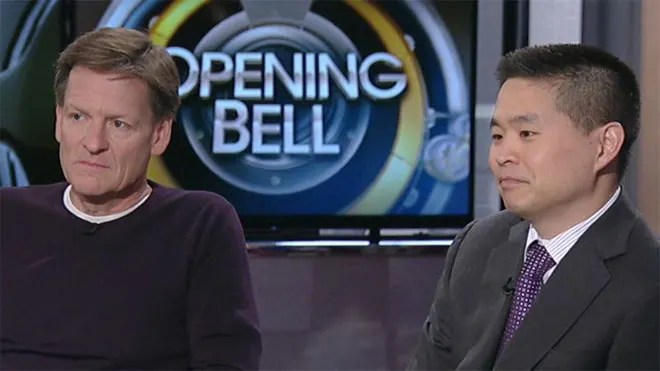
Mark Mobius, the author of the book is one of the most well-known EM investors of all time (although he looks a little bit like the bad guy from a James Bond movie):

Nevertheless, I bought the “Little book” as they are usually compact and easy to read.

The book starts with the general investment principles of Mobius, which are clearly derived from value investing “Graham-style” following his mentor John Templeton. He stresses low valuations, especially with regard to tangible book and wants companies to pay out dividends.

Similar to Howard Marks he deeply believes in the cyclicality of markets.

Within the book there are several stories about specific markets such as Czech Republic, Kazakhstan, China, Thailand and Russia, but most of this are anecdotes, entertaining but not very instructive. He mentions some specific investments (Siam Cement, China Telecom) but overall he remains mre on the general level.

The best part in the book are the last chapters where he provides some general advice how to invest in Emerging Markets. For him, investing in Emerging Markets is Contrarian Investing.

My highlight quote from the book is the following:

“If you see the light at the and of the tunnel, it might be already too late to invest”.

Other good quotes are:

“When everything else is dying to get in, get out. When everyone else is screaming to get out, get in”.

“When everyone else is getting all pessimistic, that’s usually when it is tim to turn optimistic”

“You’ve sometimes got to take pain in the short-term in order to outperform in the future”

“The first country to get hit , and hit hard, is typically the first one to recover”

Overall I liked the book as it is easy to read, although it doesn’t offer a lot of “depth” which, on the other hand, is not the goal of the “little book” series.

Maybe it is a kind of “confirmation bias” from my side, but somehow the book confirmed my view that it is now a good time to dig deeper into Emerging Markets.

A final warning at the end: Just for fun I looked up the long term performance of the Templeton Emerging MArkets Fund. Despite being hailed as a guru, the long term performance of Mark Mobius doens’t look very good:

Interestingly, the last 5 years or so the fund looks like a simple MSCI EM tracker fund (minus fees):

I have to verify this but in fund management, legends are often overrated…….

Book review: “Short stories from the stock market” – Amit Kumar

Books about short selling are few and rare so I decided to buy the Kindle version, which around 7,50 EUR is fairly cheap. The author, Amit Kumar runs an independent research firm called Artham Capital Partners and used to post occasionally on Seeking Alpha. There is also a “Manual of Ideas” interview with him to be found at Beyond Proxy.

The book itself is fairly short with 167 pages, which in itself is not bad. The book covers many aspects of short selling, including some case studies from the author himself.

However what is completely missing in my opinion are for instance references to existing books like the “Financial Shenanigans” classic from Howard M. Schilit. He also mentions David Einhorn’s Allied Capital Short thesis and Bill Ackman’s fight with MBIA, but again he does not reference to the book about Ackman and MBIA.

Jim Chanos, the most famous short seller, is mentioned once with in the context of Enron but nowhere else. Chanos made some great presentations for instance with regard to value traps.

It is also strange that in the beginning, the author explain the P/E ratio over a full page, but later on assumes quite some advanced accounting know how like knowing what Comprehensive Income is.

The best parts of the book are the sections where he lists the various areas in Balance Sheets and Income statements where to look for trouble and the interview with the guy behind “Off Wall Street”. Strangely enough, in his list he doesn’t mention the Cash Flow statement as another place to detect “Shenanigans”, but he gets a special point from me for mentioning differences between Net income and Comprehensive Income as a warning sign.

I would have also expected something about Chinese Reverse mergers, but it seems that the author somehow was not interested in that part of the market although it might have been one of the “Life time” short gold mines in the last few years.

So overall, I have some mixed feelings about the book. Yes, it covers a lot of stuff and there are not many books out there which cover the topic. On the other hand, a lot of important stuff and sources are missing. the book could gain a lot, by referencing more to existing works of other short sellers like Chanos, Block, Bronte etc.

Nevertheless, for the price offered I think the book looks like reasonable good value for investors who are generally interested in short selling, although in its current form it will be clearly not an “investment classic” anytime soon. T e fair, the author mentioned that there will be future editions of the book, so maybe he will add some of the missing parts.

« Older Entries Recent Entries »