Category Archives: What we read

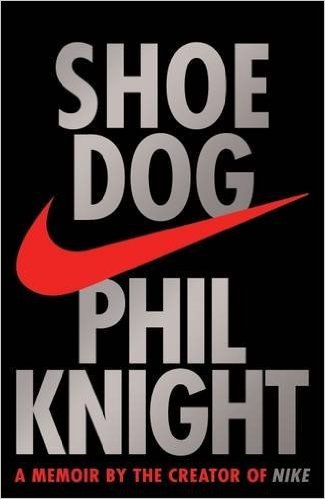
Book review: “Shoe Dog – A Memoir by the Creator of NIKE” – Phil Knight
41ncqoemvtl-_sx323_bo1204203200_

“Shoe Dog” is the memoir of Phil Knight’s early years as founder and CEO of NIKE.

As a University track runner, he got the idea to import sport shoes from Japan. Without much preparation he flew to Japan and actually managed to get the importer contract for the Japanese Tiger brand.

The first shoes he sold on track & field competitions literally out of the trunk of his car. For the first years, he worked as a CPA at day and financed the shoe business with his salary. The creation of the NIKE brand was more or less a “forced coincidence” when the Japanese company tried to kick them out of their deal.

As the company was founded with very little equity, (only 1000 USD, with his former coach as 49% partner), the company was for many years always on the brink of bankruptcy and was saved once by the parents of an employee and another time by a Japanese trading company.

I was very surprised how well the book is written. I am not sure but I think most of the memoir is written by Phil Knight himself. The book reads much more like a Thriller than like a (somewhat boring) “How I did it” memoir. For the first 200 pages or so I couldn’t put the book down. Although the end of the story is well know it is nevertheless fascinating to read how the first 10 years or so they limped from one near death experience to the other.

What I also find interesting is that Phil Knight mostly describes the mistakes he made. If you read the book you get the impression “What the hell did he actually do ?” for NIKE to become so succesful. In his descriptions it is almost always his employees or his former partner who came up with the best ideas. His leadership style seemed to be very team oriented and “Hands off”, a nice contrast to the “maniac detail obsessed” guys like Bezos and Jobs. My interpretation is that he basically was responsible for the general direction and strategy and let his employees do whatever they thought was the right thing to do.

My learnings from the book:

  • Those days were great days for banks. They were the kings and start-ups like Nike the ones begging for money. Raising money back then was really difficult, capital was scarce.
  • A value investor woul dhave never invested in this company as it was debt only, free cash flow negative and with little observable competitive advantages for the first 10-15 years.
  • Nike was actually saved by a Japanese trading company which funded the expansion after the bank refused to finance a strongly growing but cashflow negative company
  • The brand “Nike” and the “swoosh” were much more coincidence than strategic planning
  • Nike and Knight were at the right place at the right time. When people started to wear sneakers as everyday shoe, Nike was just there. They didn’t foresee it and didn’t plan for it.
  • Phil Knight’s leadership style seems to have been very “hands-off”, much less detail obsessed than for instance Jobs or Bezos. A good example that a founder doesn’t need to be an egomaniac asshole to be succesful.
  • Amazon these days is able to charge more for the Kindle copy than for the paperback. Remarkable.
  • From a personality point of view the founders and initial team seem to have been “outsiders”. A guy in a wheelchair, an obese guy and a more or less autistic running freak were the first employees and later also the top management. Not your typical Fortune 500 top management.


Overall I can only recommend this book. I think it makes a perfect and surprisingly “thrilling” read especially for the summer holidays.


Some links

Must read: Deep thoughts on changing  competitive advantages from Jan (TGV Truffle fund)

Competitive Advantages 2: How ARM did beat almighty Intel

Steve Balmers “Truth”: How Microsoft missed mobile

The guy from Punch Card Blog look into one of heir failed investments (CONN)

Chipotle and the next big thing: Burgers. Plus a look behind the Chipotle counter.

Stock picking is not dead, closet indexing most likely will be soon

Some links

Recommended: TGV Partners Fund 6 month report: “Don’t be a dividend monkey”

Recommended: RV Capital 6 month report: “Is it possible to be long-term and contrarian?”

Congratulations. John Hempton (Bronte) got a full Bloomberg profile

Matt Levine on the FTC ruling for Herbalife

Buying a diet shake from a Herbalife distributor will now be harder than buying a gun; 

Why Active Asset Managers need to change their business model

A good checklist from Forager if an Acquisition makes sense (or not)

The current state of the Bordeaux WIne market (FT.com, search result)


Some links

Great insights how the event ticket market works (hint: You’re screwed)

Armstrong Flooring could be an interesting small cap Spin-off (h/t AR, market folly)

Is there a mattress store bubble ? Plus Jeff Mathews on Mattress Firm (MFRM)

Interesting letter from Gator Capital, a HF focused on financial services companies with an analysis of post-reorg Ambac

Jim Chanos sees big issues in online and auto lending in the US 

Shipping Parties in Greece are not as much fun anymore


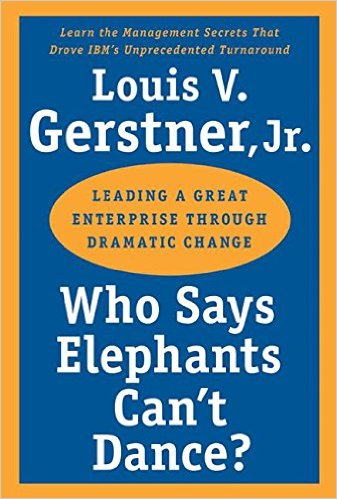
Book review: Louis V. Gerstner- “Who says Elephants Can’t dance ?”

51uczyiatql-_sx335_bo1204203200_

“Who says Elephant’s can dance” is the book from the former CEO of IBM who took over in 1993 when IBM was struggling hard and then turned around the company until he left in 2002.

Interestingly he wrote the book himself without the help of a professional writer, which is very rare for such kind of memoirs, but makes the book very interesting.

Gerstner came to IBM from RJR Nabisco but he did spend most of his previous career ar Amex and was shocked how bureaucratic the company was. The book then describes in detail how he managed to focus the company on the then little known internet and “e-business” segment away from the focus on the traditional mainframe computers.

The most interesting chapters come towards the end of the book where he reflects on company culture and strategy.

A few of my take aways from Louis Gerstner’s insight:

  • Alignment of interest is important. He required managers to hold multiples of their salaries in company stocks
  • One company: bonuses only based on total company targets, no divisional targets
  • Company culture is many times a reflection of the personality of the founder and endures a long time (in IBM’s case almost 100 years)
  • If a company is struggling, focus on the core business. Don’t di”worsify” and try “transformational” M&A transactions
  • Processes are overrated. Lead by principles to maintain flexibility
  • capital management within a company is hard. Succesful units want to reinvest their profit and not share it with others
  • Centralization vs. decentralization is always a struggle, find the right balance, don’t go to either extreme
  • revenue decreases during a turn around can be actually a sign of strength

At the end of the book he even gives some advice to stock analysts and proposes 5 questions to ask (and answer) when considering an investment:

  1. Is the company a major force in a growing market (Segment) ?
  2. Is the company holding or increasing market share by using sustainable advantages (cost, technology, quality)
  3. Is the growing market share reflected in growing cash flow after ALL costs (forget adjustments)
  4. Is the company using the cash flow wisely (Avoid “macho” acquisitions, concentrate on R&D, marketing)
  5. Is the management aligned with shareholders. Do executives hold meaningful amounts of stock ? Does the company distribute dividends and/or buy back shares ?

Coming from a manager and not an investment guru, I think this 5 points pretty much capture everything.

Overall, I found the book one of the best “Business books” I have ever read and I can only recommend it highly.


Some links

Tom Ward (Chesapeake and Sandrigde) has no good words for the oil E&P business.

Bill Gates recommends 5 books to read this summer.

Interesting chart how bank profits and interest rates are correlated (or not..)

Thanks to a comment I discovered a relatively new but promising blog: Valuetradeblog

Nils has two updates, one on Hargreaves Services, the other on Vitec

There is  a new biography out about the founder of Iscar (bought by Berkshire some years ago)

Frank has a good post on our pilgrimage to Mecca ahhh Omaha this year


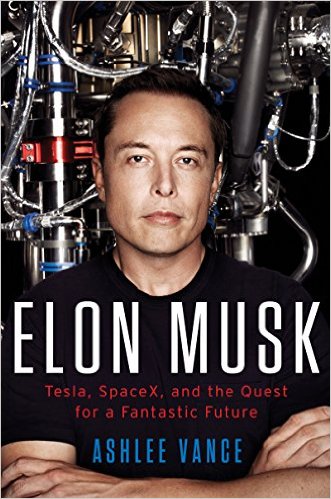
Book review: “Elon Musk: Tesla, SpaceX, and the Quest for a Fantastic Future”

51huql08bgl-_sx329_bo1204203200_

I have to admit that before I read the book, I had a deep dislike for Elon Musk. I am not a big fan of egomaniac super star CEOs to put it mildly.

Over the years I followed Tesla but not in much detail, I always thought it is just a big hype. But recently I had the chance to catch a ride with a Model S and was very positively surprised. So as part of my vacation book package I downloaded the Elon Musk biography.

What did I learn from the book ?

1. Elon Musk was not the founder of Paypal. He was the founder of X.com which merged with Paypal. This turned him into a big shareholder and he made a lot of money but technically Paypal was not his idea.

2. His goal for life is to bring people to Mars because he is afraid that the Earth at some point in time is uninhabitable. That’s why he founded SpaceX. Tesla and SolarCity are more like an “accident”. Hi heart is in SpaceX.

3. At work level, he seems to be a real Axxxxxx, he fired his 10+ years personal assistant because she wanted a pay raise. I am not sure if you need to be such an idiot to be successful. However after Steve Jobs’ success many tech founders seem to think so.

4. He does scientific mindset and understands a lot of the technology. He never accepts the status quo similar to Steve Job’s “reality distortion” ability. For some reason, reality often follows his wishes. One example for instance is his insistence to use normal, uncertificated tech for SpaceX rockets instead of expensive, certificated stuff. Everyone said it wouldn’t work but it did.

5. Reading the book, it is clearly that he is a very dedicated guy who got much farther than anyone else thought, both with SpaceX and Tesla. In both cases he challenged fundamentally how things are done.

6. Nevertheless I would still never invest in one of his ventures. He always moves “on the edge” and the financial crises almost killed everything he had. There is little “margin of Safety” in what he does.

Overall, after reading the biography I still think that Elon Musk is still an egomaniac and also narcistic founder/CEO but I do now have much more respect of his achievements. And if he comes up

The book itself is written quite well. It starts slow with a lot of (in my view not very interesting) childhood stuff but then gets much better. Overall I definitely can recommend it as one of the better CEO biographies I have read over the years.


.

Some links

Tough year: Leucadia’s 2015 shareholder letter

Though year, too: Loews 2015 shareholder letter and  annual report

Kerrisdale Q4 letter with a snapshot of insurance broker Brown & Brown

Great Ted interview with Linus Torvald (creator of Linux)

Former coal giant Peanody filed for bancruptcy protection

Swiss watch makers are still waiting for a recovery

A quick look into the complicated Energy Transfer /Williams NatGas pipeline merger 


« Older Entries Recent Entries »