Some links

Genius investor Eddie Lampert is still struggling with Sears

Home run investing via “on base” investing – Great interview with Zeke Ashton

Carson Block goes mainstream- warns on EM exposure of US companies

Good post about a column about private companies in the NYT (good blog by the way…)

If I would be 10-15 years younger, I would do ANYTHING to get this job at John Hempton’s Bronte

Nate from Oddball seems to become famous plus a new interesting “oddball” stock

Midyear performance review “Wexboy style”

Friday night IVG Bombshell

Friday night, 8 pm seems to be a good time to land a real bombshell. IVG distributed an Adhoc notice with some update information about the upcoming restructuring.

Among other stuff, the comment on potential recovery rates in a liquidation. This is the German original:

ergäbe folgende Befriedigungsquoten: ca. 96% bis ca. 100% für Objektfinanzierungen (Carve out debt), ca. 86% bis ca. 89% für den syndizierten Kredit von 2009 (Syn Loan II), ca. 46% bis ca. 55% für den syndizierten Kredit von 2007 (Syn Loan I) und ca. 27% bis ca. 41% für die Wandelanleihe. Die Gläubiger der Hybridanleihe und die Aktionäre der Gesellschaft würden in diesen Fällen voraussichtlich jeweils keine Befriedigung erhalten.

So nada/niente/rien for Hybrid and Equity and only 27%-41% for the convertible. This is significantly below the latest trade of around 58% as of today.

After all, my summary from May seems to be spot on:

the likelihood of IVG “surviving” long term in my opinion is very small or even zero. So equity and hybrid should be avoided

I am really glad that I sold out:

Overall, for the portfolio I would for the time being sell down the position at current rates and eat the loss. I am pretty sure that I am too early but as I know that I am a rather bad short term speculator, I want to play this safe.

This is by no means over yet but it doesn’t look good.

Interestingly, Third Avenue seemed to have bought into IVG earlier this year. That’s what they say in their last shareholder letter:

Our analysis determined that the IVG Convertible Bond swere most likely the “fulcrum” security in the capital structure. In other words, holders of the IVG Convertible Bonds are likely to participate in a debt-for-equity restructuring, and the subordinated securities(preferred and common) would retain little or no value. IVG Convertible Bonds mature in 2017, but holders have an option to put the bonds to the company in 2014. The Fund purchased approximately 5% of the outstanding IVG Convertible Bonds at an average cost of sixty-eight cents on the dollar. As a larger holder,we anticipate having a seat at the table with the company

Man, that sounds really stupid. Even I had found out that the “fulcrum” security were the loans. it seems to be that Marty Whitman’s successors got a little bit sloppy.

So let’s get some Popcorn and watch what will happen on Monday.

Missed opportunities: Osram, Praktiker, Powerland

Osram:

Good idea, bad execution is my summary for this one. The main mistake was clearly some kind of “anchoring”, because I wanted to see a price below 23 in order to buy. ANother question would be if you should, as a true value investor, do such “trades” at all.

Clearly, I am not yet convinced of Osram’s long term potential, but to me it was clear that this looked very similar to Lanxess’ first day on the stock market. A friend told me that “if you miss the limit by a few cents, then the margin of safety was too small anyway”. That is a good point. On the other hand, I think one can also add “alpha” if one does those kind of trades consequently (like the KPN trade), if the odds are in one’s favour.

I mean this is the whole idea of “special situation” investing. It might not be a pure “Margin of safety trade” each time, but if the chances are 55:45 on average instead of 50/50, over time this strategy will also produce good results.

For the time being, I will however remain on the sidelines with Osram.

Praktiker

Almost exactly a year ago after I sold the Praktiker Bond, the Insolvency now seems to be unavoidable.

Looking back, the sale at ~44% in July looked like really bad timing in the beginning:

Clearly, this was a missed opportunity as well, as the price even doubled after I sold July 2012. But after the “restructuring”, the Praktiker bond in my opinion was a pure speculation, the odds were at most 50/50 or worse. Clearly, I did not forecast the bad weather, but overall this whole affair looked just too bad. So I do not regret this missed opportunity as the fundamental decision was clearly correct.

Just as a remark: I assume that the recovery for the bond will be very low, maybe even single digit percentage points. Everything valuable has been pledged away and I don’t think they will get any fresh money into the capital structure “below” the bond.

Powerland

2 years ago, I looked at Powerland, a “German-Chinese” IPO. Already a superficial look at the company showed a lot of inconsistencies. Now it looks like that the game is over.

I am not sure why I didn’t short the company. This was clearly a case with a very big chance of being a fraud. There would have been even a second good chance when the CFO in November 2012 surprisingly left the company. So clearly a missed opportunity as I didn’t follow up on that one.

Update Osram Spin off & Lanxess

Valuation update:

That’s what I wrote 2 weeks ago:

Valuation

EBITDA was ~250 mn for the first 6 months of the fiscal year 2013. If we assume ~500 mn for the year 2013 and ~500 mn net debt, then 105 mn shares at 30 EUR would mean an EV/EBITDA of ~7. If we add 500 mn of unfunded pension liabilities, we have EV/EBITDA of ~8. That is not really cheap but rather expensive for such a cyclical and capital intensive business.

2 things changed here:

1) The price was 24 EUR as a first trade, 20% lower as discussed 2 weeks ago
2) The net debt number i used was not the most recent one but from 30.09.2012. The most recent one was 0.5 bn

So overall, the current evaluation looks like a lot more reasonable (2.4+0.5)/0.5 = 5.8 x EV/EBITDA if one assumes 500 mn EBITDA.

Lanxess

Just for fun, I looked up some info about the Lanxess IPO in 2004/2005. Interestingly, Bayer tried to IPO Lanxess against cash as well but then had to settle for a Spin-off.

On the first trading day, Lanxess went down -6.3% from an opening price of 15.75 EUR to 14.85 EUR. This was the lowest price ever for Lanxess.

In order to get not to excited about spin-off, one should remember the HypoReal Estate spin-off from Hypovereinsbank. We all kno how this ended.

Summary:
Based on the now siginficantly reduced valuation, I feel tempted to go into Osram although with only a smaller alliocation (2-2.5%) of the portfolio as a spin off special situation. I will however wait until late afternoon to finally decide.

As of lunch time, only ~7.8 mn shares have been traded, I assume there is more to come. If the price goes significantly below 23 EUR, I will be on the buying side.

Performance June 2013

Performance June 2013:

Performance in June 2013 for the portfolio was -1.6% against -4.3% of the BM (50% Eurostoxx, 30% Dax, 20% MDAX). YTD, the portfolio is up +17.7% against 7.1% for the BM.

Interestingly, this was the first negative month for the portfolio after 18 consecutive positive months, for the BM the “run” were 12 months of positive returns. The positive aspect is the fact, that the draw down was a lot less than the benchmark, even adjusted for cash.

Graphically this looks as follows:

Positive contributors were EGIS (+6.6%), Rhoen (+6.5%). Loosers were SIAS (-15,1%), EMAK (-12,4%), AS Creation (-7,1%).

Portfolio transactions

As discussed, I closed the Kabel Deutschland short after the official offer of Vodafone. The result was a loss of ~-22% on this position.

Only new entry of the month was Thermador. In order to remain within my 20% allocation to France, I sold Bouygues at the same time, resulting in a profit (incl. dividend) of ~+11%.

Portfolio as of 30.06.2013

Name Weight Perf. Incl. Div
Hornbach Baumarkt 3.7% 2.4%
AS Creation Tapeten 4.0% 39.2%
Tonnellerie Frere Paris 5.8% 81.6%
Vetropack 4.1% 6.6%
Installux 2.7% 14.2%
Poujoulat 0.9% 11.4%
Dart Group 4.7% 167.3%
Cranswick 5.7% 37.0%
April SA 3.5% 12.5%
SOL Spa 2.7% 31.5%
Gronlandsbanken 2.2% 23.2%
G. Perrier 3.2% 18.8%
IGE & XAO 2.0% 4.8%
EGIS 2.8% 7.6%
Thermador 2.7% 1.5%
     
KAS Bank NV 4.7% 28.7%
SIAS 4.8% 36.7%
Drägerwerk Genüsse D 9.1% 180.1%
DEPFA LT2 2015 2.6% 58.3%
HT1 Funding 4.6% 56.2%
EMAK SPA 4.6% 45.1%
Rhoen Klinikum 2.3% 18.1%


Short: Prada -1.0% -15.3%
0 0.0% 0.0%
Short Lyxor Cac40 -1.1% -11.0%
Short Ishares FTSE MIB -1.8% -3.6%
     
Terminverkauf CHF EUR 0.2% 6.9%
     
Cash 20.4%  


Value 50.5%  
Opportunity 32.9%  
Short+ Hedges -3.7%  
Cash 20.4%  
  100.0%

Comment

Nothing really new.

Thermador Groupe (ISIN FR000006111) – a true “hidden champion” from France ?

Back to my favourite hunting ground France, the country which, according to the “famous” Harvard professor Niall Fergusson, will burn this summer.

Thermador Groupe is (as many others) a result of my boss screener. The score is not super high but indicates that it might be a high quality company at an attractive price. So what are those guys doing ? According to Bloomberg the following:

Thermador Groupe wholesales plumbing supplies. The Company buys plumbing supplies primarily from manufacturers outside France and distributes them throughout France. Thermador distributes ball, butterfly, check, motor-operated and solenoid-operated valves, pneumatic actuators, central heating system components, plastic pipe, and domestic and small community pumps.

Doesn’t sound too exciting but that is usually a very good sign.

Valuation looks Ok, but not exciting:

Market cap: 247 mn EUR
P/E (2012) 11.7
P/B 1.9
P/S 1.2
EV/EBITDA 6.2
Div. yield 5.4%

The company is debt free and showed 5.4 EUR net cash per share at year end 2012. So far so good, but why should this company be a “hidden champion” ?

A quick look at profitability over the last 11 years shows already, that those guys seem to do something right:

NI margin ROE ROE adj
31.12.2002 6.5% 12.7% 15.9%
31.12.2003 7.7% 15.4% 22.3%
31.12.2004 9.3% 18.4% 20.5%
30.12.2005 10.1% 19.5% 23.6%
29.12.2006 11.2% 22.6% 24.4%
31.12.2007 12.0% 24.5% 24.3%
31.12.2008 11.0% 22.2% 22.3%
31.12.2009 9.2% 15.9% 18.8%
31.12.2010 9.6% 15.8% 17.4%
30.12.2011 10.6% 17.8% 20.1%
31.12.2012 10.1% 17.0% 20.1%

High single digit margins and consistently ~20% return on investment implies that those guys know what they are doing.

But it gets even better. Despite good growth in those 11 years (sales doubled), the showed a very healthy free cashflow generation.

<

EPS FCF p. Share DIV
31.12.2002 1.66 1.09 1.51
31.12.2003 2.10 3.49 1.44
31.12.2004 2.70 1.40 1.44
30.12.2005 3.10 3.11 1.80
29.12.2006 3.96 0.94 2.06
31.12.2007 4.84 1.16 2.31
31.12.2008 4.96 2.27 2.61
31.12.2009 3.90 6.56 2.61
31.12.2010 3.99 0.97 2.61
30.12.2011 4.83 3.84 2.61
31.12.2012 4.98 4.25 3.05
       
Total 41.02 29.08 24.07

Around 75% of earnings have been converted into free cash flow and again, 90% of free cash flow has been paid out as dividends. Those are quite impressive numbers for a “traditional” business.

Business model

Again, the question here is: How do they do this ? On the surface, a wholeseller should not be able to make a net margin of 10%, so there must be a lot more to this story.

Thankfully, one doesn’t need to look around in the web to find out about them because they produce a fantastic annual report in English language.

If I understand correctly, the Thermador business model looks as following:

– they are basically the interface between a large number of manufacturers and DIY stores / local wholesale companies
– they are specializing on relatively complex pump systems where few if any manufacturers are able to produce the full range of components
– in effect they are a kind of “virtual” conglomerate which offers those system and guarantees availability of all relevant parts
– it looks like that they mainly source in Italy and China and then warehouse and distribute the systems in France
– according from their numbers, they buy stuff from around 200 producers and sell/distribute to up to 3000 customers per subsidiary

The last bullet is important: A “Normal” wholeseller, for instance in the food industry doesn’t have a lot of end clients. In such cases it is relatively easy to “cut out the middlemen”. For a wholeseller with a larger number of partners on each side, it is much easier to create value and extract higher margins.

Interestingly, they manage to do this (so far) by only 1 big distribution center in Southern France.

Uniqueness of the business models:

Despite having 8 subsidiaries which sometimes use the same providers and have the same clients, they are run completely independent. That is what they say in their annual report:

People sometimes ask us about the suitability of our organisation chart: why 8 subsidiaries with 8 management teams, 8 sales teams, 8 purchasing departments, 8 warehouses, etc. Wouldn’t we achieve economies of scale if they were aggregated? On the contrary, we think that the drawbacks this presents are more than counterbalanced by the efficiency inherent in small, specialised and highly motivated teams.

The 8 subsidiary directors do indeed have maximum freedom to develop their companies, and enjoy the support of the Group, which provides them with the financial, property and IT resources they need. They are very close to their markets, and have many years’ experience with the Group, with a sound knowledge of their businesses. Guillaume Robin looks to Marylène Boyer and Hervé Le Guillerm for day to day support in managing the Group. A more formal monthly meeting reviews cross-company issues and makes the decisions needed to ensure the Group works efficiently. Each week, the nine directors get together for lunch to talk about current topics. Twice a year, they spend a whole day off-site to discuss strategy and organisation. Finally, each January, fifty managers and supervisors from the Group get together for presentations of each subsidiary’s projects. The audience is then invited to ask the subsidiary directors about their visions, analyses, decisions and forecasts.

For anyone having “inside” experience in a large international company with a big HQ, this almost sounds too good to be true. Coincidently, I just read “The Outsiders” and I have to admit, that up until now I didn’t really think about organizational structures so much. But based on the book and my own “day job” experience, I believe that such a company without a big HQ has in itself a competitive advantage against competitors with a rigid hierarchies. Such companies are much faster and at the end of the day more efficient, because the big waste always happens at headquarters.

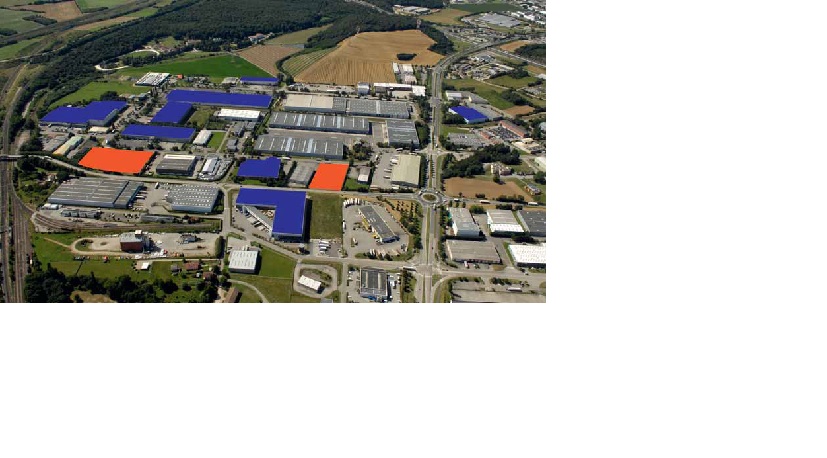
As a picture in the annual report shows, all the companies are located next to each other, however in different buildings.
thermador

What they seem to share (and what makes a lot of sense) is their IT system and of course the distribution center.

A few real “gems” from their annual report:

Since our teams are part of small companies, each person feels personally concerned: waste leads to an increase in costs and a drop in profits. We are therefore careful to turn out lights when we leave offices, close windows when the heating is on, recycle paper and to avoid heating (or cooling) excessively.

or this one:

Our travelling salespeople do not have “company” fuel cards. When they use their vehicle for professional travel, they are reimbursed on a per-kilometre basis. It is in their interest to drive economically. When they rent vehicles, they are limited to small cars which consume little fuel. Also, we ask all employees of the Group to live within 50 km of our head office.

Other positive facts:

– Management owns shares, management salaries are reasonable
– organic growth, no acquisitions
– clear structure, no minorities
– conservative discount rate for pensions (3%, below official guidance)
– all real estate owned, no signifcant leases

.
Profit sharing with employees

Again from the great annual report:

Variable component:
Since the beginning, Thermador Groupe subsidiaries’ profits have been shared with employees. Even before statutory profit sharing, we introduced our own brand of profit sharing in Thermador, the first company created in the Group’s history. This virtuous practice spread to the other subsidiaries subsequently. Profit sharing is the result of a year’s work, during which the management teams present the operating accounts of each subsidiary on a monthly basis. Everybody can understand how the annual result is put together, and what mass of profit sharing will be distributed. The distribution of that mass is decided by the management team, and takes into account each individual’s performance as fairly as possible.

In each subsidiary, the profit sharing amount therefore depends on profit, which means there are major differences between the companies of the
Group. It varies from 12 to 27 % of salary. The average for the Group is 22% of gross annual salary.

Again, this is something I have never read in such a clear and precise way in an annual report.

Funnily enough, a lot of this sounds exactly like in the Les Schwab autobiography I have reviewed a few days ago. Who would have thought that something like this can be found in “socialist” France ?

Stock price & valuation

The stock price is still far away from the highs in 2007:

From a valuation perspective, I don’t want to be too sophisticated. This is not a super cheap stock but a very high quality stock. Would this be a UK or US stock, it would trade at least at 8-10 EV/EBITDA. As this is a French stock, one should not expect a lot of “action”. Nevertheless I find it attractive at current levels as I am convinced that they will find ways to grow their business in the future.

Risks

Clearly, the economic situation in France is the biggest risk. Thermador started to expand interenationally. In their own style, they created of course a seperate entity for this. We will see if the business model works internationally as well. The unit Thermador International founded in 2007, grows quite quickly, but has yet to achieve the profitanility of the other subsidiaries.

Additionally, any consolidation, either on the manufacturer or client level might make Thermador’s business more difficult.

Finally, some very clever B2B internet company could try to compete with Thermador. However, I think Thermador is much more than matching producer and clients. There is a lot of distribution know how and facilities involved plus guaranteeing services and spare parts within a short time frame. But clearly, this is something to watch out for.

Summary:

Thermador is in my opinion a true “hidden champion”. For me the reason why this company trades below its “true” value is the uniqueness of its business model combined with they way the company is run and organized. Together, this is what I would call a “Les Schwab moat”, the power of a highly motivated company in a competitive market.

Clearly, the current situation in France doesn’t make things easier for Thermador. Nevertheless I entered into a 2.5% portfolio position at EUR 58.20 per share. As this would bring my net France exposure above 20%, I sold out the Bouygues stock as a risk management measure.

Sporadic links

A very comprehensive post from Prof. Damodaran about equity value, firm value and enterprise value

Very interesting: Buffet’s Berkshire is buying a Life Insurance company from Hartford

Interview with the boss of Apollo, Josh Harris, about opportunities in Europe and distressed investing.

Two great posts about book value and earnings power.

Must read: Jason Zweig’s 30 year anniversary of his “intelligent investor” column

Book review: Les Schwab Pride in Performance: Keep It Going

This book was a recommendation of the editor of Poor Charlie’s Almanack and is the Autobiography of legendary US Tire sales guru Les Schwab.

Les Schwab created one of the biggest independent Tire Dealerships in the US from scratch. The book is a mixture of Autobiography, short stories and lots and lots of business wisdom.

The story of Les Schwab is to a certain point very similar with Sam Walton (Walmart). A no BS guy starts with a small shop in a rural area in the US and then branches out all over the country.

However, the biggest difference with Wal Mart is the fact, that from the beginning, Les Schwab shared almost 50% of his profits with the employees. Although he seems to have been one tough cookie, he didn’t want to keep all the profit but actively included employees in the profit-sharing to align them and the interest of the company.

The system is quite simple: Overall, a little less than 50% of the profits of each store is shared with employees. When a new shop opens, employees have to keep their profits in the store, until the store has positive net worth. If they then want to take out money, the head office takes out the same amount of money. If someone retires, the stake will be bought out by the company.

This employee profit-sharing system with clear communication, target setting etc. seems to have been one of the major “competitive” advantages for Les Schwab within an extremely competitive market.

Compared to stock or option programs,this program has the advantage that it better aligns the long-term goals of employes and company. For further promotions for instance, the amount of money that an employee has kept in the company is an important factor. Compare this with stock option programs for listed companies…..

I have never been to a LEs Schwab tire station but this picture seems to be the reality:

This is a quote from the same blog:

For those of you not from the Great Northwest, Les Schwab is the bomb-dot-com for all things automotive. They don’t require an appointment, they come running out to greet you like you’ve just returned from a tour in ‘Nam, they have complimentary popcorn and espresso, and every year they give away a shit ton of free beef if you spend over $500. Free. Beef. There is so much majesty in those two words that I am in overwhelming awe. Oh, Les Schwab. . .you had me at rump roast.

Back to the book: He describes in great detail, how he was able to expand the business despite the fact that he had to deal with those tire producers which run their own tire centers and how he improved the business step by step.-

The special thing about this book is the fact that Les Schwab has written it without the help of an editor directly for his employees. What it lacks in “polish”, it makes up with very interesting insights from the unfiltered perspective of a succesful hands-on entrepreneur.

It is fascinating to see how Les Schwab thinks about motivation and management. On top, there are a lot of gems in the book. For instance why it makes a lot of sense to run one giant warehouse despite large distances. In one chapter, he describes how he was approached several times by Private Equity buyers. In a few lines he describes the private equity business better than I have ever read before.

From a “theoretical” perspective it is interesting to see that competitive advantages exist which are outside the “typical competitive” advantages (barrier to entry, size, network effects). Great management and employee motivation in combination can create a “moat” even in a business with low barriers to entry.

Summary:

All in all, I think this is an outstanding book for anyone remotely interested in how business are run or should be run. One of the best business books / Autobiographies that I had ever read. HIGHLY RECOMMENDED !!!!

For anyone interested, there is an interesting article about Les Schwab to be found here which was written in 1997, 10 years after he wrote his book.

A quick look at the Solarworld restructuring (XS0641270045, 6 3/8 2016)

Although I would not even touch Solarworld with a 10 foot pole, it is still interesting to see how they try to restructure their debt without going into the “ESUG” process.

Solarworld is one of the largest German manufacturers and distributors of Solar modules. In order to fund their expansion, they took on a lot of debt.

Roughly ~400 mn are loans and 550 mn are traded bonds which currently trade around 30% of nominal.

A few days ago, they announced, that some institution from Qatar will help the company plus the founder will inject as well some money.

However, this is all contingent on a proposed restructuring plan where both, the creditor banks and the bond holders of the two traded Bonds (XS0478864225, 400 mn 6 1/8% 21.01.2017 and XS0641270045, 100 mn 6 3/8, 13.07.2016) have to agree in separate meetings.

Just to make sure: This is for educational purposes only….

So let’s look into the restructuring memorandum to see how this proposal looks like:

The concept is basically to exchange the old bonds into new bonds with a lower nominal value plus some shares and a small cash component.

After the transaction, current shareholders will have only 5% of the new equity, the other 95% will be held by debt holders. Part of those new shares will be then sold to the founder and the Qataris and bondholders will get the resulting cash.

Lets look at the 2016 bond: For 1000 EUR current nominal value, bondholders will receive

57.84 EUR cash (5.78%)
7.31 “new” share
439.9 EUR nominal new bond

So here the problem starts:

1) What is the value of the new shares ?
2) What is the market value of the new bonds

1) New shares:
Here we have some possibilities to approach this. First one could use the price which is going to be paid by the founder and Qatar.

Current number of shares is 111.7 mn. After a reverse split of 150:1, this translates into 0.74 mn restructured shares for current shareholders. Then ~14.2 mn new shares will be issued, making it ~14.95 mn “new” shares in total.

The founder will buy 19.5% of the new shares for 9.75 mn EUR, Qatar pays 36.25 mn for 29%. interestingly, this translates if I have calculated correctly in different prices. 3.34 EUR per share for the founder and 8.36 EUR for Qatar.

A second possibility is to use the current share price pre dilution as a guid. However, If we look at the current price of 0.40 EUR, we can see that if I buy 150 old shares for 0.40 EUR, then I pay 60 EUR for a new share. This indicates that current shareholders do not understand how the restructuring works…

Personally, I would rather go for the lower end of the “range” between founder and Qatar. Interestingly, in one of the documents it is said, if the deal with the founder and Qatar does not happen, one would get 16.46 new shares and no cash.

So the new shares in my opinion should be valued at 7.31* 3.34= 24,45 EUR per 1000 nominal or 2.45% of current nominal.

2) New bond

So the question remains: What is the value of the new bond ? The details of the new bond can be found here.

The bond is quite complicated. The coupon is EURIBOR based, but the basis is at minimum 1% plus 5% margin. So currently this would be 6%. However, the coupons can be deferred until maturity, but then the interest rate increases.

The new bond is secured, although this is not too much different to the current bond. The current bond had “negative pledge” clauses. In some respect, the negative pledge is even stronger, because this includes all future assets as well, whereas the new “pledge” only includes current assets. Plus, they carved out the Qatar assets.

Additionally, the new bond will pay down part of the principal early. The schedule is:

1. 39.11 EUR per (new) 439 EUR principal after closing in July
2. 29.20 EUR June 2014
3. 21.43 EUR June 2015
4. 28.13 EUR June 2016

I have seen someone discounting this payments at 10% for calculating the value of the old bond, but I think this is wrong. You might do this after the restructuring happened, but before, those payments are at the same risk as the old bond.

Honestly, I find this bond too hard to value at the current stage. Based on the old bond price and the assumption for the cash and share distributions mentioned above, the implicit valuation of the new bond ~22% of the old bond or 22/44= 50% of the new bond nominal. At the current stage, with the restructuring not even implemented, this looks OK.

Comparison to Praktiker & IVG

Maybe one quick note because I have covered both Praktiker and IVG as well: The big difference here is the fact, that in the current capital structure, we have only a very small amount of secured creditors in the capital structure. So Senior holders got away quite well. For IVG and Praktiker, this is not the case. Especially for Praktiker, one should assume a recovery which is much lower than what we see here.

Summary:

Solarworld will be an interesting case if and how voluntary restructurings work in Germany. The case is very different from Praktiker and IVG but nevertheless interesting.

If the restructuring is successful, I think the new bonds might be worth another look. This is due to the fact that they are very complex and to a certain extent the “fulcrum” security, i.e. the most senior part of the capital structure.

Apart from a short of the “old” the Solarworld share (which unfortunately cannot be borrowed), the current situation does not look attractive to me.

« Older Entries Recent Entries »