Category Archives: Bücher

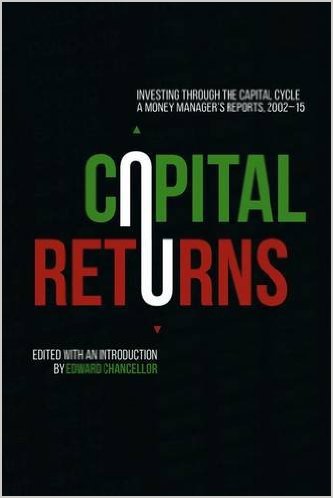
Book review: “Capital Returns” – Edward Chancelor / Marathon Asset Mgt.
41nijcbufal-_sx331_bo1204203200_

“Capital Returns” is an edited collection of investor letters from UK based Marathon Asset Management. Before reading the book,I actually didn’t know much about Marathon.

On their website, they summarize their strategy as follows:

At the heart of Marathon’s investment philosophy is the capital cycle approach to investment.  It is based on the idea that the prospect of high returns will attract excessive capital (and hence competition), and vice versa.  In addition, an assessment of how management responds to the forces of the capital cycle and how they are incentivised are critical to the investment outcome.

This capital cycle approach is very interesting. As mentioned above, the book has no direct narrative. The investor letters are however clustered together in chapters with similar main topics:

  • Capital cycle, sectors (automoblie, commodity, cod fishing, beer, oil)
  • Growth (Colgate, Geberit, Intertek, Amazon, digital moats, Rightmove, Baidu)
  • Management (incentives,  pro cyclicality, capital allocation, Sampo, Scandinavia, family ownership, Richemont, management meetings, culture)
  • Crisis (Anglo Irish, securitizations, private equity, Spanish property, German banking, Northern Rock, Handelsbanken)
  • After the crash (Spanish construction, Bank of Ireland, PIIGS, low interest rates
  • China
  • Funny “Greedspin” Christmas letters

The book is not so easy to read because the letters themselves, despite very well written, are very condensed with a lot of deep insights. I always had to take a kind of a mental break after one or two letters in order to digest everything

Overall, I would characterize their approach as follows:

  • International with an European focus
  • generalist approach, all sectors, differenent business models
  • transformation from “cheap” to “quality” over the years
  • they also invest into financials
  • the invest relatively diversified


Essential personal learning experience

The main take away for me was that their supply focused capital cycle model enabled them to see and avoid many of the problems (CDOs, housing, commodities, PIIGS, China) well in advance. Most analysts focus on the demand side only and forget about supply.

This is something to keep in mind for the future. As a bottom up investor, I think their approach can improve decision making without going into useless macro analysis. If you just look at single companies, one might miss some of the overarching issues in the sector (TGS Nopec…..).

Marathon Track record

The question always is: Talk is cheap, how about their returns ? At least from their website, it seems that their funds made 3-5% outperformance p.a.  constantly  on a 3, 5, 10 and 20 year basis. This is very remarkable for a manager with a couple of billion under management.

For me it was also interesting to see that they not only share many of my personal opinions about investing, but that there is also a nice overlap of companies I find interesting and what they found interesting, for instance Lloyds Banking, Admiral, Handelsbanken and Koc as a well managed family owned company. Clearly there is some “confirmation bias” at work from my side, but still interesting.

Recommendation:

Overall, the book is an essential”MUST READ” for any investor. The major drawback is that it is currently only available as hard cover at around 37 EUR.

The “value option” is to be found on their webpage where they published some of their investor letters for free.

There is also a similar book on the time period from 1993-2002 called “Capital Acocunt” which costs around 80 EUR on Amazon.

Overall, for me Marathon is clearly one of the “Gurus” in investing and it makes a lot of sense to pay attention to what they are doing. Especially if and when they re-enter oil and commodities.

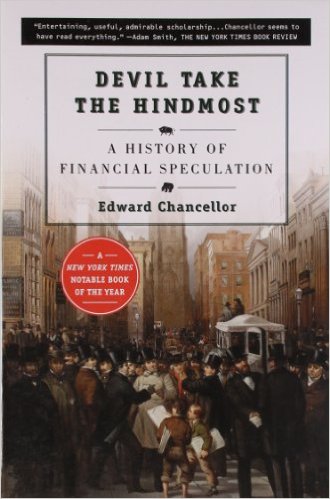
P.S.: the editor, Edward Chancelor has also written one of my all time favourite financial books: “The Devil took the hindmost” from 2000. If you like financial history, this is also a “must read”:
51-cgsquhml-_sx328_bo1204203200_


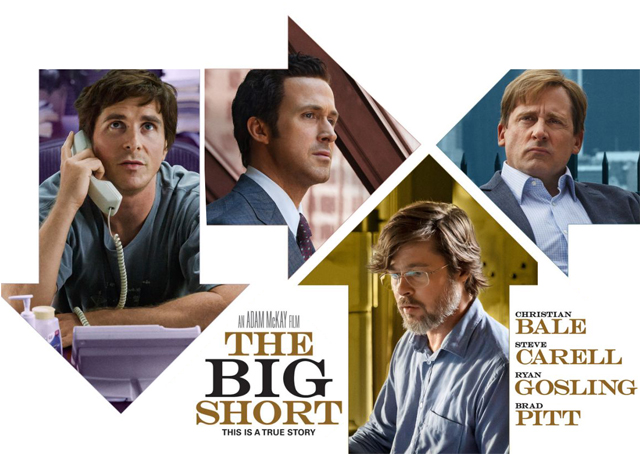
Movie review: “The Big Short”

thebigshortcsheader


This is a clearly a first for the blog: A movie review and not a book review.

I had read the book from Michael Lewis a couple of years ago and it was clearly the best of many books trying to explain the sources of the “financial crisis” 2008/2009.

Honestly, I could not imagine how you can  make a Hollywood movie out of this book.

The  story is mainly about a couple of  fund managers who discovered at the same time around 2006/2007 that the US mortgage market was deeply flawed especially in the subprime area and that it was only a matter of time until everything would break down.

Most of those fund managers were “ousiders”, so not mainstream super star hedge fund managers but strange guys like Michael Burry, the now famous medical doctor turned fund manager with the Asperger Syndrom or the 2 guys who founded their fund as students with 100k start capital in a garage.

Another important role was played by a Deutsche Bank investment banker Greg Lippmann (in the movie the guy is called Jared Venett) who tried to sell the instruments to bet against sub prime mortgages.

Overall I found the movie extremely entertaining and very good. Why ?

First of all the actors are really really good. Especially Christian Bale (M. Burry) and Ryan Gossling (DB trader) play extremely well.

Secondly, the movie gets surprisingly almost all the facts right. They do explain the underlying concepts very well and often in surprisingly funny ways. One of my favourite scenes is when Selena Gomaz and Richard Thaler explain the conceptof CDS/CDOs at a Las Vegas Black Jack table.

thaler

Of course they made some compromises to turn it into a Hollywood movie. Nevertheless I do think that the movie actually shows a pretty acurate picture of investment banking back in the heydays of 2006/2007.

Best learning experience: negative carry & patience

Of course the characters in the book and the movie were not the only ones who predicted the subprime crisis. Back then a lot of people were sceptical with regard to mortgages banks etc.

But I think what the movie really showed was how difficult it is to actually bet significantly on a “doomsday prediction”. Betting against subprime CDOs required those  guys to pay signifcant amounts of “insurance premium”. In Michael Burry’s case, the “negative carry” was something like -20% p.a. for the full portfolio. In all cases the managers were not credit specialists and investors clearly  didn’t like what they saw at first and in Burry’s and Iceman’s case tried to force them out of their positions because very few people are willing and able to sacrifice yield in order to make big returns.

It is very similar to what I wrote a couple of months ago: A great idea or a great strategy alone is worth exactly nothing. Yes, you can maybe sell some books as the guy “who predicted the last 5 crashs”. But if you manage money you have to actually execute it well in order to create value.

And I do think that this is the main lesson form the book and from the movie: It takes a lot of guts and a kind of “outsider” status to actually be succesful when you bet against the overall consensus. Talk is cheap, actions matter.

The second lesson was that patience also plays a big role in actually scoring big. All the portrayed fund managers were early with their trades and the position went against them at first. In Eismann’s case all his partners for instance wanted to sell quickly after they were back in the green, but he insisted on waiting.

Another good example of this rare persistence in adverse situation was Bill Ackman who at the same battled mortgage guarantee company MBIA on their role within suprime mortgage business. Hi fought them over years until he had finally his big pay off. There is a good book about this story as well, “Confidence Game”

51azlkey-xl-_bo2204203200_pisitb-sticker-arrow-clicktopright35-76_aa300_sh20_ou03_


So my recommendation for anyone at least partially interested in finance is clear: Go and see the movie !!!!

I actually think the movie should be a mandatory part of any finance course at schools and universities like the original “Wall Street” movie.


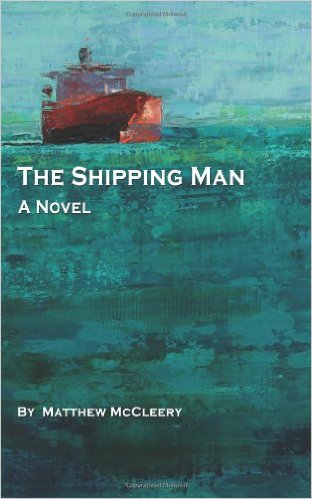
Book review: “The Shipping Man” – Matt McCleery

51vjqba-hnl-_sx310_bo1204203200_

This is a book reader “JJ” recommended to me somewhere in the comments. Its a very unique book as it says “A novel” on the cover but in effect is the best book I have read about the shipping industry.

The story is about a NY based hedge fund manager who decides that he wants to own a ship. He buys an old ship with his personal money from a strange Greek guy and then gets into the world of shipping. Along the way he loses his hedge fund, encounters many problems and sells his ship with a lot of luck at a profit.

By pure coincidence he ends up as the CEO of a Norwegian Oil Tanker company and tries to raise senior debt funding at Wall Street.

The book seems to be at least partially autobiographic. What I really liked about the book is that despite telling a funny and readable story, the author also manages to include many great insights on the shipping industry specifically and financing, cost of capital and other financial aspects of Wall Street along the way. 

One of the key messages is that financing ships economically sucks because a lot of the players think quite uneconomically. They want to have the biggest ships or the biggest fleet and always manage to lure in many gullible investors on the way. The whole industry seems to be like a big casino where some insiders always get their cut and all the oher “players” lose in the long term by design.

Actually I do think that the same principle applies for any other very capital intensive businesses.

Anyway, I can highly recommend this book. It is a good read and interesting for anyone who has ever thought about investing into something related to shipping.

At least for me, I am now completely “healed” from even looking into shipping companies or Off-shore drilling etc.


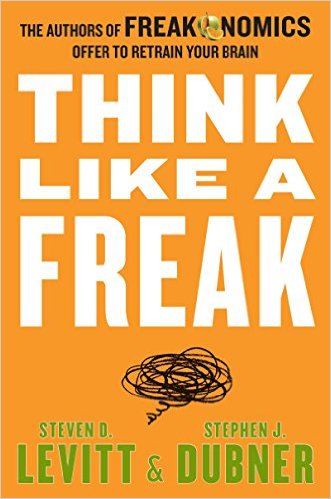
Book review: “Think like a Freak” (Levitt/Dubner)

think like a freak


“Think like a Freak” is not an explicit  finance book. I had read both predecessor books and I liked the original “Freakonomics” a lot, the second book not so much.

For those who haven’t read them: The Freakonomics books look at how every day life and real life problems can be explained by economic variables like incentives etc. often with very surprising and not really obvious connections.

The third book in my opinion is very good. They want to encourage readers to “think like a Freak”. This means among other things, trying not to tackle big problems head on but trying to solve little problems that might then have large effects or do things differently. And mostly the way to solve those problems is very unique.

One example for instance was David Lee Roth (the singer of Van Halen) who was famous for demanding a very detailed list of things for his concerts, among others a bowl of Smarties but without the brown ones.

The reason for this seems not to have been pure vanity but a test if the people organizing the concert halls actually had also read the other stuff, especially with regard to the technical equipment. So the first thing he did when he arrived at any stage was to check the Smarties bowl. If the brown ones were still in, they directly went to checking all the equipment really thoroughly, in order to make sure that everything really worked. If the brown Smarties were out, they just made a standard test and saved a lot of time and effort.

Interestingly, I actually could make a connection to investing when I read the book.

I do think that value investing is actually very similar to “Invest as a freak”. As a value investor, you don’t really care about the big problems like “will the stock market go up or down”, “what will GDP growth be” etc. Rather you concentrate on “small” problems, looking at company by company without caring so much about the “big picture”.

I think it is also important for an investor to develop some kind of “brown Smarties” test similar to David Lee Roth. For me for instance this is the comprehensive income line. If I see something strange there I know I have to be really really carefull when I further analyze the stock.

Anyway, even without making the connection to Value Investing, “Think like a Freak” is a very entertaining book. HIGHLY RECOMMENDED !!!


Book review: “Damn Right: Behind the Scenes with Berkshire Hathaway Billionaire Charlie Munger” – Janet Lowe

The success story of Berkshire for a long time has focused only on Warren Buffett, the front man with the knack of explaining even the most complicated issues in a funny and folksy manner. Charlie Munger was for a long time only considered to be the “funny side-kick” who seems to be asleep most of the time during Berkshire’s annual share holder meeting.

This changed somehow in the last few years, among them the excellent “Poor Charlie’s Almanack” from Peter Kaufmann and there seem to be a couple of Charlie Munger books already released or in the pipeline.

So I was pretty surprised that there is a much older book about Charlie than the others. “Damn Right” was written and released in 2000 and is based on many interviews, some with Charlie Munger directly but also with his family and former colleagues and friends. 2000 was a year where many people thought that Berkshire had lost it, maybe one reason why the book didn’t become more well-known.

The book starts slowly with some stories on his parents and grand parents but gets more interesting pretty quickly. Munger started early on as a lawyer but discovered that he can make more money by being a real estate developer and started buying plots, building and selling apartments and houses. He then started to buy parts of or whole small companies. For a very long time he did so as a pure “Graham investor”, picking up bargains or even net nets.

Munger then started Munger Wheeler in the 60ies but was already discussing investment ideas with Buffett over the phone. He also invested together with Buffett and another Californian investor and friend Rick Guierin (One of Buffett’s “Superinvestors”) into the same companies sometimes even closely held ones. The most famous common acquisition of this time was the Blue Stamp company.

Wheeler & Munger performed greatly from 1962 to 1969 but did badly the next few years when Warren Buffett hat already closed his partnership. Munger dissolved the partnership in 1976 but still had a track record of making ~24% p.a.against 6% p.a. fr the Dow Jones.

The changing point in his history is clearly the purchase of See’s where they paid, for the first time in their history, above book value for a company. Munger is quoted that they would not have bought Coke if they hadn’t started with See’s.

After that the book covers some of the major Berkshire stories but with an interesting perspective. For me the most surprising facts from the book were:

– Munger and Buffett were fined by the SEC in 1974 (WESCO)
– Munger’s Partner had the original See’s Candy idea
– Munger was a “Graham style investor” for a very long time
– there were really big draw downs in the Munger partnership

Interestingly enough, the book says that already in the late 90ies, Munger wasn’t involved that actively in Berkshire anymore. For me the question always remains: Would Buffett had been as succesful without meeting Munger or would he would have become “just another succesful” investor ? Who knows.

Overall the book is definitely a good read for any value investor and tells most of the Berkshire story from a slightly different perspective. HIGHLY RECOMMENDED.

Book review: “Simple but not easy” – Richard Oldfield

I honestly never heard of Richard Oldfield before but in the UK he seems to be a well-known investment manager. He used to run Mercury Asset Management and now has his own company, Oldfield Partners.

The book is part autobiography and part investment philosophy, containing the wisdom of his 40 year career in investments.

I couldn’t really detect a structure in the book, but it is generally well written and contains a lot of wisdom. I liked very much that he started with his biggest mistakes. A couple of his thoughts mirrored my own to a 100% such as the fact that “armchair investing” might have a lot of advantages. He calls it “traveling narrows the mind” and gives some very interesting examples for this view.

Interestingly, the book was released in 2007, just before the financial crisis hit. I guess with his cautious style he clearly survived it but it is also clear that he didn’t see it coming. In one of the chapters he is discussing that the issues in the US housing markets were not as big as they were made in the press and he was invested in GM which went bankrupt a year later or so.

On the other hand, almost everything he writes reflects deep insight into investing. There is good stuff on how to select asset managers as well if and when to fire them.

One of the most relevant quotes for me was the one where he states that people who are good at stockpicking are usually not good in FX forecasting,, i.e. fundamental stock analysis and “macro” don’t mix well. He writes about an overlay hedge which killed a large part of the performance of a portfolio. This is an observation I made too and where I am currently suffering because of my TRY bet. Note to myself: Revisit the TRY bond position.

Overall I think it is a very good book and I might read it again because it is packed with good stuff and I maybe didn’t get everything for the first time.

I would explicitly recommend it to those investors who want some insight into “family office” like investing, but it is good reading both for beginners and professionals. Just don’t expect a “how to get rich in 12 month” type of book.

Double Book review: Tim Clissold “Mr. China” & “Chinese Rules: Mao’s Dog, Deng’s Cat, and Five Timeless Lessons from the Front Lines in China”

Tim Clissold is an English guy who happened to go to China just when China was opening up to the Western world in the early 1990s. His first book “Mr. China” tells the story how he tried to set up and invest a 400 mn USD private equity fund in China together with an US Wall Street veteran.

This was clearly not an easy task. When, after visiting 100 or more companies, he finally found some to invest in, the real problems only began. Ownership rights in China are quite flexible and in his book there are a couple of in-detail stories what can go wrong in China. As a short summary I would say that actually almost everything can go wrong in China for a foreign investor. Contracts are worth nothing and more than once a manager disappeared with most of the money. In other cases, the old owner just built a new factory next to the old one and all the workers left for the new factory and so on and so on. An interesting details was the importance of company seals (“chops”). Those company seals are much more important than anything and the one who has those seals in possession can do anything.

It might be a severe case of confirmation bias but after reading this book I felt fully vindicated for not even considering to invest in any German or US listed Chinese companies (and yes, this includes Alibaba, Baidu etc.). If you can’t even control what’s happening when you are in the country how should you have any chance if you are only invested via several questionable legal constructs.

Clissold makes it especially clear that Chinese thinking is entirely different from western thinking when it comes to business and rules that we take for granted just do not apply or even exist in China.

The second book is a more focused story on his second attempt in China, where he was called in to solve a difficult situation with regard to a big Carbon credit project and then started out to set up his own Carbon Credit investment fund in the mid 2000s. Of course he encountered the same problems as in the first try but he tried to counter them with more typical Chinese tactics which seemed to have worked better. In the end this project didn’t work either as the price of Carbon credits collapsed during and after the financial crisis.

The second book also includes more historical and philosophical background on China which makes it a “deeper” read than the first one.

Overall I can recommend both books to anyone who is interested in China in general and investing or working in China specifically. Although they are a lot of “How China thinks” books out there, this is one of the few with really first hand experience. And the books are quite well written, too.

Book review: “King of Capital: The Remarkable Rise, Fall, and Rise Again of Steve Schwarzman and Blackstone”

The title of the book is actually a little bit misleading. Yes, Blackstone and Steve Schwarzman play a large role in the book, but the book also covers the story of the whole private equity industry pretty well.

After working for DLJ and Lehman, Schwarzman started Blackstone as a 2 person M&A advisory boutique in the 1980ties. As the M&A advisory business was somehow limited, Schwarzmann and his partner decided trying to get into the then fledgling private equity business. Just before they were out of money, they got their first investor money and then became on of the most succesful Private Equity players.

What I liked the book ist that it looks not only at Blackstone but at the development of Private Equity since the 1980ties in general. There is also a lot of interesting detail to be found on specific deals which I found very interesting. For instance how Blackstone failed in Germany in the Cable sector and many more deals. Blackstone in contrast to some other players invests often in cyclical companies where timing is quite important.

Most recently they also branched out big time into Real Estate. A funny side story is the fact, that Larry Fink started Blackrock as a division of Blackstone and relatively early bough the company out for a couple of hundred million USD. Blackrock is now a 65 bn USD market cap company, almost 20 bn more than Blackstone, its former parent.

The author hinself seems to be relatively neutral or even slightly positiv on the general role of private equity and collects some good arguments.

Overall, private equity investors like Blackstone are very close to what I would call “value investors”. Clearly, sometimes they extract that value petty quickly but many times they also create and grow companies like Blackrock. Overall those guys clearly have longer time horizons than most equity fund managers and one of their strengths is that they are not meassured against benchmarks on a monthly or quarterly basis. I guess that is the main reason why they can act very countercyclical.

However, Private Equity is not a one-way street to success a s the side story of Forstmann-Little shows. In the 1990s, they were the predominant player but than went all in into telecom and technology and finally did not survive. Blackstone did some Telco deals as well but nothing which would harm them big time.

As a summary, I can highly recommend this book who has a some interest on how Private Equity works and how those guys think.

Book review: “Good to Great to Gone: The 60 Year Rise and Fall of Circuit City” – Alan Wurtzel

Circuit City was the largest consumer electronics retail chain in the US in the 1990s and 2000s. The stock was a super star performer and the company even made it into Jim Collin’s book “Good to Great” as one of the best companies in the US.

In 2009, Circuit City filed bankruptcy. The book now describes the full story from the founding in the 1960s to the fall in 2009. The book is written by Alan Wurtzel, the son of the founder Sam Wurtzel, who also served 13 years as CEO from 1973 to 1986 and as a board member for couple of more years until 2001.

So clearly his story about the company is not as neutral as a “normal” author might have written it but he states that at the very beginning of the book.

Pretty early in corporate life, around the 1970s, Circuit City (then called Wards) had already an existential crisis as their previous business model (mostly selling to “department like” stores in larger stores) stopped to work. They then completely changed strategy. In the 1970s to the 1990s they perfectly rode the wave of consumer electronics with their “super stores” which relied on sales via dedicated sales professionals working on a commission.

Then, starting in the mid 2000s, Circuit City lost track, especially against Best Buy and had finally to file for bankruptcy in 2009. Funnily enough, Best Buy had its own crises but somehow recovered.

Wurtzel is very critical on his successors, especially that they never really used the cashflow for improving stores but rather did share buy backs and acquisitions.

The unique aspect of the book in my opinion is that the author very much focuses on strategic planning and the interaction between Management and the Board. He describes in very good detail what kind of strategical mistakes were made by the management and how the board failed in challenging and correcting the flawed strategy. There was a lot to learn for me and I think it would be interesting for people who regularly speak to management. Just asking how they handle strategy might get some surprising results. Wurtzel for instance is of the opinion that an annual strategy process tends to become “mechanical” and inefficient and that strategy should only updated on a 2 year basis.

The book is also a reminder that retail is a very difficult industry. Retailers can grow very quickly and profitable, but if something changes profoundly in the competitive landscape, turning around businesses becomes difficult. In Circuit City’s case, the larger self-service Best Buy stores seem to have been the nail in the coffin. Circuit City never got up to really take a big investment and completely remodel the stores. Instead, in order to keep investor happy, they used the cash to buy back stocks. Wurtzel correctly points out that stock buy-backs make only sense if you have “truly” free cash flow. If you just avoid or shift necessary Capex, then buying back shares is not a good idea.

Circuit City also had a very strong corporate culture, especially with regard to its sales personal. The problem with that culture was that it also seemed to prevent the shift to a non-commission, self-service structure like Best Buy. So yes, strong culture is a competitive advantage, unless it prevents a necessary change in the business model. Interestingly, Circuit City started a used-car dealership called CarMax based on the same prinicpals which was spun off from Circuit City and still is doing well (14 bn USD market cap).

The Circuit City story reminds me a little bit about Tesco. Tesco also tinkered around little by little in its stores in the UK while they didn’t fully realize the threat of the discounters. Let’s wait and see how they will do.

In any case, I can highly recommend this book to anyone who is interested in the retail industry and/or company strategy.

P.S.: There is even a documentary on the rise and fall of Circuit City called “The tale of two cities”. Some clips of that movie can be viewed on Youtube here.

Book review: “The Frackers: The Outrageous Inside Story of the New Billionaire Wildcatters ” – Gregory Zuckerman

“The Frackers” is the story about a bunch of crazy US “wildcatters” who managed to find a way to extract enormous amounts of oil and natural gas from rock formations which were thought (by conventional wisdom) as not to be worth drilling.

They way they achieved it was actually not to invent anything new, but to combine and refine existing technologies (horizontal drilling and fracking) which allowed them to produce oil and gas at competitive costs.

For potential investors there is a lot to learn in the book, among other stuff:

1. Being too early is the same as being wrong. It took a long time to make it work and those who started early often did not have the means to pull through.

2. One of the key innovations was to use less chemicals than before in the fracking fluids. One more example that innovation often means less and not more

3. The guy who had the breakthrough idea with adding less chemicals to the fracking fluid did actually not profit much from his invention

4. Established companies like Exxon, Chevron etc. mostly missed the opportunity because they relied on “conventional wisdom” which said that shale is not relevant. Funny enough, one of the best shale regions (Barnett) lies literally below Exxon’s headquarters. They were sitting directly on top of a big energy source but ignored it and went to Indonesia, Nigeria etc.

5. The most aggresive and fastest growing “frackers” did not produce the best long term returns for shareholders. If you compare for instance the two companies of the main characters, Aubrey McLendon’s highly leveraged Chesapeake Energy against Harold Hamm’s conservatively run, 70% CEO owned Continental Resources, it is not difficult to see which is the better long term concept for shareholders:

For non-US readers like myself it was also interesting to see how the dynamics between wildcatters and land owners play out. Without landowners having a profit stake in the production, getting permission for fracking would be much more difficult. This is maybe the reason why fracking in Europe will never get done as the government has the monopoly on natural resources.

Another thought: I think in the current discussion of how the oil price impacts the US economy, it is not enough to look just at the direct jobs created by the E&P companies. If you assume that in total, the shale boom increased daily US oil production by 5 mn barrels, at an oil price of 80 USD per barrel, around 150 bn USD have flown back into the US economy annually instead of going to OPEC countries or other non-US oil producing countries. I guess fracking had a much bigger impact on the US economy’s revival since the financial crisis than the Fed.

Finally, there is a fascinating side story about the guy who is running Cheniere Energy, Charif Souki. His great idea was to import natural gas into the US and he raised several billion USD to build a huge gasification plant on the gulf coast. He clearly did not see fracking coming and his investment was worthless. Nevertheless, he was able to raise another few billion bucks and retool the facility in order to export natural gas.

This “double or nothing” gamble seems to have paid off. Seth Klarmann by the way, has just doubled its stake in Cheniere, making it their biggest public listed position at around 1,7 bn USD.

Overall, I found the book very interesting and I would say that it is a MUST READ for anyone interested in the oil industry. It is well written and entertaining as well as informative. Highly recommended !!!

« Older Entries Recent Entries »