Category Archives: Anlage Philosophie

Celesio Merger Arbitrage update: A new shark wants a bite

Late last year, I joined the merger “arbitrage” play when US based McKesson wanted to take over Celesio. I did exit the position with a small profit soon therafter, as I was not really sure what was going on.

This deal was clearly “shark infested” with Elliott, the smart and aggressive US Hedgefund on the one side, Goldman as advisor of McK on the other. Nevertheless it looked very strange that Elliott seemed to have went away with only 50 cents more than the initial offer of 23,50.

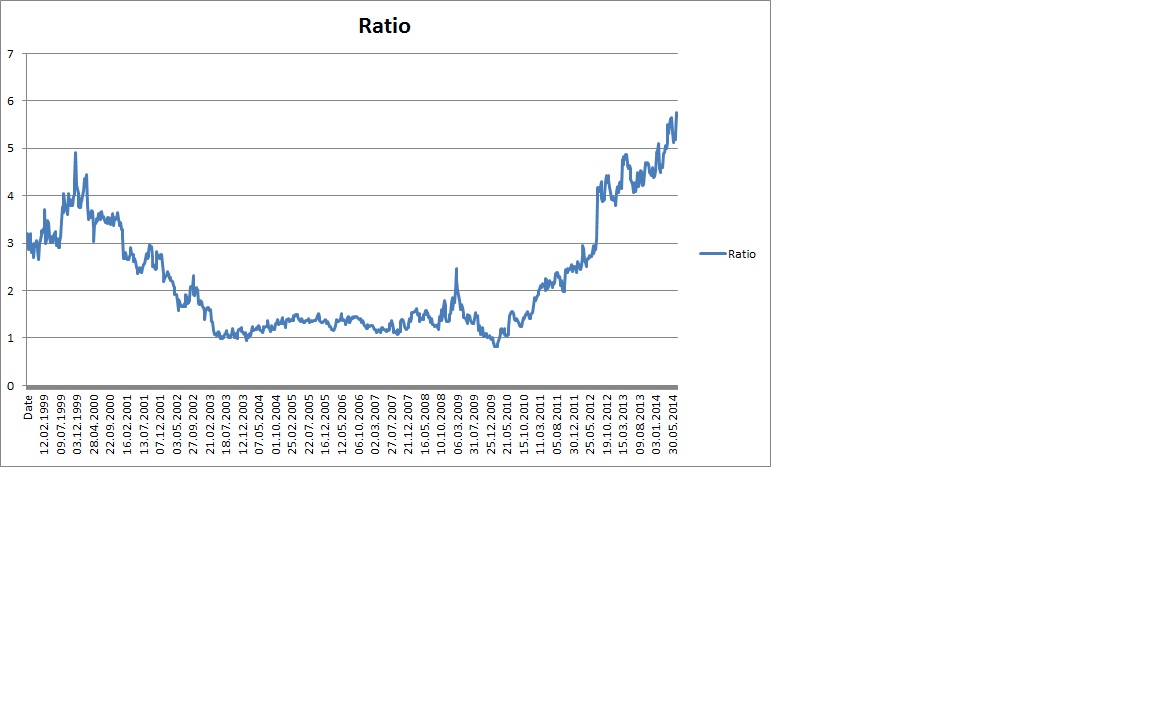
Interestingly, the stock price went up above the offer price afterwards as we can see in the chart and I was wondering why:

Yesterday, this WSJ article then was very surpising:

Another big shark has joined the scene: Magnetar, one of the most (in)famous US Hedge Funds (“Big Short”). They seemed to have looked into McKessons disclosures and found this:

Magnetar accuses McKesson of offering a higher price to one large Celesio shareholder, Elliott Management Corp.

Later in the article, more details are given:

To win Elliott’s consent, McKesson paid it nearly €31 for each convertible bond, the lawsuit claims.

Documents published by McKesson indicate it did pay the equivalent of €31 a share for Elliott’s convertible bonds. Other convertible bondholders received the equivalent of €23.50 a share.

We believe McKesson’s actions were specifically aimed at evading the minimum price rule in German takeover law, and resulted in offering only €23.50 per Celesio share to minority shareholders, whilst paying a look-through price of up to €30.95 per Celesio share through the acquisition of convertible bonds,” Magnetar said

In my post back then I had written that the 2018 convertible bond had the highest annoyance factor in the capital structure:

In total, the 2018 convertible will be exchangeable into 19 mn shares, more than 10% of total outstanding shares at any time after the take over happens. However, this could turn out to be a big problem for McK. Any company doing such a takeover wants to get rid of minorities as quickly as possible and is therefore trying hard to squeeze out shareholders and delist the company.

With the 2018 convertible, this could be very difficult. Even if McK owns more than 95% of the shares, convertible holders could suddenly convert bonds into shares and then make a squeeze out impossible. The 2018 convertible therefore has a quite high “annoyance factor” for McK. In general, when a company has a more complicated capital structure, an “annoying” security can be a very good security to own.

So Elliott seems to have cashed in the “annoyance factor in a private deal and McKesson agreed because they thought that the German take over rules (same price for everyone) does not apply to convertible bonds.

Magnetar, which seems to have held convertibles as well has obviously a different opinion and is now sueing McKesson. Elliott looks safe, but the maybe Magnetar gets another bite out of the “big whale” MCKesson. If this would be the case, this would be a further embarresment for Goldman who were Mcks advisor.

Honestly, I although I thought through many scenarios in this , I did not have this scenario on my radar screen, otherwise I wouldn’t have sold the convertibles but tendered them into the offer.

Nevertheless a very interesting story and a great learning experience. If guys like Elliott or Magnetar turn up, you should definitely be sure not to end up as shark food.

I still don’t understand why the stock currently trades at 25,80 EUR or so but this is another story.

MIFA Update (2) – And why I would prefer Russian shares to German Bonds

The story around the German bicylce producer MIFA seems to get more and more interesting. Yesterday I posted the update on the (not so surprising) losses detected now from previuos years of dubious inventory accounting.

A few minutes after I published the post, MIFA came out with another “breaking news” which starts the following way:

MIFA: Investment agreement with Indian bike manufacturer HERO concluded,
equity investment pursuant to capital increases from authorised capital

– Investment agreement with OPM Global B.V., a subsidiary of Hero Cycles
Ltd., about an equity capital investment in the amount of EUR 15
million concluded

– FERI EuroRating Services AG reduced issue rating of corporate bond

– Annual General Meeting expected for third quarter of 2014

From the headline one would conclude that the rich Indian “uncle” finally will save the company. Handelsblatt for instance translated this into a headline which one could translate into “MIFA secures investor”.

For the real “juice” of this announcement, you have to read down a little bit towards the end of the annoncement:

The investment commitment by OPM Global B.V. entails significant financial contributions of MIFA’s financing partners and is subject to various conditions precedent, especially to the condition of a haircut in the amount of EUR 15-20 million of the bondholders as well as an exemption from the German Financial Supervisory Authority (BaFin) from the obligation to make a public takeover offer under the The German Securities Acquisition and Takeover Act.

So to understand this again, the facts:

– The 2013 issued MIFA bond has a total volume of 25 mn EUR
– most likely, the covenants of the bonds are breached, so MIFA would have to pay back the bond on short notice
– the “Indian uncle” will only invest, if bond holders accept a haircut of 60-80%

Normally, if a company cannot pay back a bond, the company will go into default. the shareholders will be wiped out and the company then changes ownership from the shareholders to creditors i.e. bondholders for instance via a debt/equity swap.

at MIFA, they try to reverse the order. Let’s look at another part of the announcement: Hero is commiting to pay 15mn for the following shares:

The cash capital increases shall comprise a 10% capital increase with subscription rights being excluded and a subsequent rights issue with a total number of 4.9 million new shares to be issued. OPM Global B.V. has undertaken to subscribe all such shares which together with additional existing shares to be transferred from
certain existing shareholders would result in an overall participation of the investor of up to 47 %.

With currently 9,8 mn shares, only (0,98 +4.9) = 5.88 mn new shares will be issued. With a total new sharecount of 15,68 mn shares, the old shareholders would keep economically (9,8/15,68) =62,5% of the company while senior bondholders would keep only 20-40% of their bond prinicpal. In my opinion it should be the other way round.

It will be interesting to see if bondholders are accepting this pretty obvious blackmailing. The argument will most likely be that if they don’t accept, they will end up with nothing. Praktiker by the way tried a similar tactic, going to bondholders first . In Praktiker’s case, both shareholders and bondholders ended with nothing.

That the proposed transaction would be better for shareholders than for bond holders shows clearly in the price action this morning. While the bond lost further from around 33% to around 27% (or -20% in relative terms), the shares are up more than +20% at the time of writing.

Coming back to my headline: When i bought my first two small Russian share positions (Sberbank, Sistema) many people commented that they would never buy Russian shares because property rights are not respected in Russia. This might be even correct, but you get very cheap valuations and if they do respect property rights, tzhe potential upside is high.

In German bond markets however, property rights are even worse in my opinion once a company is in trouble. As we learned at IVG, subordinated bond holders can be wiped out without blinking an eye and looking at the last few cases, senior bond holders are now expected to rescue the company before shareholders commit a single cent. Under German insolvency proceedings, often the old management carries on (WGF) and wipes out bondholders as they wish. However, other than in Russia, there is no upside to this if you buy a newly issued German bond at par. So for me, if I would need to choose between a newly issued German Corporate bond and a Russian stock, the choice is clear….

The sad part of this story is that this event along with many other similar event will hurt corporate bond issuance in Germany in the long run, especially for smaller companies. With the banks continuing to shrink, this is not good news for those German Mittelstand companies who need debt funding.

I am somehow tempted to become a “bond activist” here….Let’s see how this continues….

Updates: MIFA & Nuclear decommissioning liabilities

Just a few quick comments on events that caught my eye while I was on vacation:

MIFA

As predicted in my post some weeks ago, the troubles of MIFA were clearly not a temporary 2013 “accounting system” issue but a result of dubious inventory accounting over multiple years (or simply stated – fraud):

This is the quote from the news release last week:

In the course of investigations by the Management Board and Supervisory Board of MIFA, it has been detected that also the previous years’ financial statements contain material misstatements. These misstatements relate to the inventories of raw materials, consumables and supplies as well as finished goods. Recent findings show a cumulative inventory difference in the amount of approximately EUR 19 million, which originate from the financial statement 2012 and previous years.

This is what I wrote 7 weeks ago, just based on public information:

I do not claim to really understand what MIFA was doing and I have no idea if they will survive or not. However, just by looking at their historical material costs and inventory level, it seems unlikely that the newly introduced accounting system could be responsible for a 15 mn loss. For me it is much more likely that the inventory build up at least since mid 2012 lead to overstated results over a longer period of time. The 15 mn loss announced seems to contain a significant write down on inventory as well. I could imagine that they might have to restate older financial statements as well.

Both, stock and bond look like “terminal decline”:

It looks like that the company lost money for a long time and made profits only by faking inventory levels.

I have often said that Grman listed Chinese companies are fraud, but clearly we have a lot of “home grown fraud” here as well. It will be interesting to see if someone is going to jail for this. I guess not

German utilities / decommissioning liabilites

Some months ago, I looked briefly at Eon’s nuclear decommissioning liabilites, which, in my opinion were clearly under reserved as the discount rate of 5% is far above anything being used elsewhere. That’s what I wrote back then:

EON has 16 bn EUR of reserves on its balance sheet for the decommissioning of nuclear power plants. Those 16 bn are clearly already reserved in the balance sheet, but as they will be due in cash rather sooner than later, they should be clearly treated as debt and added to Enterprise value.

However, there is a second issue with them: For some reasons, they are allowed to discount those amounts with 5% p.a. This is around 2% higher than for pension liabilities which in my opinion is already quite “optimistic”. They do not offer any hint about the duration of those liabilities, but if we assume something like 10-15, just adjusting the discount rate to pension levels would increase those reserves by 3-5 bn and reduce book value by the same amount.

I was therefore quite surprised that there seem to be negotiations that the German Government will take over those liabilities. Here is a “Spiegel” article in German which points ut that there seem to be supporters for this on the political side.

The argument made is that if the Government takes over the liabilities, they would not bear the credit risk of the utilities. However that argumentation has some serious flwas:

– the German utilities have indeed made reserves on their liability side, but they are clearly NOT backed by cash on the asset side. In the table I linked to one can clearly see that the liabilites are only partly financed by liquid assets. If we take out working capital requirements, my assumption would be that less than 50% is backed by liquidi assets.

– as I said before, the current liabilites are clearly underreserved. Without knowing anything about the technical aspects, alone the 5% discount rate used indicates 20-40% under reserveing depending on the duration of the liabilites and based on EON’s cost of debt. Clearly if the German Government would take over the liabilities, we would need to discount at German Government rates meaning the fair value or better cost to the taxpayer might be more than 50% more than reserves.

If the utilities would be succesfull with this, both, EON and RWE would be a strong buy and the German taxpayer a strong sell. Maybe I should hedge my position as a German tax payer with a long position in RWE and EON ?

Another pilgrimage & Portfolio transactions & Slow posting ahead

Another pilgrimage

Last year was the first time that I went to the “Woodstock for capitalists“, i.e. the annual shareholder Meeting of Berkshire Hathaway. As I mentioned last year, the annual meeting itself would not be a reason for me to (spend all the money and) go there, but the possibility to join a 2 day conference and talk to other Value Investors is definitely worth the trip.

Who knows how many more annual meetings with Buffett and Munger will be taking place and if there will be the same kind of atmosphere in the future once Warren and Charly are gone ?

I will definitely try to buy some of those great souvenirs, they make great presents for fellow value investors:

Portfolio transactions

In April so far, I have fully sold my SIAS Spa position. I further sold down April SA to 2,5% portfolio weight. The reason for this is that I have actually bought a new “half” position in the same sector, but I did not finish my write up yet. Other than that no actions.

As there will be no April monthly report, a very quick preliminary look at April: So far it looks like a relatively strong month, with the portfolio up +1,6% against -0,8% for the benchmark. Major contributors were KAS Bank (+6,2%) and the EM positions (Sistema, Ashmore, Koc) with +4 to +6%.

Slow posting ahead

The next 2-3 weeks, there will be slow or more likely no posting. Instead, I will try to support the economy of an ailing “PIIGS” country as good as I can 😉

null

Update: Portugal Telecom & Oi Merger & Oi capital increase

DISCLAIMER: The stock discussed is again very risky and not a typical “value stock”. Please do your own homework and never commit large amounts of your capital to such investments. The author might buy or sell the shares without giving advance notice. Do your wn homework !!

Last year I had a mini series (part 1, part 2, part 3) about the merger between Portugal Telecom and the Brazilian Oi. My initial idea was a long PTC / short OI deal as the mechanics of the merger seemed to imply a signifcant dilution for OI shareholders.

Interestingly, since I wrote the first post in October 2013, both shares lost siginficantly, however Oi with around -37% more than double than PTC with -15%.

Oi is now in the process of preparing the planned capital increase and it looks that they did push through the share offering though there have been some hickups along the way.

Just as a quick reminder:

Oi was supposed to do a big capital increase first before then the company gets merged with PTC.

Oi seems to have priced the new shares aggresively at the bottom of the expected range:

Grupo Oi SA, Brazil’s largest fixed-line telephone carrier, priced an offering of preferred shares at 2 reais each, at the bottom of the indicative range set by bankers, sources said on Monday.

So at current prices with PTC at ~3 EUR and OI common shares at 2,50 Reais (or ~0,81 EUR) PTC sharesholders will receive “new shares” of OI at the value of 2,2911 Euros plus 0,6330 “CorpCo” shares which should equal common shares. So at 3 EUR there seems to be a small discount but I think this is hardly exploitable as an arbitrage situation.

For me, the current situation is an interesting combination of a special situation (capital increase regardless of price) and Emerging Markets exposure.

However, much more interesting for me is that aspect:

It is pretty clear that Oi wanted to raise a defined amount without really caring about the share price. This looks similar to EMAK and Unicredit in Italy 2 years ago. This is one of the rare cases where we clearly have a seller who does not care about the price but just wants to raise a fixed amount of money.

The “special-special” aspect of this one are the following feature:

1. We do not have subscription rights despite the massive amount of new shares
2. We have the additional complexity of the subsequent PTC merger

In such a situation, it is extremely hard to come up with a solid valuation of the business. Both, OI and PTC look very cheap on a trailing EV/EBITDA basis but honestly, i did not try to figure out how the combined entity will look like. Oi minorities clealry got screwed by this transaction whereas PTC shareholders had been protected to a certain extent.

The good part of the this capital raising is that the entity will have some fresh cash which will allow them to operate for some time. Although there is clearly the risk of further dilutions if they want to bid for instance for additional businesses in Brazil.

Summary:

For me, the Oi capital increase looks very similar to situations like EMAK and Unicredit, where the companies issued new shares regardless of price. This increases the possibility that the price has been pushed significantly below fair value. Buying PTC now looks like an interesting way to get exposure to the merged entity at a depressed price. I will therefore invest a 1% position into PTC at current prices (3 EUR) for my “special situation” bucket.

There is always something “on sale”

When I go home from work, it is usually quite late and I don’t have a lot of time for shopping, as shops close at 8 pm sharp.

The next store for me is actually a “Karstadt” branch, which has a nice but VERY expensive grocery department. The interior looks like this:

The stuff they are offereing is good quality but it is in general very expensive (like 2 times the price compared to a normal REWE), but they do always have some items on sale. In the sausage department for instance, they will have really good Parma ham at a good price one week, Serano ham the next week and “Südtiroler Speck” the next week. So if you are flexible, you can make a “good value” purchase despite the fact that the store on average is really expensive. The interesting thing about being flexible is that if you always go for the “on sale” item, which I do for instance also for cheese, you sometimes discover interesting new things. One of my favourite cheeses (goat cheese with cranberries) for instance is one which I would never had thought of buying before. But as it was on sale, I bought it and really liked it.

The big trick is not to buy (too much) of the expensive stuff. Sometimes you can’t avoid it, but if you have a plan and stick to it, my overall bill is relatively similar to a “normal” Supermarket and I often end up with new and interesting items.

If I would always buy the same item, for example Parma ham, my favourite ham, I would end up paying on average far too much or, if I would use a hard cap on price I would end up hungry on many days. In my case, buying nothing and being hungry often ends in eating really unhealthy stuff like chips and chocolate, so this is a rather “high risk” strategy.

So why am I writing about my shopping habits ? Did I run out of investment ideas or what

Well, I do think that the current stock market is, to a large extent similar to my Karstadt grocery department. There is no doubt that on average stock prices look very expensive. Especially my favourite “hunting ground”, quality small caps are on average really expensive, same as US blue chips etc etc.

On the other hand, if you look around a little bit further and allow some flexibility like in my Karstadt grocery store, there is almost always something on sale in the stock market. For instance in 2011/2012 when German small caps already looked very rich, I decided to look into Italian and French stocks (which I had never done before) and I was genuinely surprised how many “good value” stocks existed outside my native environment. Clearly, not every new item will be of good “Taste” as some of my early experiments with Greek and Italian stocks showed. But the gain of the positive surprises more than made up the items which were not to my liking.

Although it is much early to tell, my trip further away into markets like Russia and Turkey seem to confirm my theory. Those markets are clearly on sale, but at a first glance, it is an unusual taste. On a second glance, one is often surprised how good those companies are.

Here are, in no particular order, some areas where I think “on sale items” can be found:

– Emerging markets stocks (Russia, Turkey etc.)
– Eastern European stocks
– European utility stocks
– European financials (banks, insurance)
– Oil majors, oil service
– Dutch real estate companies
– “traditional” Hong Kong companies
– UK grocery companies
– shipping

Clearly, not everything on this list will turn out as “good value” and some of them might even be far over the “consume until” date. And none of them will most likely prvide you with a “quick double”. But medium term, 3-5 years, many of those areas will contain stocks who will provide more than ufficent return compared to their risk.

Coming back to my grocery example: Many of those “sale items” aren’t even in the sausage and cheese department, they might be in the fish or salad area or even at the vegetable stand. But if you are flexible enough to go home and eat a delicious “oriental bulgur salad” instead of cheese or Parma ham, you will not only make a good deal but gain an interesting perspective.

One advice however: if you try something new and exotic, don’t go all in and buy 3 kilo for the next two weeks. Just buy a small amount and look if it is your taste. At Karstadt for instance i ended up once with a pink fish egg paste which I really didn’t like at all. But as I had bought only a small portion, I just threw it away with no loss.

Back to the stock market: What I see at the moment is that many good stock pickers are going into cash because their favourite area has become to expensive. They “slavishly” follow Buffett’s advice to buy only what they know and wait for a crash in order to buy back their favourite shares at low prices. For me however this strategy resembles a little bit this well-known strategy:

Additionally, many investors seem to be influenced by guys like John Hussmann who claim to have statistical proof that nothing can be earned on average at the current valuation levels. Ignoring the fact that Hussmann’s performance numbers short, mid and longterm totally suck, I think the problem with all those “backtesting” gurus is that their market timing asset allocation look great on paper and charts but rarely work in practice.

I personally think that “contrarian, value based” stock picking without active market timing will beat any “asset allocation backtest” strategy over the long run. Especially for smaller investors, the coming years might be very very good years for stock pickers if one stays away from the beaten paths despite most likely weak returns for the overall market.

As a stock picker, I think times likes these are a great opportunity to expand one’s circle of competence and look for bargains outside your favourite areas as there might seem to be plenty available. As I said in the headline: There is always something on sale.

MIFA AG (ISIN DE000A0B95Y8) – all that inventory and the supposedly largest bicycle company of the world

Disclosure: I do not have any interest in MIFA shares or bonds and I do not plan to invest, neither long nor short. This is a “for education purposes” analysis only..

Background

MIFA is a German based manufacturer of bicycles. I had actually included them into the peer group when I looked at Accell, the Dutch bicycle company some time ago. The company went public in 2004. Its largest shareholders are the CEO (24%) and Carsten Maschmeyer, the billionaire former CEO of the controversial financial services company AWD.

A few days ago, they shocked their shareholders by sending out a press release which in my opinion is among the “all time greatest” press releases ever.


The headline was thee following:

DGAP-News: MIFA expands Management Board and announces prospective net loss for 2013

That doesn’t sound good but the highlights are within the release:

– Preliminary FY 2013 net loss of EUR 15 million

To put this in perspective, those are the accumulated earnings of MIFA since 2004:

MIFA Net income
2004 1,8
2005 1,7
2006 0,5
2007 -2,0
2008 1,2
2009 1,7
2010 0,4
2011 2,0
2012 -1,0
   
Total 6,3

So the loss is around 2,5 times their accumulated profits of their prior 9 years of operation. Not bad and shareholders didn’t seem to like that one:

Where it gets really interesting, is the explanation for the loss which really caught my interest:

 This net loss for the year is mainly attributable to a failure to meet sales revenue expectations during the 2013 financial year. Inventory positions were incorrectly booked in connection with the launch of a new accounting system in the second quarter 2013. The cost of materials was understated accordingly in the quarterly financial statements for the second and third quarters of 2013. As MIFA does not conduct inventory-taking during the course of the year, the company failed to identify the erroneous bookings until the preparation of the annual financial statements.

So what they are saying is: Sorry, we launched a new accounting system in Q2 2013 and screwed up our accounting for those last few quarters. This sounds unprofessional but rather innocent.

A quick attempt at some “forensic” accounting analysis:

Well, let’s have a quick look how this looks based on their own published numbers. If the cost of materials was the problem, we should easily see this in the share of material cost divided by sales. This is a table I have prepared over the last 15 quarters:

>

Cost of material against average Q
Q1 2010 71,3% -0,2%
Q2 2010 67,1% 1,5%
Q3 2010 63,6% -1,1%
Q4 2010 65,8% 6,1%
Q1 2011 74,3% 2,8%
Q2 2011 60,5% -5,1%
Q3 2011 69,8% 5,1%
Q4 2011 55,3% -4,4%
Q1 2012 71,3% 0,2%
Q2 2012 66,3% -0,7%
Q3 2012 68,3% -3,6%
Q4 2012 58,1% 1,7%
Q1 2013 69,0% -2,4%
Q2 2013 68,6% 2,9%
Q3 2013 57,2% -7,5%
     
avg Q1 71,5%  
avg Q2 65,6%  
avg Q3 64,7%  
avg Q4 59,7%

What I did is the following: I calculated the share of materials per quarter and then, as the bicycle business is cyclical, calculated averages per quarter. Then in a final step I subtracted the averages from the actual numbers to see the variation.

The table shows clearly, that variations of +/- 5% are not unusual. Indeed, Q3 2013 looks strange as the cost of material seems to be too low. But on the other hand, Q2 looks normal (material cost above average). So the “accounting software problem” seems to have kicked in only in Q3. However the impact of that problem is far from 15 mn EUR.

MIFA had around 20 mn “gross” sales. So if we assume that material costs would be average for Q3 at around 65%, then the impact of the new accounting system would have been around -1,5 mn EUR (pre tax). This is somehow less than the 15 mn loss (post tax) MIFA indicated.

So we can quickly summarize at this point: The new accounting system only explains around 1,5 mn EUR loss, not 15 mn.

Digging deeper: Inventory levels

So the question is: Where did the other 13,5 mn EUR loss come from ? Let’s have a quick look at their inventory levels.

Inventory/12 m sales vs 12 m ago
Q1 2010 43,7%  
Q2 2010 42,6%  
Q3 2010 40,9%  
Q4 2010 50,4%  
Q1 2011 56,4% 12,7%
Q2 2011 43,0% 0,4%
Q3 2011 39,1% -1,8%
Q4 2011 40,4% -10,0%
Q1 2012 57,8% 1,4%
Q2 2012 48,1% 5,1%
Q3 2012 53,4% 14,3%
Q4 2012 61,0% 20,6%
Q1 2013 77,7% 20,0%
Q2 2013 59,0% 10,9%
Q3 2013 64,2% 10,8%

This table shows per quarter the inventory level divided by 12 months trailing sales. Then in a second step, in order to eliminate the seasonal effect, I calculate the change per quarter from a year ago. As one can easily see, something seems to have changed in the second quarter 2012. Inventory levels went up and never came down. And just for reference: Accell manages to work with inventory levels of around 30% per year-end, half of what MIFA is showing.

What also seems to be a strange coincidence is the fact, that MIFA stopped to break down inventory in their 2013 quarterly reports. Before, they would split it out in finished but not sold products etc, whereas from Q1 2013 we only get one line for total inventory. A large inventory in my opinion is a big problem for a bicycle companies. Mostly, they renew their models annually. Full prices are only paid by customer in spring time, the later in the year the higher the discounts.Especially with Ebikes and their components, which improve a lot over the annual cycle, old stuff will require large discounts to sell them.

Finally a last look on the relationship actual sales vs. produced but not sold. Normally, due to the seasonality, MIFA would build up inventory (i.e. produce more than they sell) in Q4 and Q1 and then sell more than they produce in spring/summer (Q2 and Q3).

Total production Sales Unsold products
Q4 2011 11.435 7172 4.263
Q1 2012 40.731 38.297 2.434
Q2 2012 41.758 41.668 90
Q3 2012 17.426 17.463 -37
Q4 2012 13.782 13.836 -54
Q1 2013 43.025 35.954 7.071
Q2 2013 44.535 46.653 -2.118
Q3 2013 20.167 15.079 5.088

This table shows us that they had the usual inventory build up in Q4 2011 and Q1 2012 but that they failed to sell this in 2012. We then see a huge inventory build up again in Q1 2013 (on top of the large base). Then there was some selling again in Q2 2013, but the really strange thing is the inventory build up in Q3 2013.

So again, this underlines the impression that the problems started already in 2012 and that most likely the inventory is much to high.

Other stuff

When I quoted the press release above, I left out a few passages.

Mr. Wicht is currently unavailable to the company due to illness.

Mr. Wicht was the long time CEo and 24% owner. That he just dissapeared is not a good sign.

As far as the corporate bond that was issued in 2013 and existing bank credit facilities are concerned, it cannot be excluded that one or several of the financial covenants included
in the bond and credit facility terms cannot be complied with in the 2013 financial year. This might result in a special right of cancellation for the respective investors. If this were to occur, the company plans to convene a bondholders’ meeting to coordinate a corresponding amendment to the bond terms. The company would also examine other refinancing options in such an instance.

Oh oh, covenant breach, this does not sound very promising. I am pretty sure, bondholders and banks will not consent to anything, unless additional (dilutive) equity wil be injected.

And finally the “carrot on a stick”:

LETTER OF INTENT SIGNED REGARDING CO-OPERATION WITH HERO CYCLES
MIFA has made significant progress with its planned strategic partnership with Indian company HERO Cycles Ltd. (“HERO”). MIFA has signed a letter of intent with HERO that comprises a EUR 15 million investment by HERO. Further details relating to the transaction are subject to final due diligence, and to agreements where the parties are in advanced negotiations. Besides an equity investment, the strategic partnership includes an extensive cooperation venture between MIFA and HERO in the purchasing and product purchasing areas, especially in the case of electric bikes and motors. Legally-binding agreements with HERO are expected within the next few weeks. In terms of revenue, HERO is the world’s largest bicycle manufacturer.

Two comments here:

1. In technical terms, a letter of intent has no legal implications. Hero Cycle can walk away at any time if they don’t like the terms.

2. According to this report, Hery Cycles had sales of 1.450 “Crores” Indian rupees. One crore is 10 million so we are talking abot 14.5 bn Indian rupees of sales. Sounds like a lot, but with a 60:1 INR/USD exchange rate, we are talking only about 240 mn USD annual sales. So in terms of revenue, Hero Cycles is only around 60% the size of Accell. And the largest bicycle manufacturer in the world by sales is Giant from Taiwan with 1.8 bn sales or 7,5 times the sales of Hero cycles.

So the claim that Hero is the largest bicycle manufacturer is clearly wrong and in my opinion could be interpreted as misleading investors believing that there is a “deep pocket” Indian investor, whereas in reality, Hery cycles is only a relatively small company selling lots of ultracheap bicycles. If I calculated correctly, they are selling ~5 mn bicycles in India per year which results in an average selling price 44 USD per bicycle. I just found this link with the 2014 line up of Hero. Most of the models indeed are in the 40-50 USD per bicycle range. And by the way, the bicycle business in India doesn’t seem to be so great either at the moment.

And for the avoidance of doubt: Hery Cycles IS NOT part of the much bigger Hero Motor group. They do have the same founder but split up a few years ago.

Summary:

I do not claim to really understand what MIFA was doing and I have no idea if they will survive or not. However, just by looking at their historical material costs and inventory level, it seems unlikely that the newly introduced accounting system could be responsible for a 15 mn loss. For me it is much more likely that the inventory build up at least since mid 2012 lead to overstated results over a longer period of time. The 15 mn loss announced seems to contain a significant write down on inventory as well. I could imagine that they might have to restate older financial statements as well.

For someone analyzing MIFA in detail, it would not have been that hard to see that something was going really wrong. Drastically increasing inventory levels in a seasonal business are always a really bad sign, at least as bad as increasing receivables.

For the shareholders and bond holders, there is still the hope that Hero Cycles from India might be the much needed saviour, although the false claims made in the press release should make one suspicious and I highly doubt that those guys have such “deep pockets”.

Let’s wait and see but this will not be easy for MIFA.

Update: Vetropack (CH0006227612)

Vetropack just released 2013 numbers and the annual report yesterday.

All in all, things don’t look so great. Sales increased 2%, however EBIT margins declined and net income declined significantly as the one-off gain from a property sale in 2012 could not be repeated. EPS (undiluted) was 137 CHF per share.

A quick reminder here: Vetropack reports in CHF but the majority of sales are non-CHF. In 2013, the Swiss frank depreciated against the EUR, so all things equal, even with constant EUR sales, Vetropack would show increasing CHF sales.

The stock market seems to have been expecting more, the share has dropped significantly over the last few week:

The biggest problem for Vetropack is clearly Ukraine, where they had ~15% of sales in 2013. They do not provide profits for their subsidiaries, so we do not know which margins come from what country. But clearly, with the currency devaluation (~-50% since the beginning of the year), in the best case, sales from Ukraine (and profits) will be -50% lower in 2014 than in 2013 just from the currency effect.

Looking into the 2013 annual report, we can see that most other subsidiaries are stagnating or only growing very slowly. interestingly, if we compare 2013 with the 2008 report, we can see that especially Switzerland has disappointed, with sales now -20% lower in 2013 than in 2008. Somehow, the increase int he Swiss franc seems to have been a big problem.

All in all, things don’t look very good. This is reflected also in the current valuation. At the current share price of ~1570 CHF, P/B is almost exactly 1, trailing P/E 11,4 and the dividend ~2,4%.

The only bright side was that cashflow looked rather OK in 2013. Operating CF of around 100 mn CHF minus Capex of 50 mn is ~50 mn free cash flow which has been distributed to shareholder to a large extent via divdends and teh stock repurchase last year. Net cash went down but this seems to be the result of a “Non core” purchase of a real estate company which came with some real estate loans (note 26 annual report). I would therefore exclude the 20 mn real estate debt from EV as the acquired assets are “extra assets”, not required to run the business.

Valuation & Competitors

That’s what i wrote back in “the old days”:

We can clearly see that for a margin of safety of 50% I would need to assume for instance a discount rate of 8% and a growth rate of 3%.

If history is any guide, Vetropack should be easily able to grow by 3%, having achieved much much mor in the past. Additionally, a 8% discount rate for a non-cyclical consumer product related company with net cash and an extreme conservative balance sheet should be reasonable.

This was based on 150 CHF free cash flow per share. 2013 FCF per share was around 122 CHF per share. So first mistake: Free cash flow did not increase by 3% from 150 CHF but did actually contract. Secondly, I used 8% as discount rate. As we see now, Vetropack’s regional exposure does not really warrant a lower discount rate than my simple 10%. So second mistake: The 8% discount rate was much too optimistic for a company with signficant “emerging markets” exposure.

If we look at the peers, both Zignano and Vidrala have been doing much better, at least over the last 2 years:

Both trade at siginficant higher valuations. Zignago at 20x trailing p/E, 8,5 EV EBITDA and 4,6x book, Vidrala at 18xP/E, 3x book and 7,8 x EV/EBITDA. MArgins are not that much higher for Zignago and Vidrala, but Return on invested capital (including debt) looks better. ROE anyway as both competitors use leverage. Both peer companies, despite being based in “PIIGS” countries managed to grow their top line better than Vetropack. Vidrala has grown sales by ~25% since 2008, Zignago by around 20%. Vetropack in comparison has grown sales (in EUR) since 2008 only by 15%, net income went down -10% vs. 2008.

But: Also for Zignago, net income went down -20% since 2008, only Vidrala could actually increase net income (after a small dip in 2011 and 2012). Although they seem to do almost all of their business in crisis ridden Spain, Portugal and Italy. So Vidrala clearly shows that you can do a solid job in this business even under adverse circumstances. Although valuations look stretched for both competitors.

Back to Vetropack: Starting with the current variables (1.575 CHF per share, 125 CHF FCF), I would need at a 10% discount rate ~4,5% FCF growth per annum to give me a 50% upside. This is clearly not going to happen soon. On the plus side, the downside is well protected via the (conservative) tangible book value which will most likely grow by mid single digits going forward.

So at the moment, I do not see a big upside or under valuation for stock, taking into account the higher risk profile of the stock.

The upside could come back, if Ukraine gets solved quickly and a lower discount rate could be justified. Another positive could be somehow lower costs but I would not rely on this. Finally, if they continue to buy back shares, then we could also see improving metrics per share but they didn’t announce anything yet.

What to do now ?

I am a little bit uncertain at the. I think I made a mistake in the beginning by using a discount rate which was too low and did not reflect the geopolitical risk profile of their subsidiaries. Now however, the Ukrainian risk seems to be priced in already to a large extent. As I am somehow more sympathetic to Emerging Markets in their currently depressed state, I am tending to keep Vetropack as a partial “Emerging markets / Ukraine bet” for the time being.

However, if I would find more and better EM bets, I might sacrifice Vetropack at some point in time.

Potential AirBerlin Delisting – Bad news for German stocks and its shareholders

Late last week, AirBerlin announced (more or less directly), among other stuff, that they plan to completely delist and transform themselves into a non traded “limited liability” company.

AirBerlin is a struggling regional German Airline, where Etihad, the Arabian airline has currently a 29% stake. Ethihad seems to be eager to increase their share to slightly below 50%, above that Airberlin would be at risk to lose valuable Airport slots etc. as they would not be considered a German/European airline anymore.

Normally, if you cross the threshold of 30%, you have to make a bid to all shareholders, usually related to an average price over the last 30 (or 0 ?) days or so.

In this case, the plan seems to be different. Ethihad and the management seem to want to take Airberlin private. In this case the tactic seem to be to scare investors away by delisting the shares and transform then into non-tradable stakes first, and then most likely come with a lowball bid for the remaining shareholders.

Looking at the stock chart, we can see that Air Berlins stock has been struggling anyway for a long time:

Funnily, the stock chart jumped shortly when the news came out but then went back down again rather quickly.

Why is this possible and where is the problem ?

Why did I say in the headline that this is bad news for stocks and ist shareholders ? Well, first of all, delisting a stock is definitely not a good thing for shareholders, all other things equal. Not being able to trade via an exchange means very limited liquidity. Limited liquidity or no liquidity means that holders either will require a higher discount to fair value or, as many funds etc. are not even be allowed to hold the stock and are forced to sell.

While this is a bad thing for existing shareholders, it is of course a good thing for a strategic investor, who does not need any liquidity in his position and wants to buy cheap. So “conspiring” with management in order to delist a company and drive down the acquisition price would be a very obvious strategy to take over companies cheaply.

In order to avoid this and protect especially small shareholders, there are usually regulations to prevent this. One case where I was directly involved last year for instance was EGIS, the Hungarian pharmaceutical company. There, the majority owner also threatened to take the company private in order to “motivate” small shareholders. But in Hungary, he would have needed at least 90% of the shareholder vote in order to do so. So he had to make a somehow fair offer at first before then being able to add his “going private” thread. This makes a huge difference.

So why the hell is this so easy in Germany ?

My guess is that this is a first test balloon, following to court decisions in Germany.

First, in 2012, the highest German court, the “Bundesverfassungsgericht” said that the listing of a share is not explicitly protected by the German constitution. As a result of this, late last year, the highest Civil court then decided in October 2013, a delisting can be decided without asking shareholders by the management of the company alone.

Until now, based on the so-called “Macrotron case”, companies had to offer a fair-value based cash compensation if the wanted to delist from the stock exchange.

I am not a lawyer, but in general this decision has clearly negatively impacted the right of minority shareholders. I do not know which are the possibilities to fight against those delistings, but it seems that it has become much harder and more difficult. So going back to the EGIS example: Minority shareholders in Hungary are much better protected against this as German shareholders.

Of course this is great news for M&A advisors, private equity funds or dominant shareholders etc., because it makes it easier to buy companies and kick out small shareholders at a low price.

On the other hand, in the long run, valuation levels for markets almost always reflect the rights of shareholders, especially minorities. If there are no rights (see Russia) than stocks will trade at a discount.

For me, this is a reason more to stay away from the rather expensive German stocks, especially if they have dominant shareholders who want to have the whole company cheaply.

If the AirBerlin case would be the blueprint for similar deals to come, this would be very negative for the valuations of similar German companies. One might even think about developing a short strategy for likely candidates. And yes, squeeze out speculations do not look so attractive anymore.

Book review: “The little book of Emerging Markets” – Mark Mobius

After starting to look into Emerging Market companies, I thought it might be a good idea to beef up my library with some books on that topic.

Mark Mobius, the author of the book is one of the most well-known EM investors of all time (although he looks a little bit like the bad guy from a James Bond movie):

Nevertheless, I bought the “Little book” as they are usually compact and easy to read.

The book starts with the general investment principles of Mobius, which are clearly derived from value investing “Graham-style” following his mentor John Templeton. He stresses low valuations, especially with regard to tangible book and wants companies to pay out dividends.

Similar to Howard Marks he deeply believes in the cyclicality of markets.

Within the book there are several stories about specific markets such as Czech Republic, Kazakhstan, China, Thailand and Russia, but most of this are anecdotes, entertaining but not very instructive. He mentions some specific investments (Siam Cement, China Telecom) but overall he remains mre on the general level.

The best part in the book are the last chapters where he provides some general advice how to invest in Emerging Markets. For him, investing in Emerging Markets is Contrarian Investing.

My highlight quote from the book is the following:

“If you see the light at the and of the tunnel, it might be already too late to invest”.

Other good quotes are:

“When everything else is dying to get in, get out. When everyone else is screaming to get out, get in”.

“When everyone else is getting all pessimistic, that’s usually when it is tim to turn optimistic”

“You’ve sometimes got to take pain in the short-term in order to outperform in the future”

“The first country to get hit , and hit hard, is typically the first one to recover”

Overall I liked the book as it is easy to read, although it doesn’t offer a lot of “depth” which, on the other hand, is not the goal of the “little book” series.

Maybe it is a kind of “confirmation bias” from my side, but somehow the book confirmed my view that it is now a good time to dig deeper into Emerging Markets.

A final warning at the end: Just for fun I looked up the long term performance of the Templeton Emerging MArkets Fund. Despite being hailed as a guru, the long term performance of Mark Mobius doens’t look very good:

Interestingly, the last 5 years or so the fund looks like a simple MSCI EM tracker fund (minus fees):

I have to verify this but in fund management, legends are often overrated…….

« Older Entries Recent Entries »