Some links

An interesting but very scary story on the massive Russian hack that has been detected only recently

Ben Evans on what is next after the smart phone

9 lessons from Cycling (around the world) applied to investing

FTAlphaville on AIM listed company ThinkSmart

Deep thoughts on the future of the Container (ship) industry

Great paper on the recent SPAC mania and on who is holding the bag at the end

Softbank backed Compass is rolling up the US real estate brokerage industry 

FEMSA – Is “the most interesting company in MExico” Interesting enough ?

Background:

Whenever I hear a new name from different quality sources I am highly motivated to look at a stock even if it is outside my usual area of competence. FEMSA is such an example. I have seen FEMSA already in two funds of the “TGV Langfrist” family, it is the second largest position at Profitlich/Schmidlin and finally Swen Lorenz featured FEMSA in his latest weekly dispatch.

He mentions another (very good) FEMSA write-up which calls FEMSA “The most interesting company of Mexico” which is a very detailed write-up and highly recommended.

I try to summarize FEMSA in two bullet points:

  • FEMSA is a family owned conglomerate, consisting of an (economic) 15% stake in Heineken, a 47% stake in Coca Cola FEMSA (fully consolidated due to majority in votes) and an operating business consisting mostly of Mexican convenience stores called OXXO plus some other LatAm assets that is named the “Commercio” segment
  • Especially OXXO is a growing, high ROCE business which justifies a significant valuation multiple
  • It is expected that FEMSA monetizes its Heineken stake soon plus the big story is, that based on an existing OXXO prepaid debit card there is the option for OXXO to become the “Super App” of Mexico like WeChat/Tencent in China or Grab and GoJek in SE Asia

The stock chart of the ADR looks unimpressive, basically flat over the last 8 years in EUR terms after a huge rebound from the GFC:

Read more

10 Years of Value & Opportunity – 10 Highlights, 10 LESSONS & 10 Books

Again, time flies. Exactly 10 (!!) years ago on December 15th, 2010, I started this blog

FJ-10-anniversary-logo-cropped-236x179

As every year a very special “Thank You” goes  to all readers, especially those who actively contribute either by comments or mails. I need to keep on mentioning that the interaction with readers is really driving the motivation to continue the blog in this format.

In this post I will reflect mostly on writing the blog, highlights and lessons over the last 10 years plus my 10 all time favorite book reviews. There will be a 10 Year investment/performance review in the beginning of January 2021. 

Some numbers: 

10 year stat        
Year Visits % Germany Posts Comments
2011 93,811 na 411 694
2012 178,485 49.82% 266 1,368
2013 325,240 43.14% 168 1,243
2014 430,794 32.26% 121 1,068
2015 459,992 25.94% 110 1,105
2016 521,197 28.52% 113 1,645
2017 635,741 28.79% 114 1,580
2018 452,267 28.57% 92 784
2019 325,169 31.56% 84 563
2020 YTD 483,824 39.03% 107 1,211
         
Total 3,906,520   1,586 11,261

All in all, I managed to post ~1600 posts over these 10 years which created close to 4 mn visits. The drop of visits (and comments)  in 2018 & 2019 was clearly the result of posting less due to a lack of time from my side.

So why I am still doing this ?

Read more

Some links

Incredible story how 7 UK oil traders made 660 mn USD when the oil price went negative in April

Investment outlook from Broyhill Asset Management on the “return of Value”

Fred Liu (Hayden Capital) is up 200% this year and likes Afterpay from Australia

Fascinating deep dive into the API economy (Twilio)

Investment advice from 100 years ago (Spoiler: Still highly relevant)

Swen Lorenz from Undervalued Shares likes FEMSA

December update on mostly US spin-off situations

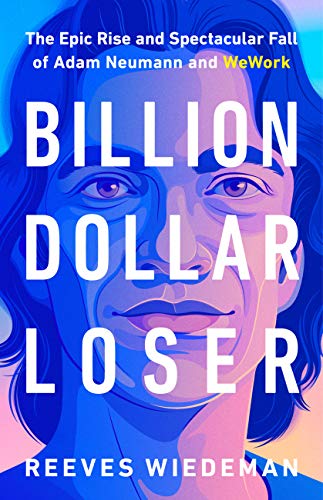
Book Review: “Billion Dollar Loser – The Epic Rise and SPectacular Fall of Adam Neumann and WeWork”

billion

As my long term readers know, I love books about failed companies and WeWork is clearly one of the most spectacular failures in the recent times.

The book focuses initially mostly on the founder Adam Neumann, who grew up in Israel and didn’t achieve much there before going to the US. There he started a first business trying to sell baby clothing which was not too successful. He then met his co-founder Miguel McKelvey in the elevator of the building where both were working. Co-founder Miguel was intrigued by the fact that Neumann used to walk around barefoot and talked to everyone.

Read more

Some links

Prof. Damodaran tries to value AirBnB plus a very nice write-up on Booking.com vs. AirBnB

A sceptical look at the S-1 of DoorDash

A long and interesting look behind the scenes of Short sellers and their financial backers

The 30 best performing US stocks of the past 30 years

Great write up on Greek Yoghurt company Kri Kri from Smallcapseurope

Paul Graham (YCombinator) essay on how to be successful in YC interviews and how founders become billionaires

The WSJ estimates that 19-36% of business trips will be “Lost forever”


All German Shares Part 35 – Nr. 776-800

Finally !!! This post will cover the remainder of the German stock universe. These remaining “newish” companies only yielded two watch list candidates Overall, I need now to slim down the watch list significantly to maybe 25-30 companies that I want to keep on my radar screen, but that will take some time.

As for the next country series (as time allows): My next target will be Switzerland. First, it is a smaller market with only around 240 local stocks according to the SIX, Secondly, I have currently  3 Swiss stocks in my portfolio (Zur Rose, Richemont, Dufry), so I have some hope that there are more interesting stocks on the Swiss market.

So enjoy the last batch of German stocks !!!!

776. Centogene AG

Centogene is a “rare disease” reseacrh company that seems to be a mixture of German/Dutch locations. The company went public on the Nasdaq in November 2019 at USD 14/ Share but lost around -30% since then. The market cap seems to be around 250 mn USD. Unfortunately not my area of competence, “pass”.

777. Cyan AG

Read more

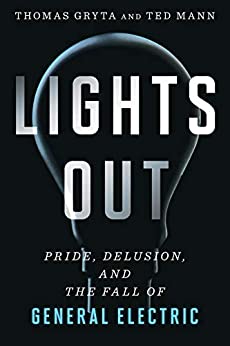
Book review: “Lights Out: Pride, Delusion, and the Fall of General Electric”

Lights GE

“Lights out” is a recently published book that covers the downfall of General Electric, which was in 2000 the world’s most valuable company with a market cap north of 500 bn USD and a proud history going back to Thomas Edison.

To the outside, the company led by “Neutron Jack” Welch looked unstoppable. With its famous management systems (Six Sigma and others) the company became a huge conglomerate, spanning business from their traditional light bulb and appliances business to turbines, financial, insurance and even TV and Movie studios. GE was most famous for continuous growth and an uninterrupted streak of quarterly profit increases until Jeffrey Immelt took over in 2001.

Read more

Some Links

Interesting post on the British Brewery stock bubble 1885-1913

Some deep thoughts on the impact of video conferencing (Zoom)  plus a very interesting feature about the founder and history of Zoom

A good pitch for Spotify and what an impact a Spotify playlist has on the music industry

Bill Gates looks back at his book “The road ahead” from 25 years ago

A critical (longread) view on the current status of the Venture Capital industry

How the COBOL programming language still rules in Financial Services

EV/TAM is the new benchmark for Electric Vehicle manufacturers (pre community expenses of course…)

Travel Series: AIrBnB – “Baller IPO” or Desperate Hail Mary (including a 3.5 bn USD accounting time bomb) ?

Intro

Long term readers know that I have covered the (online) travel industry intensively and that I actually have build up a “post pandemic travel basket” recently. Therefore, I was really excited to look at AirBnB’s S-1 going public filing.

Airbnb is one of the most prominent Unicorns of the last decade. The company was founded in 2007 and has since then become one of the really big names in online travel. It describes itself as having established a new category of travel called “home sharing” and that all the hosts on the platform as well as the clients are a big “community” that make travel “Human”.

However the big “elephant in the room” is the question: Why do they go public now after 13 years ? Why didn’t they go public earlier or wait a few more months once the travel recovery really kicks in ?

There was already a lot of press coverage already for Airbnb in the past weeks. I think in general one could distinguish between the Bull Case and the Bear Case:

The Bull case :

  • It’s a “positive” global brand with strong growth potential and a huge TAM (all travel lodging globally ) 
  • People will rent apartments first if travel rebounds 
  • Restrictions maybe less a problem in cities after Covid-19

One of the biggest cheerleaders of the Bull case is clearly Prof. Scott Galloway who wrote a big post some days ago, putting the value of AirBnB at 120 bn USD with the following statement:

Read more

« Older Entries Recent Entries »