Rubis SCA: Interesting French listed Special Situation with a Corporate Restructuring catalyst
DISCLAIMER: This is not investment advice. PLEASE DO YOUR OWN RESEARCH !!!!
Management Summary:
Rubis, the French listed Fuel distribution company, represents a potentially interesting Special Situation investment, despite (or because of) the current negative sentiment towards French stocks.
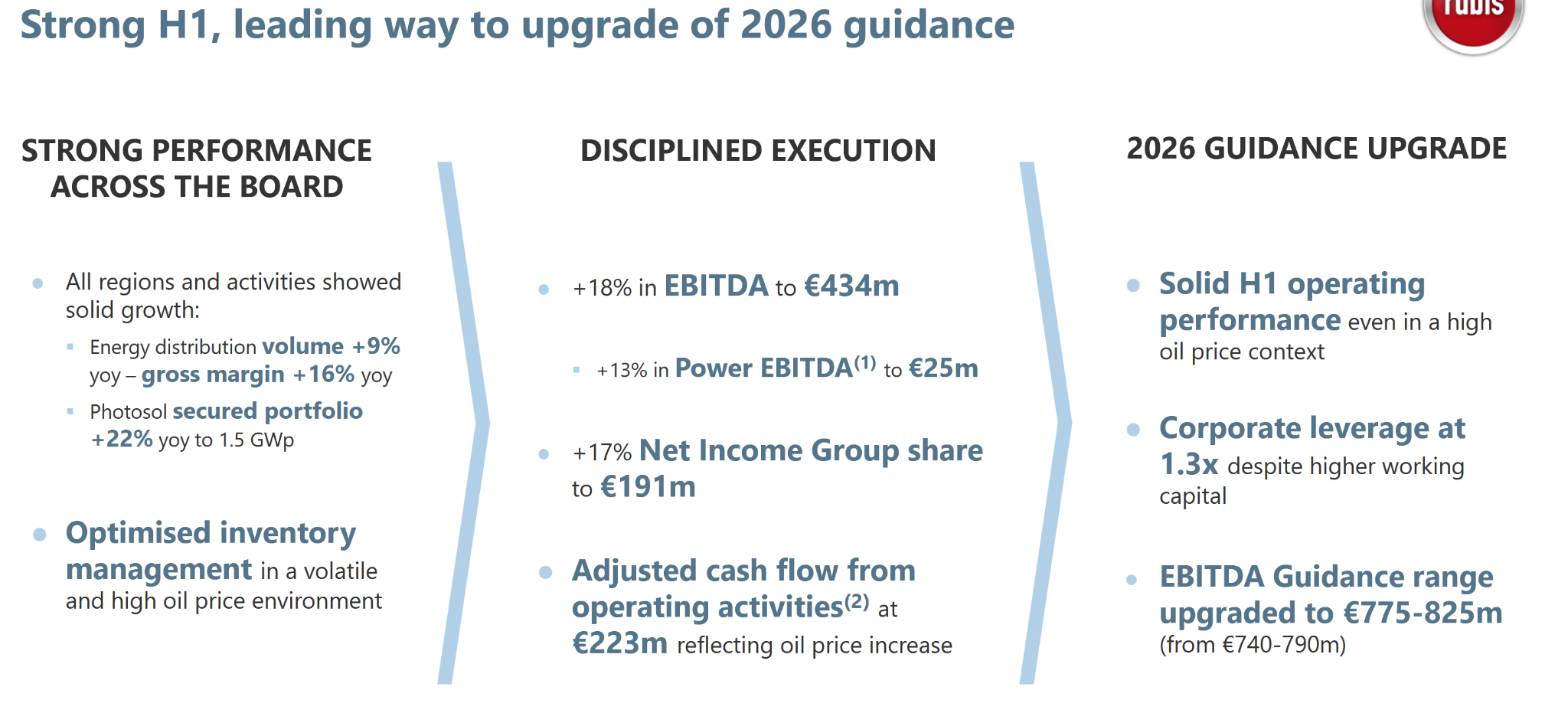
On the back of strong earnings momentum (6M earnings +18%), Rubis has almost no exposure to France and has recently announced to undergo a structural transformation from a disadvantageous SCA structure (similar to a German KGaA) to an ordinary stock corporation.
For normal shareholders, this is hugely positive despite a planned compensation for the former controlling shareholders. In addition, this opens up M&A opportunities which had been rumoured about for some time.
The share price so far has not reacted, most likely because of the perceived problems in France which in my opinion creates an opportunity for the opportunistic investor. The time that will be required until a potential M&A transaction will occur, will be nicely compensated through a 6% dividend yield.
Rubis Background
Historically speaking, Rubis is a rather young company, having been founded only in 1990 by a gentlemen called Gilles Gobin and then grew rapidly through many acquisitions, often buying small subsidiaries of large international energy companies.
Rubis is a company that I came across several times in the past. It has a very interesting mix of businesses and geographies, but due to corporate structure issues (SCA, more similar to a GP/LP structure than a normal stock corporation) I never considered investing.
Effectively, the heirs of the founder through a 2,3% share holding were controlling the board and on top of that was able to charge a significant royalty on Rubis’ profit (in 2025 this was approx. 30 mn or 10% of Rubis net profit). The formula seems to give them a percentage of the annual share price increase but capped at 10% of the net income.
At the time of writing, Rubis is valued at around 3,6 bn market cap and trades at a relatively modest ~10,7 x NTM P/E which is clearly impacted by this unusual arrangement:
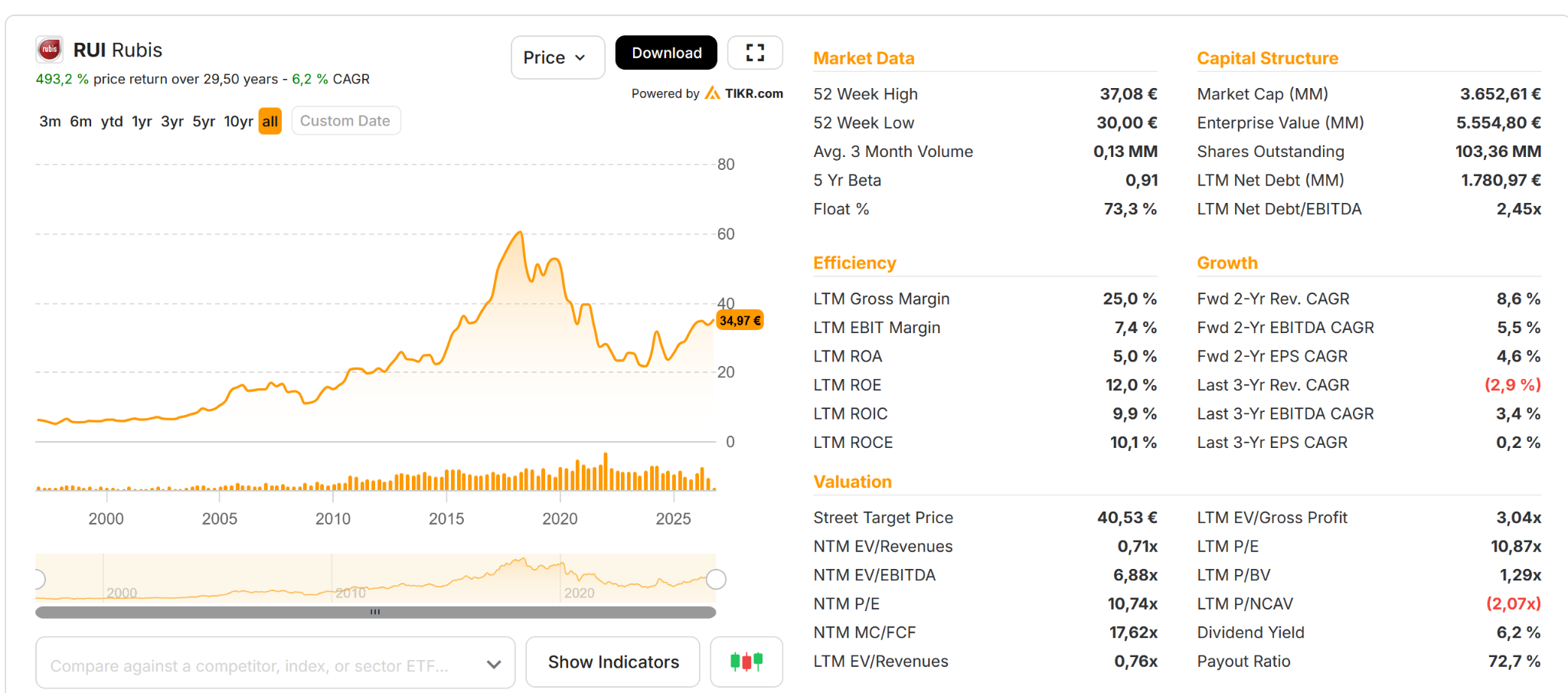
Looking at the long term chart, Rubis shareholders have done Ok including the dividend but the share price is significantly below the peak of around 60 EUR from 2018.
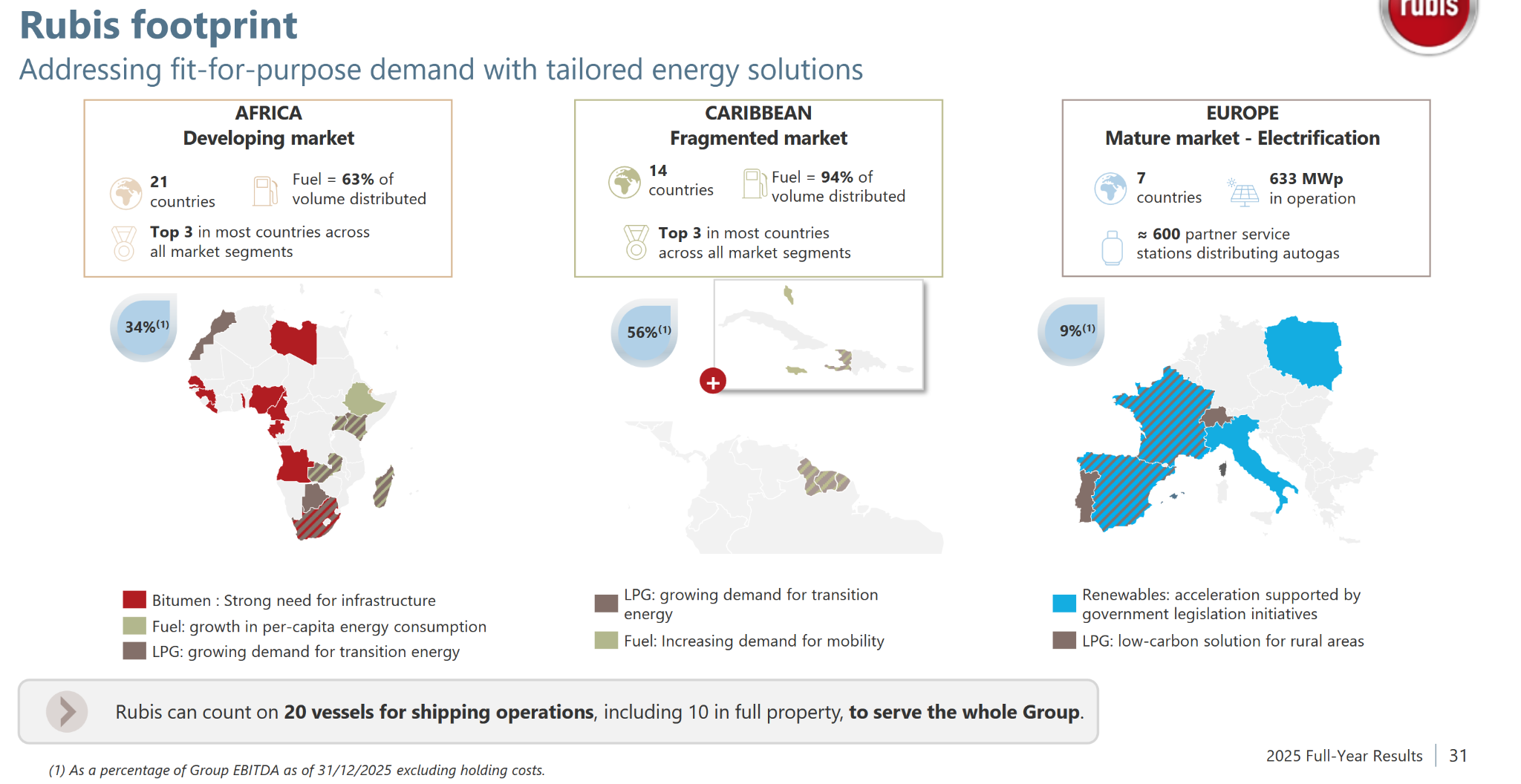
Rubis is French listed but has very little exposure to France
As there is “blood in the streets in Paris”, it is worth mentioning that Rubis sales have a pretty unique breakdown:
~50% of sales are in Africa
~40% in the Carribean
~0nly around 10% in Europe
The business as such is a mixture of fuel and LPG distribution, Renewable Energy and interestingly Bitumen distribution. Bitumen is a byproduct from refining oil and is used among others to create asphalt by mixing bitumen with sand and stones.
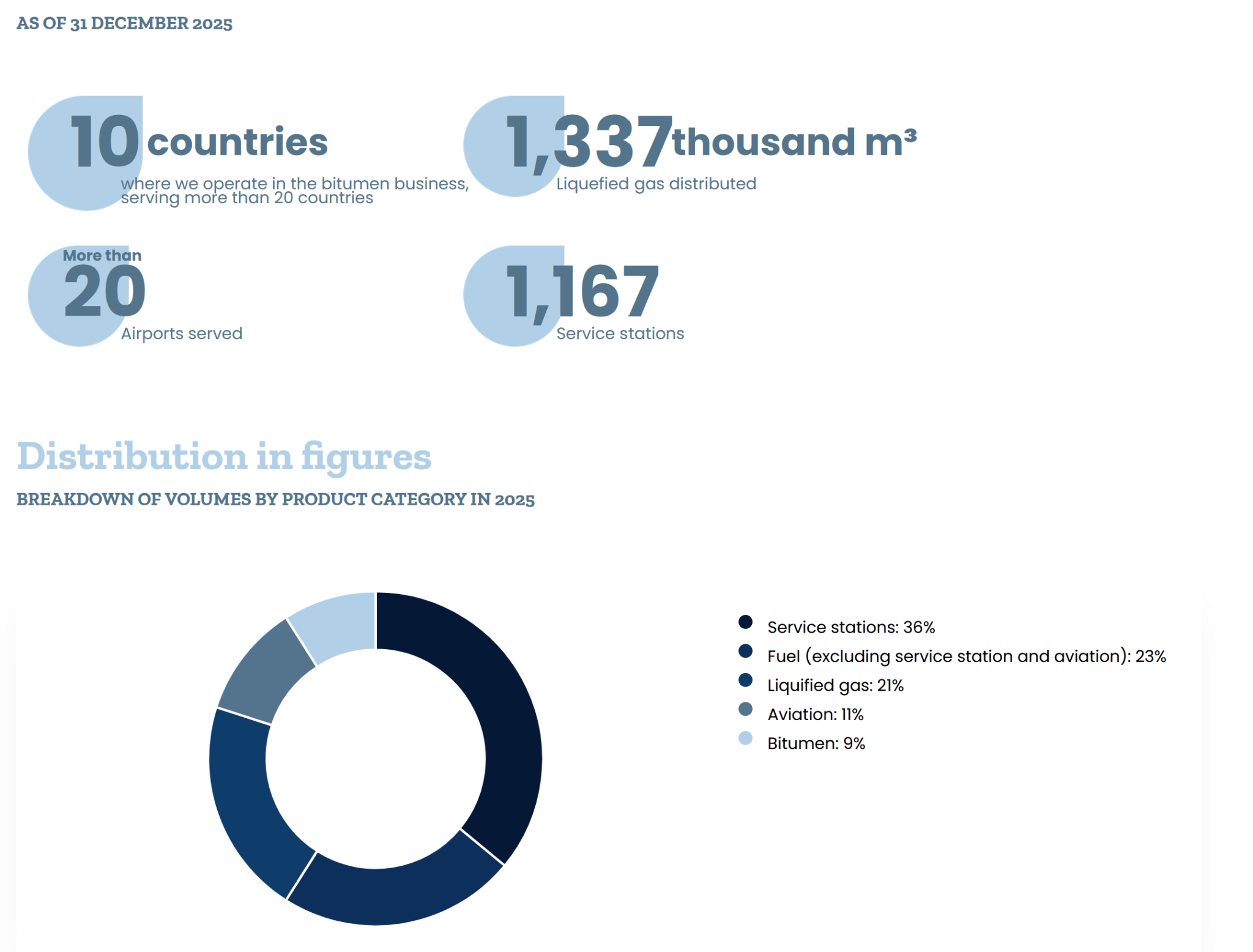
Rubis is the biggest Fuel distributor in Kenya which according to some sources is their biggest single market. This is a split of the fuel distribution business from their website:
This chart from the 2025 annual results nicely shows the extremely unique geographical footprint of RUBIS:
The Renewables Energy business is a result of the 2022 acquisition of a French Renewables company called Photosol, which was widely criticized as too expensive.
Rubis also owned a terminal business, but sold that in 2024 to JV Partner and Infrastructure fund I Squared capital.
So in a nutshell, Rubis is not impacted much by the current situation in France.
Financing wise, they seem to have restructured their debt financing “just in time” in late 2025 with a syndicated loans facility that seems to have a 5 year term.
As the business is very cash generative, it looks like that they are also not affected by the recent widening of French spreads as they don’t have to issue debt for the next few years.
The catalyst: Corporate structure change
Now however, things seem to change and quite quickly: Rubis intends to become a “normal” company, most likely under the pressure of some prominent investors, such as the Bollore Group. My friend Graouilly has written about it here.
From a technical perspective, the former “GP” will receive an extra 12% of newly issued shares as compensation for giving up his special rights that included a royalty on Rubis’ net profit.
Rubis has scheduled an extraordinary shareholder meeting for December 9th where these changes including the capital increase shall be approved.
There seems to be some resistance among the larger shareholders that the compensation is too generous, but any lower compensation amount will be a positive for shareholders.
Share price:
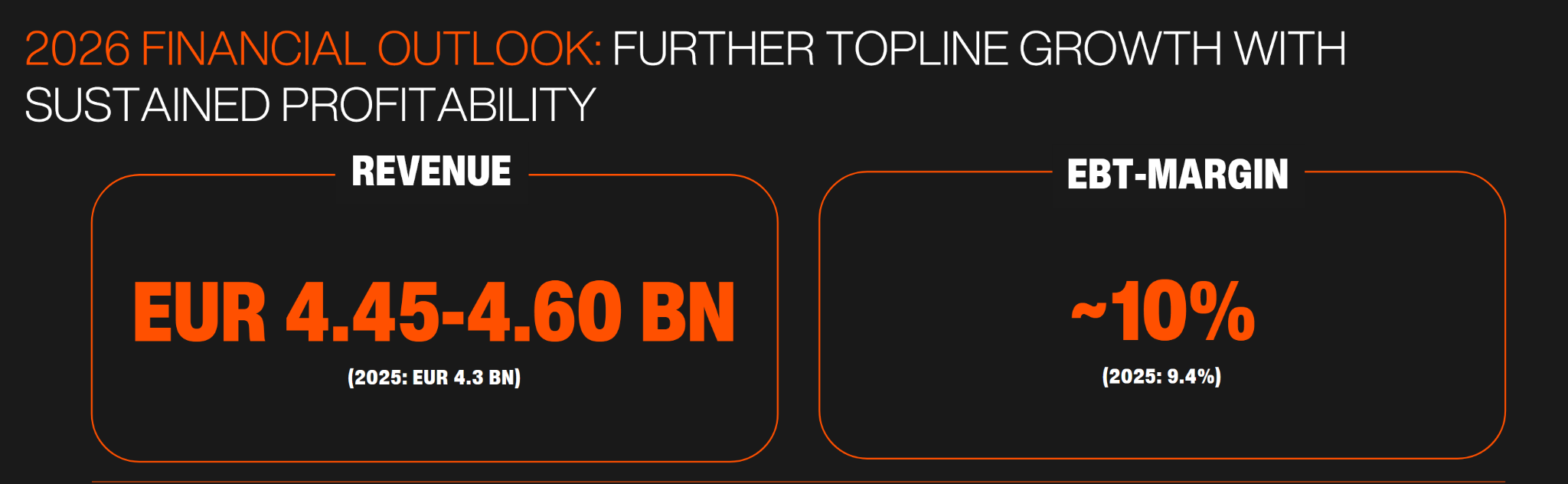
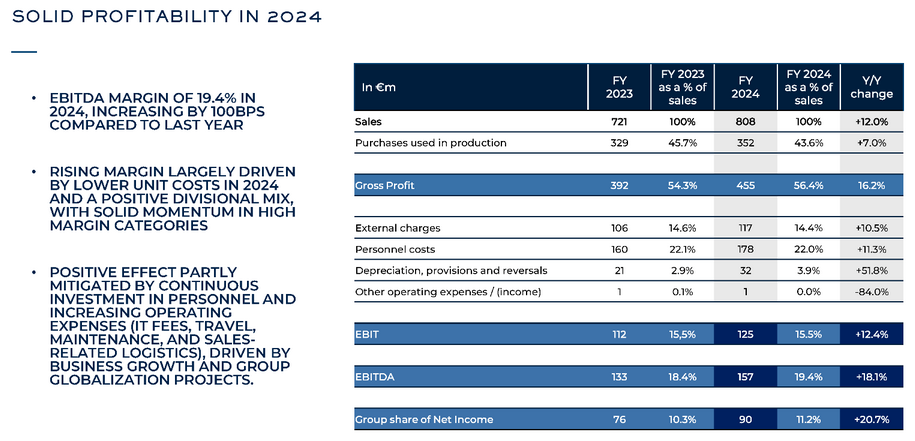
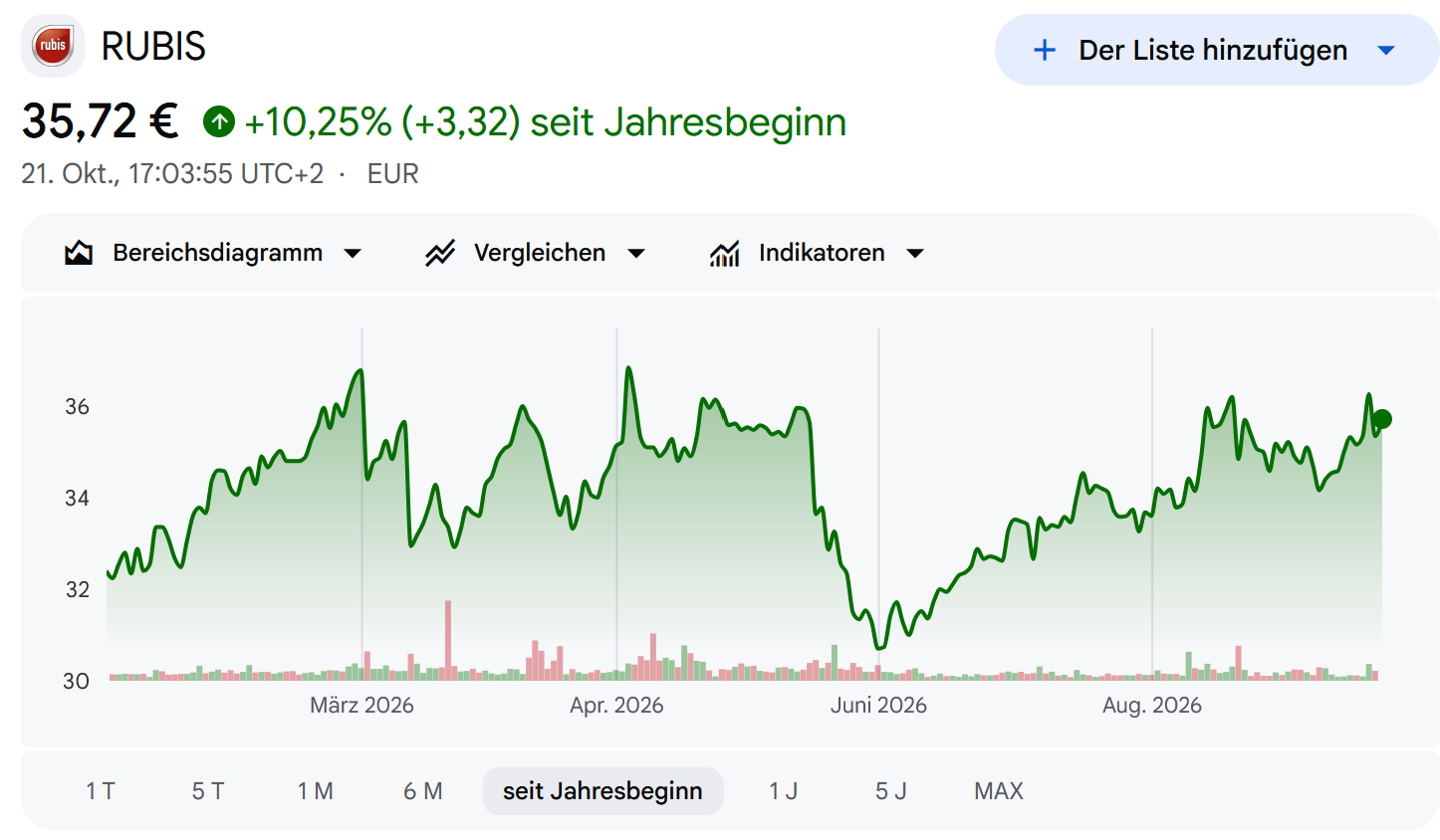
Looking at the share price, we can see that Rubis is up ~11% YTD, which is in line with earnings growth that had been +18% for the first 6 months:
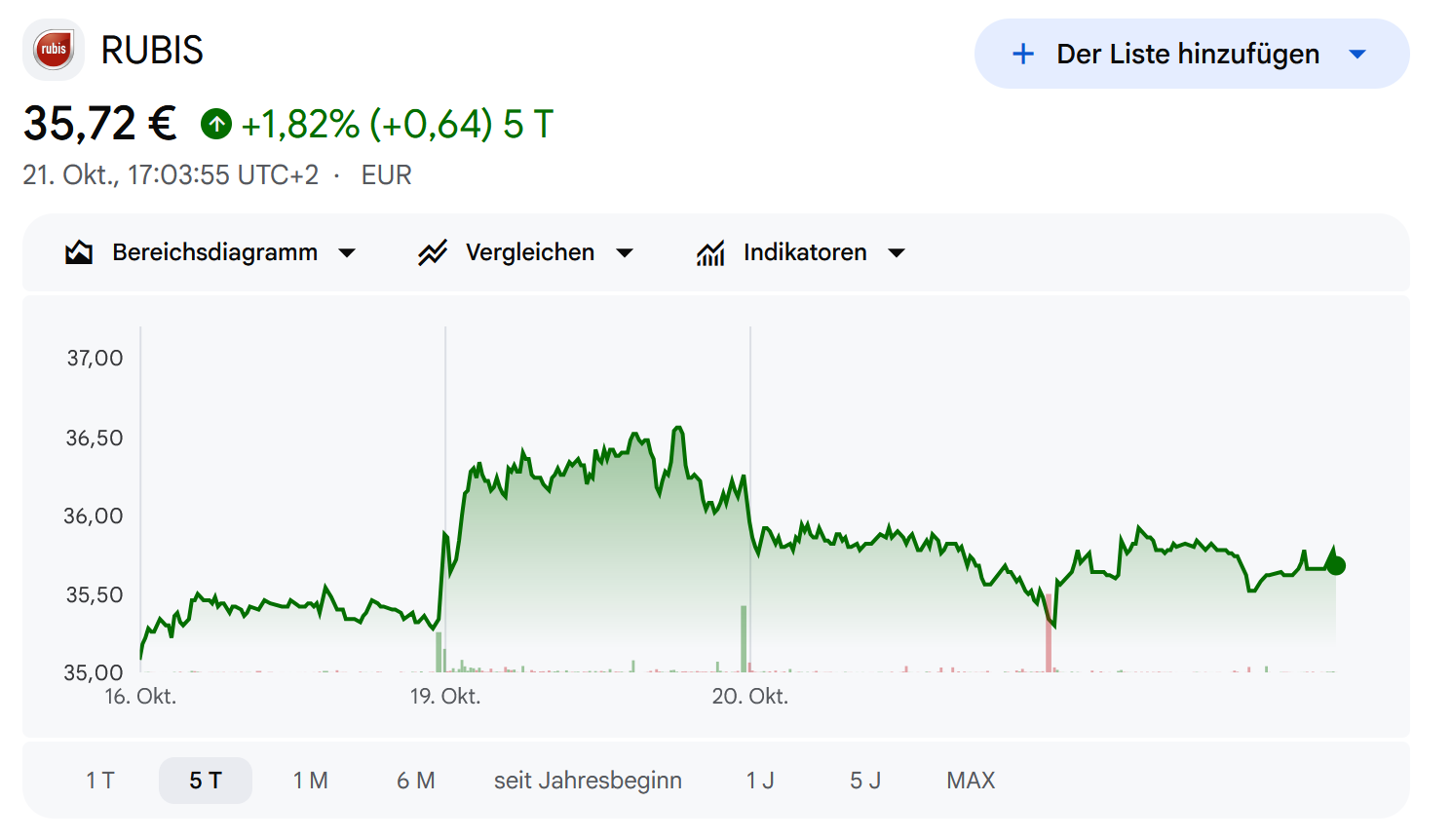
What I find interesting is that the share price didn’t react a lot on Monday’s surprise announcement, although all in all, this is quite positive for shareholders:
Similar cases in the past:
There was a very similar case in the past in France: Lagardere underwent the “same procedure”, also driven by behind the scenes activism from Boloré. The GP in that case got compensate by a share capital increase of ~8% but the shares jumped 10-15% after the announcement.
Subsequently, Lagardere was taken over by Vivendi by Vivendi and Lagardere Shareholders did quite well.
A somehow similar case was Fresenius Medical Care, where Fresenius transformed FMC from a KGaA to a normal AG because they wanted to deconsolidate FMC and FMC subsequently performed quite well.
One can only speculate why Rubis didn’t move at all, but my guess is that the current riots in France and general Caution with regard to French stocks clearly plays a role here.
Good earnings momentum
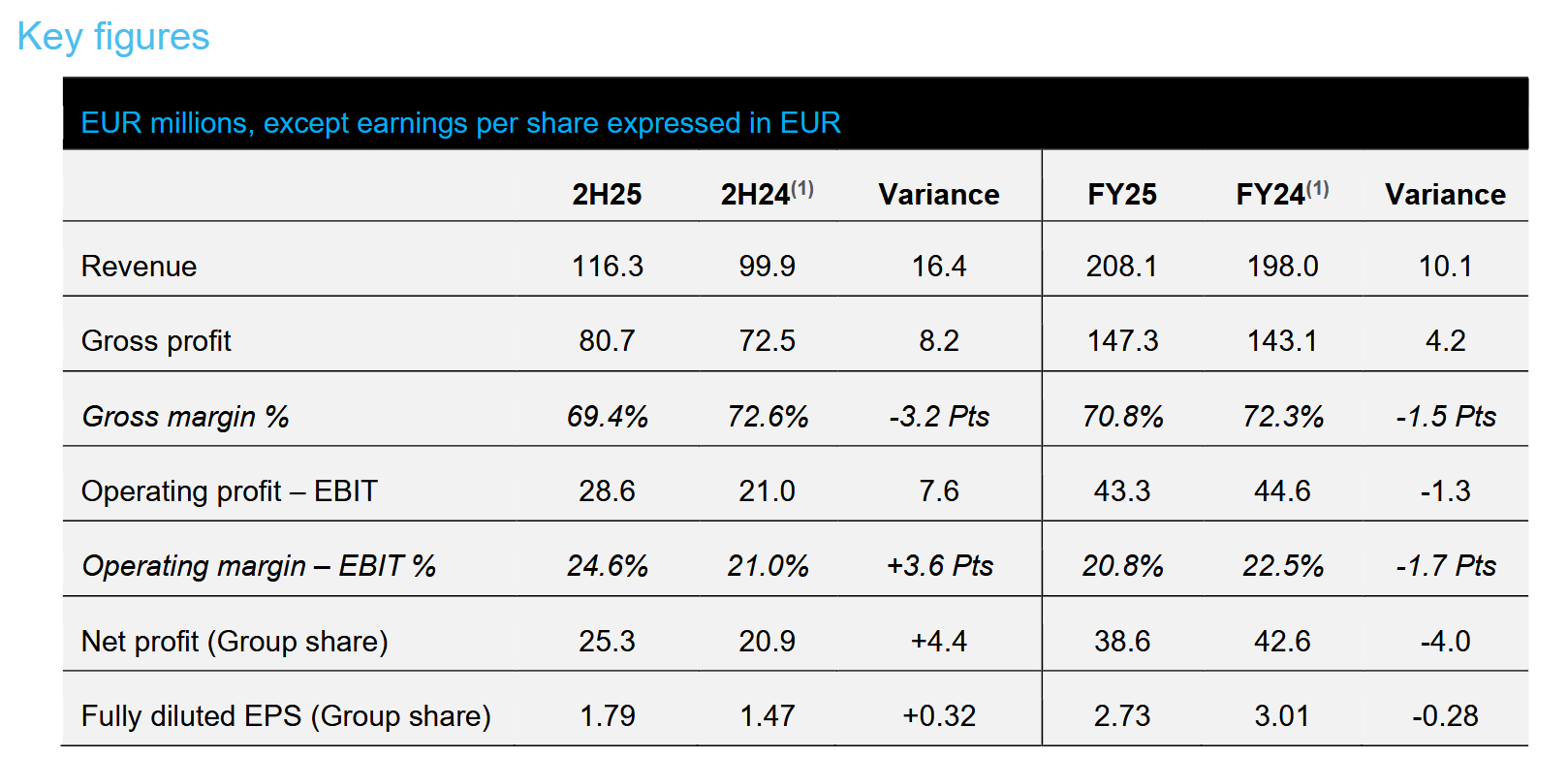
Higher fuel prices are almost always good news for distributors and Rubis is no exception here. After decent Q1, 6M numbers looked really good an dthe increased their guidance for 2026 significantly:
Investor base
Over the past few years, some prominent investors have disclosed stakes in Rubis:
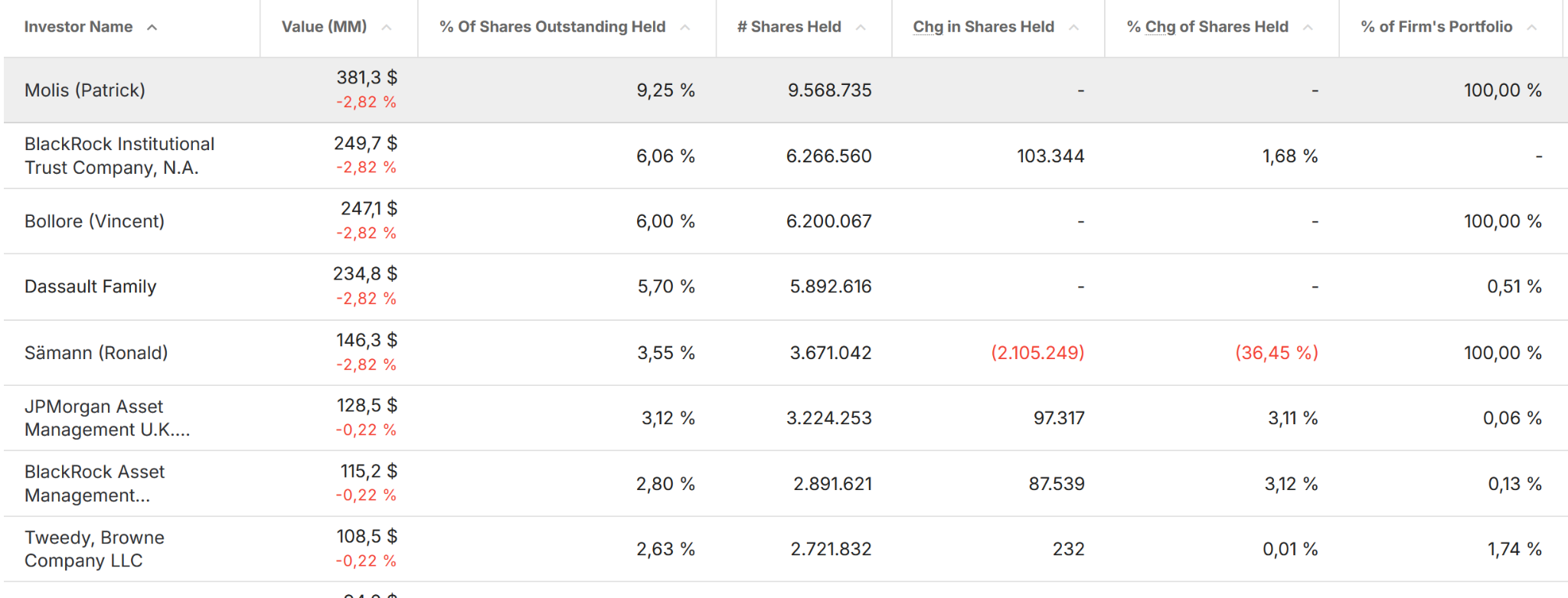
The largest shareholder, Patrick Molis is a French Business man active in logistics who started a first position in 2023/2024. He had been openly activist in the company for some time, demanding among other things a complete overhaul of the board.
At the same time, Vincent Boloré disclosed a 6% stake. Boloré is especially experienced in African businesses. He also seemed to have been involved in Rubis in the 1990ies and seems to know Molis from a couple of previous interactions.
The billionaire Dassault family seems to own its stake already a little bit longer since 2017 or 2018. I didn’t find a lot about Ronald Sämann but he also seems on board since 2023/2024 and was actually part of the supervisory board until early this year.
Graoully has some more information on this eclectic group of shareholders in his post.
In any case, I assume that those shareholders will most likely not just sit around and be happy to collect dividends but they will continue to press for change and even more so once the structure is cleaned up.
What would a PE buyer do with Rubis
Already in September last year, there were relatively specific rumours that PE firm CVC and energy trader Trafigura were interested in taking over the company.
As we have seen with my previous portfolio company DCC, especially LPG and fuel distribution are highly attractive businesses for PE companies as these businesses are stable, can be leveraged and there is still ample room for consolidation.
In Rubis’ case, those two businesses would be clearly the main targets. The Renewable business would most likely be sold to a more specialised renewable fund or energy company, although right now, there are quite some renewable assets on the market.
That leaves us with the Bitumen business for which the natural buyers would most likely be competitors like Colas or the Swedish guys
My “sum of parts” estimate for such a scenario would be at least 50 EUR per share based on recent transaction multiples including DCC. Although one has to mention that Rubis’ geographic footprint makes this analysis a little bit more difficult. For those more exotiv locations, the number of buyers is clearly smaller, however potential growth in these countries is also much higher than in saturated markets.
A quick win of any “activist” would in my opinion be to spin off the renewables business and leave the Fuel and bitumen business together which would be a veritable cash machine. This could also lead to a decent rerating of the stock.
Return expectations
Other than a direct M&A “arbitrage” situation, the current situation at Rubis is a little bit more fluent.
My base case looks as follows: I look at a time horizon of 18-24 months. Within this time horizon I expect to:
- receive 2 dividends of ~6% each
- expect that the stock will reflect the structural improvement after the AGM has approved the change in december which should lift the stock price between 10-20% (average based on similar situations in the past)
- expect at least some discussions about potential bids from either strategic players (maybe Boloré himself) or Private Equity)
My estimate for a Pivate Equity “take out value” would be around 45-50 EUR per share.
So my overall return expectation for Rubis, including dividend would be in the range of +30% to +40% in the base case including dividends.
The bull case would be a little bit higher, the bear case would be the dividend yield only.
Pro’s & Cons
So let’s summarize the Pros and Cons for this special situation quickly:
- Operational tailwind with 18% profit increase in the first 6M 2026
- Clear catalyst with structural change but so far not priced in at all
- Stock is relatively cheap and offers an attractive dividend yield of 6%
- After the restructuring, high likelihood of “value accretive” M&A activities due to the presence of strong activist investors and already existing interest
- almost no exposure to French economy as such and French bond spreads
+/- in general negative sentiment towards French stocks which limits short term upside
- exposure to FX fluctuations and Hyperinflationary jurisdictions
- PV assets are maybe not so easy to sell at a good price right now
- some residual risk that the restructuring will not happen or be delayed because of the amount of the proposed compensation
Summary & game plan
Overall, I find the set-up quite interesting as an “early stage” special situation, despite the exotic geographical footprint of Rubis.
The relevant dates are as follows:
From an operational perspective, Rubis will announce a Q3 trading update on November 3rd. I assume that this trading update will confirm the positive trajectory of the business. The upside case would be a further upwards revision of the expected 2026 profit.
The most important step will be clearly the formal approval of the restructuring in the special AGM on December 9th. Maybe this triggers some revaluation already, especially if maybe the compensation for the former “GPs” can be reduced a little bit.
I would then expect over the course of 2027 that we see more discussions on how to “catalyze” the value of Rubis. Either through renewed negotiations with CVC and Trafigura or some other actions.
My “long stop” date for this will be Mid 2028. If nothing happens until then, I will get out in any case.
Overall, I find this set-up attractive enough to allocate a 2,5% position of the portfolio into Rubis at the current price of ~35,50 EUR per share.
I partially financed the position with further sales of STEF, which has much more exposure to France, high French interest spreads and high fuel costs.