This is the follow up post on my first post where I compared Handelsbanken to Deutsche Bank.

Whenever I start to look at a company more seriously, I do a quick Pro/con list, starting with the Cons first in order to cool down my desire to quickly buy a stock:
Cons:
1. It’s a bank
2. Avg P/E over the last 15 years has been ~11 compared to 17 now (so historically expensive)
3. current P/B at 2,0 is higher than 15 Year average (1,7)
4. current price/tangible book at 2,2 vs. 15 year average at 1,95
5. Almost 100% more expensive (P/B) than most European banks
6. high exposure to potentially “frothy” Nordic real estate markets
7. significant amount of capital market funding (deposit to loan ratio clearly below 0)
8. past performance also due to "Luck" of not being active in Southern Europe, many Nordic banks look good, especially Swedish banks
9. threat of continued technological change (online banking, peer-to-peer lending, etc.)
10. analysts are extremely negative, significantly below all peers (on Bloomberg, from 33 analysts, only 1 has a buy, 16 holds, 16 sells). Handelsbanken is Number 600 of analyst consensus in the Stoxx 600.
11. we are current in a frothy stock market environment and the stock chart looks aggressive
Let’s look into more detail into these issues.
Re 1: It’s a bank
Many value investors stay away from banks, mostly due to the 2008/2009 crisis where former highly regarded banks (Lehman, Bear Stearns;WaMu, Countrywide) basically disappeared over night. On the other hand, Warren Buffett’s single biggest stock investment is a bank, Wells Fargo at around 27 bn USD for their ~10% plus stake.

One of the great things about Buffett is that he usually explains what he does. Wells Fargo is not different. He actually explains it in his 1990 annual report.
He starts explaining why they don’t like banks in general:
The banking business is no favorite of ours. When assets are twenty times equity – a common ratio in this industry – mistakes that involve only a small portion of assets can destroy a major portion of equity. And mistakes have been the rule rather than the exception at many major banks. Most have resulted from a managerial failing that we described last year when discussing the “institutional imperative:” the tendency of executives to mindlessly imitate the behavior of their peers, no matter how foolish it may be to do so. In their lending, many bankers played follow-the-leader with lemming-like zeal; now they are experiencing a lemming-like fate.
Because leverage of 20:1 magnifies the effects of managerial strengths and weaknesses, we have no interest in purchasing shares of a poorly managed bank at a “cheap” price. Instead, our only interest is in buying into well-managed banks at fair prices.
So this is pretty clear statement from Buffett: If you buy a bank, buy a good one.
Let’s look at the next paragraph:
With Wells Fargo, we think we have obtained the best managers in the business, Carl Reichardt and Paul Hazen. In many ways the combination of Carl and Paul reminds me of another – Tom Murphy and Dan Burke at Capital Cities/ABC. First, each pair is stronger than the sum of its parts because each partner understands, trusts and admires the other. Second, both managerial teams pay able people well, but abhor having a bigger head count than is needed. Third, both attack costs as vigorously when profits are at record levels as when they are under pressure. Finally, both stick with what they understand and let their abilities, not their egos, determine what they attempt. (Thomas J. Watson Sr. of IBM followed the same rule: “I’m no genius,” he said. “I’m smart in spots – but I stay around those spots.”)
He clearly invested in the people running the bank. That somehow contradicts other statements from him where he claims only to invest in businesses which could be run by idiots. Anyway, the second learning is: Buy good banks with good management..
Let’s look next, why and when he bought:
Our purchases of Wells Fargo in 1990 were helped by a chaotic market in bank stocks. The disarray was appropriate: Month by month the foolish loan decisions of once well-regarded banks were put on public display. As one huge loss after another was unveiled – often on the heels of managerial assurances that all was well – investors understandably concluded that no bank’s numbers were to be trusted. Aided by their flight from bank stocks, we purchased our 10% interest in Wells Fargo for $290 million, less than five times after-tax earnings, and less than three times pre-tax earnings.
As we have seen the 2008/2009 financial crisis, Buffett seems to like buying banks especially in crisis situations where they sell really really cheap. This somehow also contradicts the first paragraph. Clearly Buffett prefers to buy cheap if he has the chance.
In the following part, we can clearly see how far Buffett’s thinking went those days:
Of course, ownership of a bank – or about any other business – is far from riskless. California banks face the specific risk of a major earthquake, which might wreak enough havoc on borrowers to in turn destroy the banks lending to them. A second risk is systemic – the possibility of a business contraction or financial panic so severe that it would endanger almost every highly leveraged institution, no matter how intelligently run. Finally, the market’s major fear of the moment is that West Coast real estate values will tumble because of overbuilding and deliver huge losses to banks that have financed the expansion. Because it is a leading real estate lender, Wells Fargo is thought to be particularly vulnerable.
Interestingly, real estate prices look expensive in 1990, even before the big 20 year boom. He then gives us a hint how he actually puts numbers on risk:
Consider some mathematics: Wells Fargo currently earns well over $1 billion pre-tax annually after expensing more than $300 million for loan losses. If 10% of all $48 billion of the bank’s loans – not just its real estate loans – were hit by problems in 1991, and these produced losses (including foregone interest) averaging 30% of principal, the company would roughly break even.
In any case this did not deter him from buying Wells Fargo and they have been a great investment for him. Just for fun, I checked out the performance of Wells Fargo since 01.01.1990. Including dividends, Wells fargo made 15,6% p.a. since then, that is even 2% p.a. better than Berkshire returned for its shareholders in the same time period !!!!
Re 2: Avg P/E over the last 15 years has been ~11 compared to 17 now (so historically expensive)
This is clearly an issue. As we have seen above, buying banks at distressed prices is much more fun. One counter argument is that current margins at Handelsbanken are also below their historical means. If you assume mean reversion for instance to the 10 year average net income margin, than this would lead to an overall average valuation level. So no reason to worry here but it is clearly not a bargain either. On the other hand, Wells fargo for instance would have been a great investment for Buffett in any case as long-term for such a great company the entrance point has less relevance.
Re 3. current P/B at 2,0 is higher than 15 Year average (1,7)
Re 4. current price/tangible book at 2,2 vs. 15 year average at 1,95
Similar to 2, both measures look expensive compared to the past. “Normalized” the look better but clearly not a bargain.
Re 5. Almost 100% more expensive (P/B) than most European banks
This doesn’t worry me much. As Buffett mentioned, you should buy “good banks” not weak banks below book value.
Re 6. high exposure to potentially “frothy” Nordic real estate markets
Here we can use Buffett’s sample calculation:
At the end of 2014, Svenska had around 1.114.000 mn SEK property loans. If we assume 10% of them defaulting with a loss of 30%, we would end up with an expected loss of ~ 33.000 mn SEK. Compared to the net income of 15.000 SEK for Handelsbanken in 2014, this would mean a loss 2 times their annual profit. Not as comfortable as Wells Fargo back then, but US Banks in general have higher margins. On the other hand, there are no “no recourse” loans in Scandinavia, so one could assume that the stress scenario might be lower.
Re 7. significant amount of capital market funding (deposit to loan ratio clearly below 0)
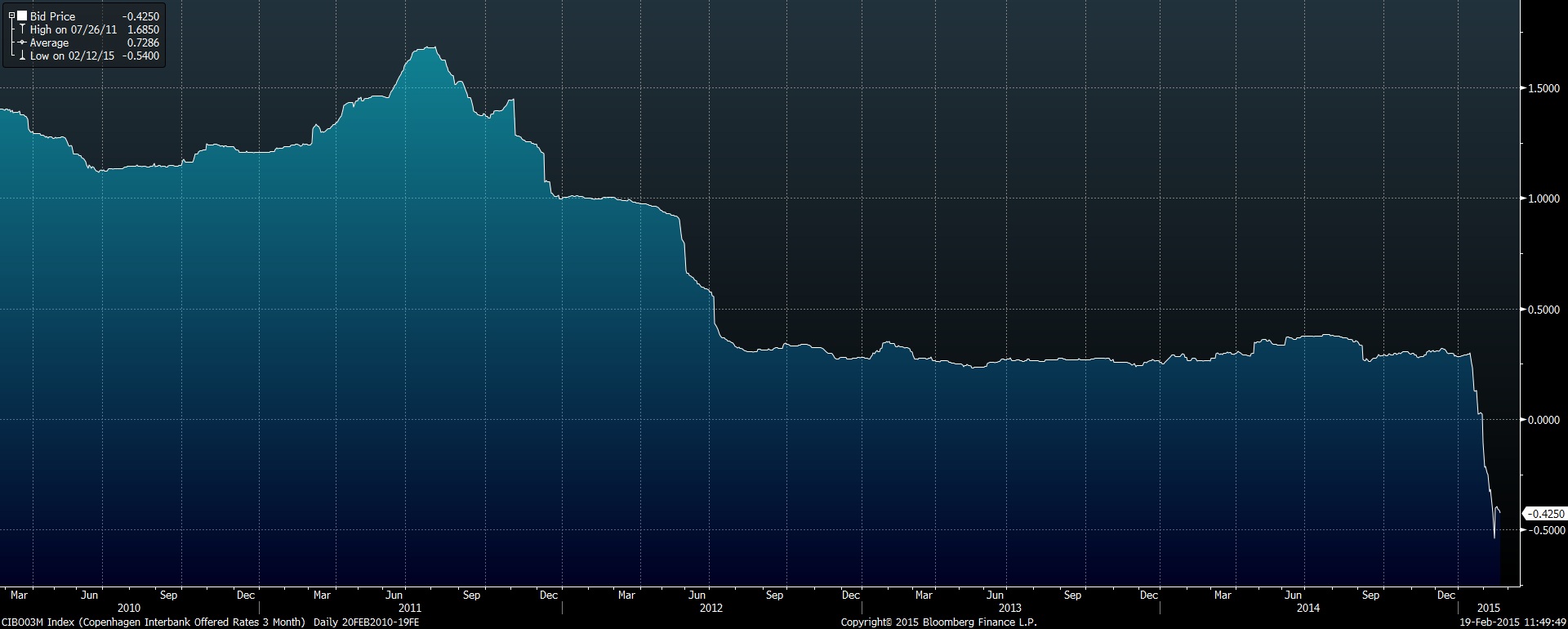
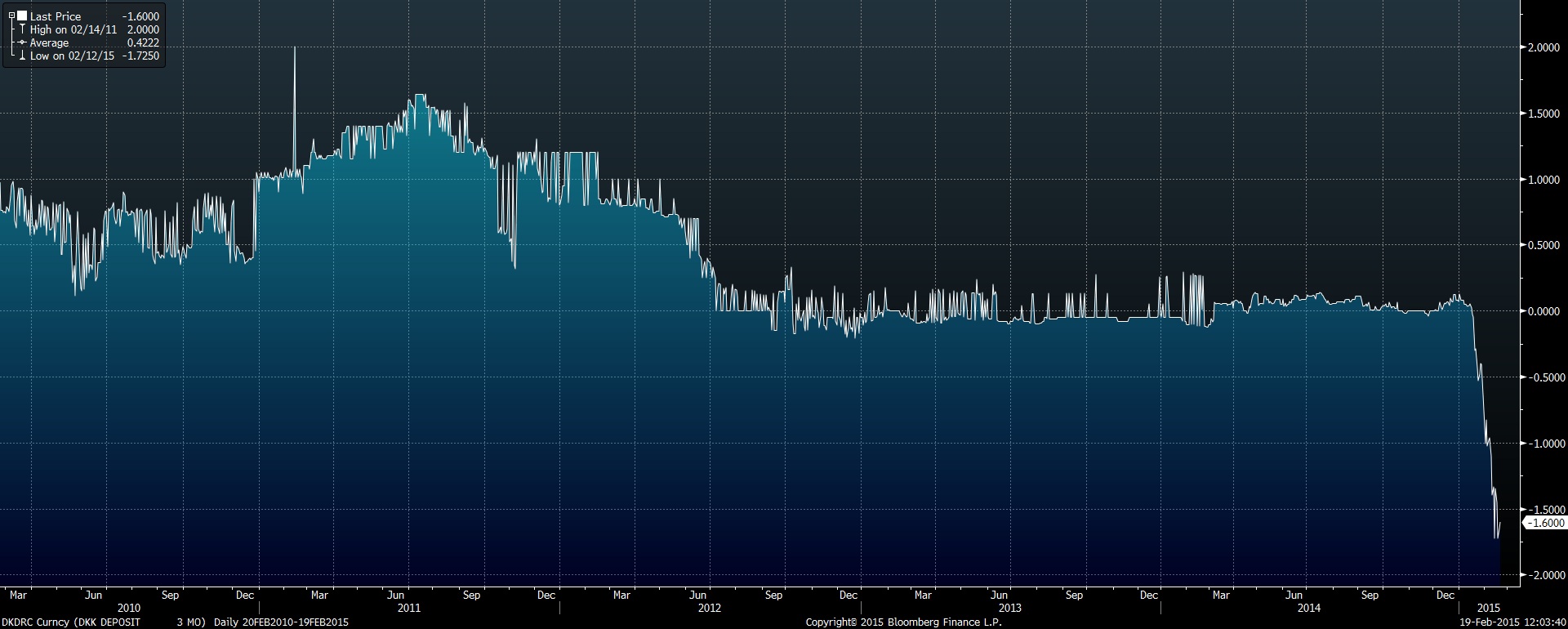
The dependence on capital market funding was the major problem for banks in the 2007/2008 crisis. Now however, the situation has turned. With negative rates, many deposit rich banks have huge problems because you can’t really charge your retail customers for deposits (yet) but you “earn” negative rates on excess deposits. For Handelsbanken, this is much easier because they don’t have a lot of excess cash on the balance sheet. So in the current environment, this is actually an advantage.
Ee 8. past performance also due to "Luck" of not being active in Southern Europe, many Nordic banks look good, especially Swedish banks
That is absolutely true, however Handelsbanken long-term ROEs etc. are the best even within this Group.
Re 9. threat of continued technological change (online banking, peer-to-peer lending, etc.)
This is a very interesting aspect. Many banks here in Germany are closing branch after branch, whereas Handelsbanken aggressively expands by opening new branches. Their focus on branch banking is clearly counter cyclical and I am not sure how this will work out long-term. I do think that there will be continued demand for “In person” bank services but I have no idea to what extend.
Re 10. analysts are extremely negative, significantly below all peers (on Bloomberg, from 33 analysts, only 1 has a buy, 16 holds, 16 sells). Handelsbanken is Number 600 of analyst consensus in the Stoxx 600.
This is actually a big plus from my side. I own other stocks (Admiral, TGS) which score equally poorly in analyst’s ratings. In my personal opinion, analysts mostly run their ratings on a top down approach. They start with the sector and if they don’t like the sector, most companies within that sector will get bad ratings. Very often in a next step they then rank companies badly which look “expensive” compared to similar companies. They almost never look a more specific aspects. A relatively expensive company like Admiral in a tough sector will get a bad rating, non withstanding any long-term significant competitive advantages etc.
For me, badly rated companies in tough industries but with long-term competitive advantages are one of the few corners of the markets where I can find value. So this would be a clear plus for Handelsbanken as a potential investment.
Re 11. we are current in a frothy stock market environment and the stock chart looks aggressive
Looking at the chart, it is quite interesting how the stock price accelerated despite the bad analyst ratings:

looking at the shareholders list one can see that US funds seem to like the stock and buy into it, especially Capital Group, T. Rowe Price and others. Skandinavian funds rather seem to be more cautious. Personally, I am also hesitant buying into such a chart, but int theory one should better ignore it as this could be very similar to “Anchoring” a very common behavioural bias.
Summary:
Looking at the “Cons” which I have identified int he first step, I don’t see a deal breaker against investing. However, the current price level is rather “fair” than cheap. This could be justified if there would be a clear upside with regard to growth and/or growing profitability.
As the post got quite long already, I will look into the upside potential in a separate post which should hopefully follow soon.






 value and opportunity