Some links
Muddy Waters is short Stroeer .
Stroeer fights back. I guess more is to come.
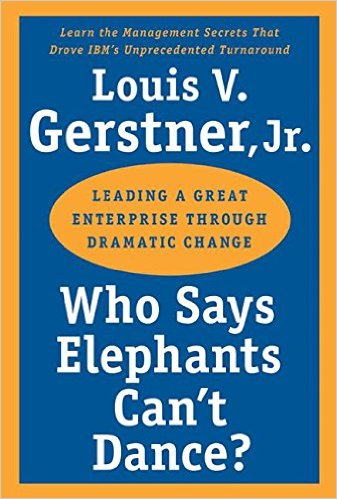
How IBM created its moat (Farnam Street blog)
Short presentation from David Sokol (via ValueinvestingWorld)
Why luck matters in life (The Atlantic)
Muddy Waters is short Stroeer .
Stroeer fights back. I guess more is to come.
How IBM created its moat (Farnam Street blog)
Short presentation from David Sokol (via ValueinvestingWorld)
Why luck matters in life (The Atlantic)
In July last year I introduced Pfandbriefbank as a “forced IPO” special situation. That’s what I wrote at the end of the post:
As I have said in the beginning, PBB is a simple case: I do think that the “forced IPO” of PBB from the German Government has created a typical special situation with good upside potential. This is clearly no “shooting out the lights” grand slam home run. In golf terms I would say that this is a “solid 6 or 7 iron” shot.
Looking at the perfomance of the stock since then, it looks like in Golf language that my “solid 6 or 7 iron” nevertheless “landed in the rough” with the stock being down -23% vs. -9% in the CDAX.
Everyone who has read Thorndikes book “The Outsiders” clearly knows that capital allocation& capital management is one of the most important factors in creating long term shareholder value. After I watched Thorndike give a briliant talk at Google on this topic, I decided to write down my own thoughts on the topic.
What is CAPITAL ALLOCATION & CAPITAL MANAGEMENT anyway ?
CAPITAL ALLOCATION is simply what you do with your profits/cash inflows once they are in your account. You can do a lot of things with it. Thorndike in the talk above uses 5 uses, I would add another 2 (in bold)
1. Reinvest: Maintain your existing assets/infrastructure/operations
2. Grow organically: Expand your business by buying more machines/outlets/opening stores etc.
3. Expand your business by M&A
4. Pay back liabilities (debt, payables, pension liabilities etc.)
5. pay dividends
6. buy back shares
7. just leave the cash on your account and wait for better opportunities
Tough year: Leucadia’s 2015 shareholder letter
Though year, too: Loews 2015 shareholder letter and annual report
Kerrisdale Q4 letter with a snapshot of insurance broker Brown & Brown
Great Ted interview with Linus Torvald (creator of Linux)
Former coal giant Peanody filed for bancruptcy protection
Swiss watch makers are still waiting for a recovery
A quick look into the complicated Energy Transfer /Williams NatGas pipeline merger
So let’s move on from focusing on the bad things and look at the the things that I like at Kinder Morgan. While I was writing this post, I found a very good blog post from Glenn Chan from 2 years ago which I can only recommend and includes a lot of interesting points about Kinder Morgan.
The Management:
Rich Kinder, age 71 owns 11% of the company and was famous for paying himself only 1 USD salary during his time as CEO.

In late 2014 I started looking into oil related companies. I have looked at a couple of energy related companies like explorer Peyto, LNG liquification terminal Cheniere , Consol Energy and Gaztransport. I only bought Gaztransport which I then sold 6 weeks later. As I am still interested in the Energy sector, I will cover some stocks from time to time.
Kinder Morgan, the US pipeline owner/operator looks like another typical potential contrarian “Value investment”.

What I liked at first sight: Read more
Must read no. 1: Jamie Dimon’s letter to JPM shareholders and the Brooklyn Investor’s comments on it
Must read no. 2: Jeff Bezos letter to Amazon shareholders
Critical story about Subprime Car lending and Credit Acceptance
John Huber on “Moonshot investing Bezos style”
Good write up of Expeditors International
Forager funds with a short case study of an Asian investment
Performance Q1 2016
For the first quarter 2016, the portfolio lost -2,0% compared to -6,2% for the Benchmark (Eurostoxx50 (Perf.Ind) (25%), Eurostoxx small 200 (25%), DAX (30%), MDAX (20%)), an outperformance of +4,2%. Since inception (1.1.2011) the score is now +105,4% vs. +52,1%.
After my post about Australian Leasing companies a few days ago, I decided to start with Silver Chef, a company I found interesting.
Negative Free cash flow at Silver Chef
As many other value investors have, I have incorporated the concept of Free Cash flow into my investment process. A company which produces great earnings but no free cash flow is often a big red flag (see for instance the Globo Plc case)
So a first look at Silver Chef seems to indicate that they have a big problem. Great earnings but negative free cash flows and increasingly so:
One very interesting aspect about Australian stocks is that there are many listed companies whose main activity is some sort of leasing. Those companies are all quite profitable and relatively cheap.
So far I only had looked at one leasing company, AerCap, the US based Aircraft leasing company.
Leasing business
The leasing business simply stated is asset based lending without a banking license. The client, instead of buying something outright and recieveing a loan from a bank, “leases” the good, pays installments and hands over the good after some time back to the lessor.
The leasing company therefore has the following main risks to bear: