Category Archives: Accounting Tricks

Dart Group – Follow up on fuel hedging and comprehensive income

As proposed in the last Dart Group post, I wanted to take a better look at the impacts on fuel hedging.

Quick summary (or spoiler): During writing the post, I got less and less sure of what to do with the fuel hedges, so the post got very long without a satisfying end. If you are not interested in the process and accounting details, the result is: I am not sure.

Let us start with a “accounting refresher” first.

Accounting for Cash flow hedges

Dart Group uses “cash flow hedges” for their fuel hedges. What does that mean ? Normally, any derivative financial instrument would be considered a “trading instrument” and would have to be marked-to-market directly through P&L.

If a company however wants to hedge a future cashflow (doesn’t matter if in- or outflow) one can apply a technique called “cash flow hedging” which requires basically two things

1) one is able to predict future cashflows with a reasonable accuracy
2) one uses a heging instrument which is “efficient” i.e. tracks the value of the hedged

If one achieves “cash flow hedging” treatment, then the hedge will treated in the balance sheet (under iFRS) the following way:

A) the value changes in the derivatives can be recorded under “OCI” (other comprehensive income)
b) in the future, when the cashflow actually happens, the corresponding hedging gain or loss will then be added or subtracted from the then realised spot price

This is what Dart Group is doing with its fuel hedging and as Wexboy commented fully aligned with accounting standards.

However my argument was that you shouldn’t ignore those movements in OCI but try to understand them and make adjustments if necessary. In order to understand this better, we have unfortunately step beck a little bit and ask the following question:

What is a hedge anyway and when is a hedge a speculation ?

In the case of Dart and airlines in general, this question is quite difficult to answer. In an ideal world as a company, you would like to pass on all your changes in costs directly to your customers and just earn a fixed fee on your products. As we all know, prices on tickets are relatively volatile, however many clients prefer to fix a price well before they start a trip in order to be able to control their budget.

An airline could also, if they were really really good speculators, create a big competitive advantage if they for example could hedge their fuel at low prices while the competitors have to buy much more expensive fuel on the spot markets if prices are rising. However, this is clearly speculation, not hedging as it could go the other way as well.

accounting wise however, one does not distinguish between “economic” hedging and what I call speculation.

So let’s look at Dart Group.

First step: READ THE ANNUAL REPORT

Before one starts to speculate how and what Dart is hedging, it makes sense to look at the annual report to find out what they are actually saying.

On Page 21 of the 2011 report they give us the following information:

2011 2010
Average hedged Price per ton $ 870 786
Percentage of estimated annual fuel requirement hedged for the next financial year 91% 90%

So we know now, that they have hedged ~90% of ALL fuel requirements according to this and we know the price.-

On page 67 we can look at fuel costs (in GBP):

2011 2010
Fuel Cost 122.8 95.3

On page 57 we can see the fair values of the fuel hedges, both an the asset and liability side:

2011 2010
Fair value Assets Forward jet fuel contracts 55.9 16.4
Fair value Liabilities Forward jet fuel contracts -17.8 -8.7
 
calc net Fair Value 38.1 7.7
Delta yoy 30.4

On page 58 we can see that in 2011, none of the fair value movements have been recorded in equity, we can also look at the total fair value movement of the ALL hedges (including currency) which were

2011 2010
Fair value Assets all hedges 59.4 21.7
Fair value Liabilities Forwardalll hedges -24.7 -9.7
     
calc net Fair Vlaue 34.7 12
Delta yoy 22.7

So basically, fuel hedges increased by ~ 30 mn GBP in vALue, FX hedges lost ~ 8 mn GBP

On page 61 they give us another interesting piece of information:

2011 2010
Impact on Profit and Loss 10% change in jet fuel prices 3.8 0.8
2011 2010
     
Profit for the year 17.3 15.6
Exchange differences on translating foreign operations 0 0
Effective portion of fair value movements in cash flow hedges 23 10.6
Net change in fair value of effective cash flow hedges transferred to profit -1.8 0.1
Taxation on components of other comprehensive income -5.2 -3
Other comprehensive income and expense for the period, net of taxation 16 7.7
Total comprehensive income for the period all attributable to owners of the parent 33.3 23.3

One important final piece of information:

Prepayments or “deferred income” stood a 177 mn GBP against trailing sales of 540 mn GBP.

So how to interpret those numbers ?

A) as the hedges seem to qualify almost completely as “cashflow hedge”, we can assume that they use “traditional hedges” like forwards or (tight) collars to hedge

B) IMPORTANT: Dart Group “hedges” 90% of next years fuel prices, but only 177/540 = 32% of (trailing) sales are prepaid. So one could argue that in order to “truly” hedge, Dart should only hedge a third of next year’s fuel consumption as for the rest, the final sale price of the tickets is still variable.

If the competitors don’t hedge, than Dart would have locked in potentially different fuel prices than the competition for 60% of next years fuel consumption and therefore run the risk of being uncompetitive if fuel prices fall.

So coming back to the initial question: What are we going to do with the change in value in OCI for dart Group ?

I have to say I am not sure anymore. I am oK with “ignoring” the part that is covered by deferred income but I honestly don’t know what to do with the part which is “speculation”.

I have quickly checked Ryanair’s latest statements and Easyjets last annual report.

While Ryanair similar to Dart seems to hedge 90% of next years fuel cost, Easyjet only hedges 65-85% of next years fuel charges and 45-65% of the costs in 2 years time.

Ryanair interestingly said that increasing fuel prices were responsible for a 29% profit decline. That sounds strange as they were supposed to be 90% hedged. Interestingly, fuel prices for Jet fuel decreased strongly in Q2, so the problem for Ryanair seem to have been locking in high fuel costs whereas some competitors were able to buy cheaper fuel in the spot market and compete better on ticket prices.

Bloomberg even compiles hedging ratios across companies:

Jet Fuel Hedging Positions for Europe-Based Airlines (Table)
2012-07-30 07:46:25.103 GMT

(Updates with Ryanair.)

By Rupert Rowling
July 30 (Bloomberg) — The following table shows the amount
of jet fuel consumption hedged by European airlines to guard
against price fluctuations.
Data is compiled mainly from company statements and is
updated as it becomes available. Hedges are for prices per
metric ton of jet fuel, unless otherwise stated.

*T
Company/ Percent Hedging Period Price
Disclosure Date Hedged
————— —— ————– —–

Ryanair Holdings Plc
7/30/12 90% July to Sept. 2012 $840
7/30/12 90% Oct. to Dec. 2012 $990
7/30/12 90% Jan. to March 2013 $998
7/30/12 90% April to June 2013 $985
7/30/12 90% July to Sept. 2013 $1,025
7/30/12 90% Oct. to Dec. 2013 $1,005
7/30/12 90% 2013 $1,000
7/30/12 50% Jan. to June 2014 $940

EasyJet Plc
7/25/12 85% Three Months to Sept. 2012 $983
7/25/12 79% Year to Sept. 2012 $964
7/25/12 77% Year to Sept. 2013 $985

Air Berlin Plc
5/15/12 82% April to June 2012 Not Given
5/15/12 92% July to Sept. 2012 Not Given
5/15/12 61% Oct. to Dec. 2012 Not Given

International Consolidated Airlines Group SA*
5/11/12 80% April to June 2012 Not Given
5/11/12 69% July to Sept. 2012 Not Given
5/11/12 55% Oct. to Dec. 2012 Not Given
5/11/12 55% 12-month forward Not Given

Vueling Airlines SA
5/10/12 76% 2012 $1,023
5/10/12 71% April to June 2012 $1,008
5/10/12 83% July to Sept. 2012 $1,035
5/10/12 74% Oct. to Dec. 2012 $1,042
5/10/12 28% 2013 $1,027

Air France-KLM Group
5/4/12 60% April to June 2012 $1,081
5/4/12 53% July to Sept. 2012 $1,081
5/4/12 50% Oct. to Dec. 2012 $1,078

SAS Group
5/3/12 50% April to June 2012 Not Given
5/3/12 49% July to Sept. 2012 Not Given
5/3/12 48% Oct. to Dec. 2012 Not Given
5/3/12 50% Jan. to March 2013 Not Given

Aer Lingus Group Plc**
3/29/12 62% 2012 $972
3/29/12 7% 2013 $991

Deutsche Lufthansa AG
3/15/12 74% 2012 $107/barrel
(Brent crude)

NOTES:
*Hedging breakeven for 2012 at $1,003 a ton, according to May 11
presentation.
**Aer Lingus figures as of Dec. 31

Summary:

To be honest, I am not sure what to do with the fair value movements in OCI. To simply ignore them and assume mean reversion would be very naive. The extent of the movements is just too large. However the impact of the fuel hedging is difficult to estimate as it depends on the behaviour of the competitors.

In general, a positive movement in fair value should be positive for the company and vice versa. nevertheless, the whole fuel hedging issue exposes Dart to quite substantial business risk, especially for the part which is not covered by deferred income.

However, this exercise made it clear to me that running airlines is a quite difficult business, especially in times of volatile fuel prices.

For the time being, I will stick with my half position and try to learn more about it.

One technical remark with regard to hedging:

In the “good old times”, fuel hedging could be done without cash collateral. A bank would happily “step in between” the airline and the futures market and only require cash at settlement of the contract.

As one of the consequences of the finanical crisis, every bank now requires cash collateral on a short term basis from the airlines for the fuel hedging contracts. For the airlines this means a significant increase in reuqired working capital. Lufthansa et al are lobbying strongly against this, but especially for smaller carriers this is a problem.

As a proxy I would use 25% of the notional as working capital requirement for fuel hedges. For Dart this would mean that 25% of around 150 mn GP or 40 mn GBP of Dart’s liquidity should be considered as “locked” for fuel hedging cash collateral.
A few thoughts on Free Cash Flow (and how easy it is to arbitrage this number)

For many Value Investors, “Free Cashflow” has become the most important “mantra” in order to decide if a stock is attractive or not. Especially in the area of technology stocks (Dell, Microsoft, Cisco, HP), the stated large free cashflows are or were the the major arguments from some investors why the invested in those stocks.

A few examples:

Dell: In February, David Einhorn disclosed a stake in DELL (which however he just sold again…), Katsenelson is a big fan of Xerox because of its large free cash flow and of course many many value investors love Cisco and Microsoft.

Let us quickly look at how Free Cashflow is defined (from investopedia):

Definition of ‘Free Cash Flow – FCF’
A measure of financial performance calculated as operating cash flow minus capital expenditures. Free cash flow (FCF) represents the cash that a company is able to generate after laying out the money required to maintain or expand its asset base. Free cash flow is important because it allows a company to pursue opportunities that enhance shareholder value. Without cash, it’s tough to develop new products, make acquisitions, pay dividends and reduce debt. FCF is calculated as:

EBIT(1-Tax Rate) + Depreciation & Amortization – Change in Net Working Capital – Capital Expenditure

It is important to notice that “Capital expenditure” only includes “direct” expenditure, like actually buying machinery etc.

Investopedia adds a pretty important point:

It is important to note that negative free cash flow is not bad in itself. If free cash flow is negative, it could be a sign that a company is making large investments. If these investments earn a high return, the strategy has the potential to pay off in the long

I think this is a point, many market pundits tend to ignore, but more on that later.

An even more important point is not mentioned in this definition: Free Cashflow does not include cash outflows for M&A activity

So let’s look at a simple example for a model company:

Base case:

EUR
EBIT (1-tax rate) 10
Depr 5
Change WC -1
Capex -3
   
   
Free Cashflow 11
   
   
Financing cashflow 0
 
 
Total cashflow 11

So our company shows a free cashflow of 11 EUR in this period and a similar total cashflow.

Case 1: Old School – Buying a new machine at year end with a loan for 15 EUR (I use year end in order not to “disturb” depreciation etc.)

We get the following result:

EUR
EBIT (1-tax rate) 10
Depr 5
Change WC -1
Capex -3
Machinery -15
 
Free Cashflow -4
 
Loan 15
Financing cashflow 15
 
 
Total cashflow 11

Aarrrg, negative free cashflow many investors would say, negative free cashflow, stay away from this stock !!!!

So a clever company might do one of the 2 following things:

Case 2: Classic FCF arbitrage: Operating leasing

In this case the company enters into an “Operating lease” contract at year end. The machine gets delivered as in a direct contract, but if the contract is structured correctly, neither capex nor loan show up in the balance sheet in that year (only the lease payments in subsequent periods)

EUR
EBIT (1-tax rate) 10
Depr 5
Change WC -1
Capex -3
Machinery 0
   
Free Cashflow 11
   
Loan 0
Financing cashflow 0
   
   
Total cashflow 11
 
Off balance sheet  
– machinery 15
– operating leasing liability -15

On a reported free cash flow basis, without adjustment, going forward, the company will look quite asset and capital efficient. However, this kind of FCF “arbitrage” will end under IFRS when operating leases will become “on balance”.

Case 3: M&A transaction

Now consider the following: For some unknown reason, one competitor is currently selling a subsidiary which only owns the brand new machine we wanted to buy and nothing else. The competitor is selling the company for the same price as the machine. Again we finance this through a loan.

The simplified CF statement looks the following:

EUR
EBIT (1-tax rate) 10
Depr 5
Change WC -1
Capex -3
Machinery 0
   
Free Cashflow 11
   
Acquisition -15
Loan 15
Financing cashflow 15
   
   
Total cashflow 11
   
Off balance sheet  
– machinery 0
– operating leasing liability 0

So “Heureka”, we have the machine on balance without impacting the Free cashflow and everyone is happy.

To be honest, this example is somehow unrealistic, but on the other hand this is exactly what is happening with many technology firms at the moment. Those companies show high free cashflow because they don’t spend a lot on investments but acquire new technologies vie M&A transactions.

If they would build this on their own, the cost would run negatively through free cashflow in contrast to the M&A expense.

There is a good post at Seeking Alpha which shows free cashflows over the last 5 years for 6 tech companies (RIMM, MSFT,DELL, NOK, AAPL, HPQ) without and including acquisitions.

For companies with a clearly declining core business like DELL and NOK, those M&A cash outs definitley have to be treated as mainenance Capex, but to be on the safe side, M&A for tech companies and pharmaceuticals should always be included in free cashflow.

This is exactly the reason why Jim Chanos has identified Hewlett Packard as the ulitmate Value Trap despite a trailing 25% FCF yield at current prices. HPQ acquisitions are not “growth investments” but “maintenance Capex” to counter their declining core business or to say it differently: The current reported “free cashflows” are more like liquidation cash flows.

Summary:

– Free cash flow can be a good indicator for the value of a company
– however one should be aware that there are many ways to “arbitrage” free cash flow
– I have only shown a few of them relating to investments but many others exist
– one should be especailly carefull to use FCF for companies which do a lot of acquisitions or use Operating leases extensively
– calculating free cash flow after acquisitions and changes in operating leases is a crude but good way to identify “problematic” companies
– some companies might be very good investments despite negative Free Cash Flows because they have good investment opportunities and finacne “conservatively”
– it will be interesting to see with what the financial industry will come up if Operating leases will come “on balance”. I have seen already attempts to structure leases as payables…..

Why comprehensive income matters – Dart Group Plc

I have mentioned a couple of times that in my opinion, the so-called “comprehensive income” is a much better indicator for shareholder wealth created than net income or earnings per share.

In my experience, almost no one cares to look at what happens after the net income line. Usually, comprehensive income is stated on a separate page anyway.

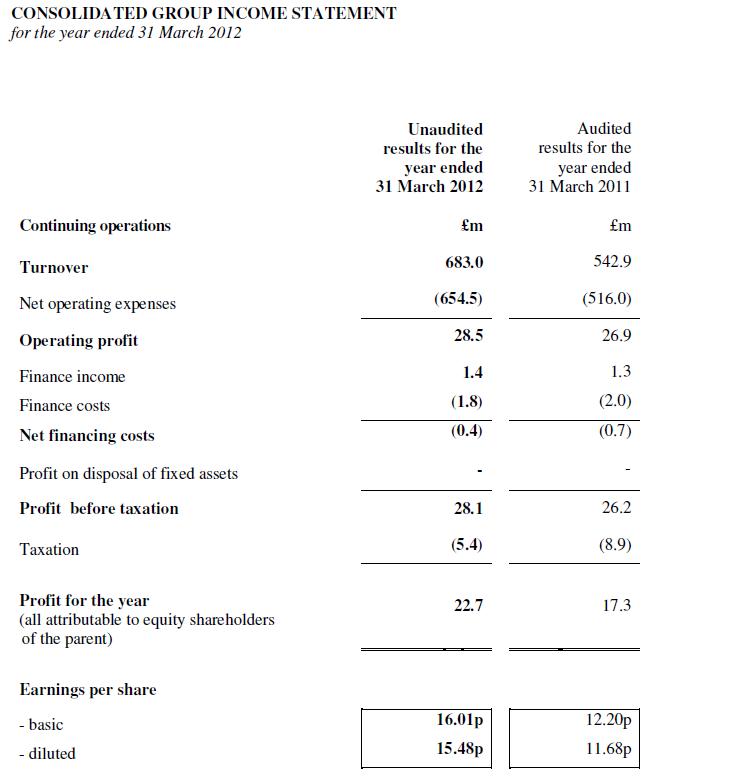
A good example to turn this into an interesting practical exercise is the most recent preliminary annual report from Dart Group, one of my Portfolio holdings

The first thought is of course “Yippie yeah”, a really significant earnings increase, P&E of 4 etc etc.

Richard Beddard at the excellent Interactive Investor blog even says the following:

The highest earnings yield ever calculated by the Human Screen is 35%. It’s so high, he’s wondering if air line and road-haulier Dart has bust his value yard-stick.

Highlights

Adjusted operating profit up 9%
Adjusted return on tangible assets: 4%
Net profit of £23m compared to net cash flow of £95m (£48m after net capital expenditure)
Net cash after approximate capitalised lease obligations of £125m is £34m, 5% of tangible assets
Per-share dividend up 7%

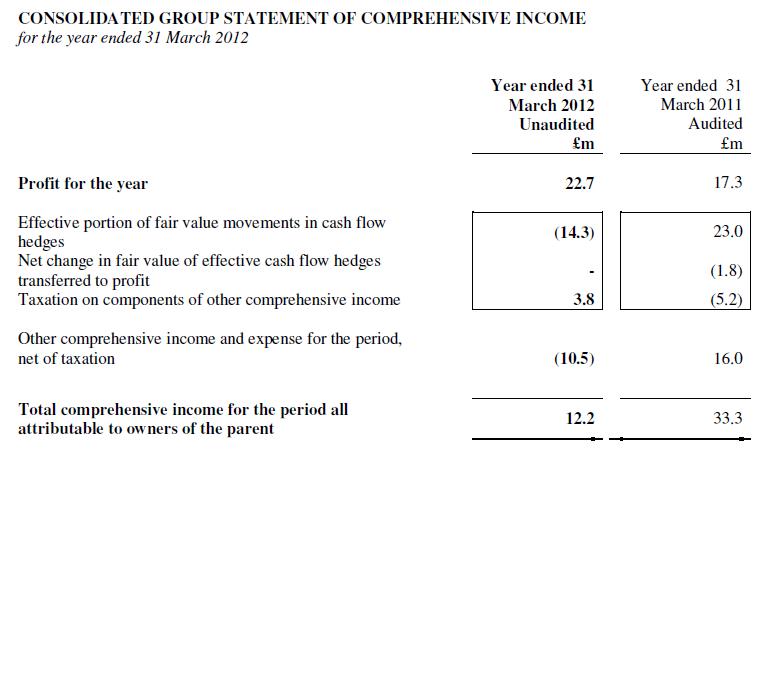
Not so fast. I guess that Richard stopped at page 9 of the interim report and didn’t bother to read that strange stuff at page 10 which looks as follows:

So we have additional items which significantly decreased shareholders equity but didn’t need to be recorded in normal earnings but comprehensive income. In this case we are looking at fuel hedges.

Items which can be recorded in comprehensive income are:

– Unrealized holding gains and losses on available for sale securities ( a trick often used by banks and other financials)

– Effective portion of gain or loss on derivative instruments (cash-flow hedge);

– Foreign currency translation adjustments (i.e. change in value of a foreign subsidiaries net asset value)

– Minimum pension liability adjustments.

Normally people would argue that those items are “non operating” and therefore not or less relevant. However, as it affects shareholder value, in my opinion it is very important to look at those item to determine real value creation for the shareholder.

Coming back to Dart Group: The fuel hedging is an essential part of the business model. Fuel costs are around 20% of sales and cannot be passed directly too customers, especially for the prepaid part. I will have a separate post on how to interpret the fuel hedges but for now the important point is:

The result of the fuel hedges should be treated as part of the normal business of Dart Group.

Therefore real 2011/2012 earnings for Dart are rather around 9 pence per share and not the 16 pence recorded in the income statement. Still cheap (PE of 9) but not “busting any value yardstick”.

Summary:

Any value investor interested in the total value creation of a company for shareholders should include all items of the comprehensive income statement into his valuation. Many companies are very good in shifting all unpleasant stuff into this section. Especially for financial companies, recorded earnings are more or less meaningless without the items in comprehensive income. Also fuel hedges for airlines or other fuel cost eexposed companies should be viewed as relevant.

Game Over Bei Sino Forest – Gedanken zu Shortselling & Auswirkungen auf Value Investoren

Letzte Woche hatte die Kanadische Börsenaufsicht quasi “den Stecker gezogen” bei Sino Forest.

Ich hatte ja diverse Male darüber berichtet. Was den Fall besonders interessant macht ist die Tatsache, dass wirklich bekannte Investoren sich hier die Finger verbrannt haben.

John Paulson, bei dem es dieses Jahr eh nicht gut läuft ist ja immerhin direkt nach dem Muddy Waters Bericht ausgestiegen.

Daraufhin meinte z.B. die große Fondsgesellschaft Wellington und ein Australischer Milliardär namens Chandler, dass sie schlauer sind und hatten trotz der recht begründeten Vorfälle erst richtig aufgestockt.

Interessant auch die bei Zerohedge veröffentlichte Liste der Analysten Ratings, wo doch auch einige namhafte Analysten noch sehr positiv gestimmt waren:

Kommen wir nun zu den Shortsellern. Den Stein ins Rollen gebracht hat ja Carson Block von Muddy Waters mit einem Bericht vom 2. Juni.

Bis dahin gab es keine Anzeichen. Die “Beteiligten” bei Sino Forest sind alles Top Adressen. Wirtschaftsprüfer ist Ernst & Young, einer der Big 4, die Gesellschaft hatte ein Rating von S&P und Pöyry, eine namhafte international Agrar-Beratung hat die (Phantom-) Wälder bewertet und ein Aufsichtsrat ist immerhin auch Aufsichtsratchef bei Glencore.

Wenn das Ganze mal vorbei ist, werden alle Beteiligten wohl sagen, dass sie nichts dafür konnten und vom Management von Sino Forest betrogen worden sind. Vielleicht ist das auch so. Allerdings haben alle eines gemeinsam: Solange der Betrug lief, haben alle kassiert. Die Prüfer, die Berater, die Investmentbanker und auch der Aufsichtsrat. Solange die Gebühren fliessen, hat auch keiner ein Interesse unangenehme Fragen zu stellen.

Echte Konsequenzen hat das auch in den wenigsten Fällen. Bei den Chinesischen Firmen ist noch die Besonderheit, dass der lokale CEO in China nichts befürchten muss, für einen Betrug im Ausland wird meines Wissens in China niemand belangt.

Interessant ist es auch, wenn man mal die Motivation der Anleger nachvollzieht. Jemand der die Aktie gekauft hat, will ganz sicher auch nichts von Betrug wissen, sondern am liebsten seine Aktie mit einem dicken Gewinn an einen anderen (Nichstahnenden) weiter verkaufen.

Der einzige, der wirklich Interesse an der Aufdeckung eines Betrugs hat, ist nur der Shortseller. Er allein profitiert, wenn er einen Betrug aufdeckt und seine leer verkauften Aktien billig zurückkauft.

Für viele ist das “verwerflich”, weil er ja so quasi am “Leid der Betrogenen” verdient. Auf den ersten Blick stimmt das ja, aber auf den 2ten Blick sollte man sich vielleicht fragen:

– verhindert er denn nicht, dass noch weitere Leute betrogen werden ?
– was ist mit denen, die vorher die Aktie gepushed haben und ahnungslose Anleger durch Kaufempfehlungen zum Kauf verleitet haben ?
– sind da nicht auch viele Anleger, die bewusst zocken obwohl sie etwas vermuten ? Ist man schuldig wenn man weiss das es Betrug ist und seine aktien noch schnell an einen weiter verkauft der das nicht weiss ?

Shortseller sind immer die einfachsten Ziele wenn die Aktien fallen. Ganz besonders Bank CEOs sind ganz schnell bei der Hand, den bösen “Shorties” die Schuld zu geben. Von der Politik wird das auch immer dankend aufgenommen, Hauptsache man hat einen Schuldigen. Relaitv typisch auch die Forderung des Deutschen Wirtschaftsministers Rösler, der anscheinend innerhalb weniger Wochen vom Gesundheitsexperten zum Finanzmarktspezialisten mutiert ist.

Stabilität in den Finanzmärkten erzielt man m.E. nicht mit dem Verbot von Short Selling, ganz im Gegenteil. Das Problem sind ja die vorhergehenden Blasen. Wie wir am Fall von Sino Forest sehen, sind die Interessenlagen so gestrickt, dass trotz aller Kontrollen nur ein Shortseller eine echte Motivation hat, eine Überbewertung oder einen Betrug aufzudecken.

Zwischenfazit: Selbstverständlich sind auch Shortseller keine “edlen Ritter”, sie sind aber m.E. einfach nur Kapitalmarktteilnehmer wie viele andere, mit einer sehr sehr wichtigen Funktion. Ein Verbot von Short Selling würde vermutlich eher das Gegenteil von Stabilität bringen, weil sich dann der Blasenbildung kaum jemand entgegen setzen würde.

Für den Privatinvestor gilt meiner Meinung nach Folgendes:

– man darf sich keinesfalls auf bekannte Namen verlassen, egal ob auf Investorenseite, Analyse, Rating oder Wirtschaftsprüfer
– wenn etwas zu gut ist um wahr zu sein (3er KGV, riesiges Wachstum, Berge von Cash etc.) ist es meistens nicht wahr
– wenn man etwas nicht versteht und es nicht wirklich erklärt werden kann, ist die Gefahr groß, dass es nicht wahr ist
– schon leiseste Anzeichen von Unsauberkeiten im Accounting können jede “Margin of Safety” in einem Investment zu nichte mache
– als Value Investor kann man die Analysen von bekannten Short Sellern nutzen, um zu erkennen ob es prinzipielle Probleme in einem Unternehmen, Sektor oder Land gibt, die eine Margin of Safety gefährden.
– als Konsequenz sind für mich z.B. China Werte mit Auslandslisting grundsätzlich uninvestierbar, ganz egal wie billig die Werte optisch sein mögen

Fazit: Short Seller haben meines Erachtens eine sehr wichtige Funktion. Als Valueinvestor kann man deren Analysen gut verwenden um die “Margin of Safety” in den eigenen Investments kritisch zu hinterfragen

Green Mountain Coffee – Update

Das hat gestern richtig weh getan:

Grund war die Meldung, dass man ca. 200% mehr verdient hatte als im Vorjahr und den Forecast für 2012 angehoben hatte.

Selbst Dauerkritiker haben daraufhin das Handtuch geworfen, die “Aggressive Growth” Investoren jubeln.

Ein paar kritische Stimmen gibt es noch, z.B. wird hier schön gezeigt, dass Green Mountain die letzten 4 Jahre ausschliesslich negativen Free Cash Flow produziert hat und die “Grumpy Old Accountants” (schöner Name) zeigen, dass man es bei Green Mountain mit dem Accounting nicht ganz so genau nimmt.

Es ist wirklich erstaunlich, wie lange und hoch das geht. Der Short wird aber auf jeden fall durchgehalten, sollte mal das Momentum drehen dann wird aufgestockt.

Ach so, ganz vergessen. Das Patent für die Keurig Kapseln läuft 2012 aus, dann kann jeder das Format prodzuzieren. Aber macht ja nix.

Sino Forest Update & Asian Bamboo Glaubwürdigkeit wieder herstellbar ?

Sino Forest:
Nachdem John Paulson ja ohne Rücksicht auf Verluste seine Position geschlossen hatte, gab es am Tag darauf eine offensichtlich gefakte Meldung, dass Muddy Waters Gründer Carson Block angeblich von der SEC wegen Kursmanipulation angeklagt wurde.

Auf Bloomberg gibt es noch einen ganz interessanten Artikel zu einem US Value Investor, der ebenfalls stark in Sino Forest investiert war..

Christopher Davis, a value investor who researches stocks and holds them for long periods, owned 13 percent of the Chinese tree-plantation owner as of April 29 through his Tucson, Arizona-based Davis Selected Advisers LP. The value of that stake has since dropped 92 percent, or more than $600 million, as Muddy Waters LLC, an investment firm run by Carson Block, said Sino-Forest overstated its timber holdings.

Bei Asian Bamboo haben wir wohl unseren virtuellen Short zu früh aufgelöst. Die Aktie fällt weiter wie ein Stein.

Dagegen hilft auch eine Erhöhung des Rückkaufprogramms auf 300K Aktien nicht und auch die eher Homöopatischen Rückkäufe des CEOs.

Es kommt immer wieder die Frage auf, was Asian Bamboo tun könnte, um Anleger von der Werthaltigkeit des Geschäftes zu überzeugen. Aus unserer Sicht könnten z.B. folgende Punkte dazu beitragen:

+ der CEO reinvestiert einen signifikaten Teil seiner Verkaufserlöse aus den letzten Jahren in die Aktie. In 2010 hat er ja mal schöne 31 Mio EUR ausgecasht, da könnte er doch locker mal 10-20 Mio wieder reinvestieren. Das könnte wirklich Vertrauen schaffen. Die 1000 Stück Meldungen dagegen sind einfach nur lachhaft.

+ es gibt “full disclosure” über die offenen Punkte (siehe unsere Frageliste)

+ zusätzlich wäre insbesondere Einblick in die Pachtverträge hilfreich und offizielle, nachprüfbare Bestätigungen über den Plantagenbesitz notwendig. Das Beispiel Sino Forest hat gezeigt, dass lustige Ausflüge mit Analysten und bunte Bilder im Geschäftsbericht nicht ausreichen, weil an einem Baum (oder Bambus) ja kein Eigentümerschild klebt.

Fazit: Asian Bamboo wird es weiter schwer haben. Ohne nachprüfbare Fakten zum Besitz der Plantagen und den offenen Bewertungsproblemen wird das Papier wahrscheinlich zum “Zockerwert” degenerieren. Da hilft auch das gebetsmühlenartige wiederholen der Prognosen nicht viel. Jetzt wären handfeste Beweise oder “Taten” gefragt.

Immer wieder China – Sino Forest, Powerland, Harbin Electric& gefälschte Hühner

Weil es neben Griechenland auch weitere spannende Themen gibt, ein kurzer “Round up” zu den allseits beliebten “Red Chips”:

Sino Forest
Auf den Zeitungsartikel hatten wir ja schon verwiesen. Jetzt verlassen die “Ratten” das sinkende Schiff: Broker Dundee Securities stellt die Coverage ein, nachdem man noch vor 2 Wochen behauptet hatte:

“We are going to provide you with some information on why Muddy Waters research is a pile of crap”

Die Kanadische Zeitung hat gleich nochmal nachgelegt.

The curious transactions totalling $6-million and inked on March 7 between a Sino-Forest subsidiary with an empty office and a seller with no address highlight the bigger questions surrounding Sino-Forest’s dealings in southern China.

UPDATE:John Paulson, der größte Aktionär von Sino Forest hat alle Aktien verkauft. Der letzte macht wohl dann das Licht aus.

Powerland
Powerland ist je einer der “Deutsch Chinesen” und im April 2011 an die Börse gegangen. Nun hat eine Firma namens “Claimpicker Research” ein Analyse im “Muddy Waters” Stil veröffentlicht.

Im Research wird auf die Differenzen zwischen Chinesischer Bilanz und Deutscher Bilanz eingeganen, das scheint in der Tat aber bei jeder Chinesischen Firma ein heisses Eisen zu sein. Interessant ist der Teil bzgl. der Einbringung als Sacheinlage in die Deutsche AG, das zeigt zumindest einen gewissen Bilanz Sachverstand bei den Erstellern der Studie.

Etwas “dubios” ist die Claimpicker Seite selber, in einem FAZ Artikel steht dazu Folgendes:

Bis zum Oktober 2010 hieß die Claimpicker AG noch ooout.com Portal AG. Unter diesem Namen hatte das Unternehmen unter anderem zum größten sozialen Netzwerk für College-Studenten aufsteigen und die wichtigste Anlaufstelle bei der Jobsuche für Graduierte werden wollen. Zudem wollte man zur größten E-Commerce-Seite für chinesische Studenten im Bereich Elektronikartikel werden.

Nach einem Wechsel des Großaktionärs, in dessen Rahmen das Unternehmen „erhebliche gesellschaftsrechtliche Mängel“ einräumte und versprach, die Informationslage zu verbessern, erfolgte die Umbenennung zu Claimpicker und der Wechsel des Geschäftsmodells. Auf seinen Internet-Seiten rät das im Schweizer Kanton Zug ansässige Unternehmen Aktionären der Powerland AG, das Bestehen etwaiger Ansprüche aus dem Prospekthaftungsrecht von einem spezialisierten Rechtsanwalt prüfen zu lassen und empfiehlt dabei die bekannte Münchener Kanzlei CLLB.

Powerland selber hat natürlich alle Vorwürfe zurückgewiesen.

Harbin Electric

Citron Research hatte einen Updated der Vorwürfe veröffentlicht, den Harbin postwendend mit einer erneuten Ankündigung eines Management Buyouts zu 24 USD gekontert hat. Das hattem an allerdings auch schon mal im Oktober 2010 getan. Immerhin konnte man jetzt den Kurs nochmal um 60% nach oben bringen.

Bleibt die Frage, warum ein CEO die eigene Firma zum mehr als dem Dreifachen des letzten Preises übernehmen will. Das hätte er durch gezielte Käufe auch billiger haben können. Vielleicht hat es damit zu tun, dass er vielleicht doch lieber eigentlich verkaufen will aber das ist nur eine persönliche Meinung.

Zum Abschluss noch die gefälschten Hühner:

Introducing Yuhe International:

…a supplier of day-old chickens raised for meat production, or broilers in China. Our day-old broilers are sold, through third party distributors or directly, to broiler farms and integrated chicken companies, which engage in the breeding, hatching, farming, and food processing of broilers, for the purpose of raising them to market-weight broilers.

Lt.. einer neuen Short Boutique sind angeblich die Farmen gefaked:

Our most important findings:
* We have reason to believe that YUII has misrepresented the details surrounding its acquisition of 13 breeder farms. More specifically, we believe we have compelling evidence that YUII never reached or executed an agreement with the owner of the Dajiang farms, as stated in December 2009,.

Mann mann mann, wo soll das noch hinführen, wenn die selbst die Hühner fälschen 😉

Sino Forest – Der Krimi geht weiter

Heute gab es Quartalszahlen von Sino Forest und einen “Analyst Call”.

Nach der Veröffentlichung der Zahlen und dem Kommentar des CEOs ging es dann kurzzeitig mit dem Kurs nach oben. Während der Q&A Session ging es aber schon nach unten, bei FT Alphaville gibt es sogar eine Art Live Kommentar dazu.

Dazu kam dann zeitnah auch Muddy Waters nochmal mit einem “Nachschlag” raus.

Die Lage bleibt nach wie vor undurchsichtig, dass Unternehmen selbst sagt, dass die interne Untersuchung mindestens 2-3 Monate dauern wird.

Dass das Ergebnis schlechter als erwartet ausgefallen ist und ein Verlust ausgewiesen wurde, ist da fast schon Nebensache.

So wirklich verstehe ich das Geschäftsmodell ohnehin nicht, anscheinend werden hauptsächlich nur Waldflächen “durchgehandelt”, wobei man nach wie vor nicht weiss wer die Käufer sind.

Fazit: Es wird bei Sino sicher noch einige Zeit dauern bis “Licht ins Dunkel” kommen wird. Man fragt sich aber schon, warum das Management so schleppend auf die Vorwürfe antwortet, insesondere der Verweis dass man sonst “Betriebsgeheimnisse” preisgibt hört sich nicht ganz überzeugend an.

Groupon IPO und die Frage was ist eigentlich Umsatz ?

Um eines von vorneherein klarzustellen: IPOs sind für einen Valueinvestor wie schon Graham angemerkt hat eigentlich immer ein absolutes No-No, das ist bei Groupon vermutlich nicht anders.

Interessant ist Groupon aber deshalb, weil es wieder ein Beispiel für “Accounting Shenanigns” in einem Bereich ist, in dem man es zuletzt erwartet und zwar beim Umsatz.

Im ohnehin sehr empfehlenswerten Going Concern Blog ist dazu ein ganz guter Artikel erschienen.

Kernproblem ist das hier:

Groupon accounts for its revenue differently than say eBay, and in a way that some say is misleading to potential investors. The company defines revenue as “the purchase price paid by customers.” Then there’s the issue of “the cost of revenue,” leaving the company with what it calls “gross profit,” which is “the amount of revenue we retain after paying an agreed upon percentage of the purchase price to the featured merchant.”

Here’s the thing: Many companies like eBay […], which also take a fee for transactions, would consider that “gross profit” number a “net revenue number.”

Im Klartext heisst das, wenn also ein Kunde einen Groupon Deal abschliesst, der z.B. über 100 EUR geht und Groupon davon sagen wir 30% bekommt würde Groupon trotzdem 100 EUR als Umsatz buchen. Den Teil den Ebay oder Visa als Umsatz verbuchen würden, nennt man bei Groupon dann “Gross profit”.

Da das Unternehmen ja keine Net Profits ausweist, klammern sich viele Analysten an den Umsatz als “hartes” Bewertungskriterium und der wird hier m.E. inflationiert. Das zeigt wieder einmal, wieviel Spielraum einem Accounting Regeln selbst bei so grundlegenden Dingen wie Umsatz einräumen.

Abgesehen davon scheint der Groupon IPO nicht unter einem ganz so guten Stern zu stehen. Zum einen scheinen den Jungs gerade die Emissionsbanken auszugehen, zum anderen hat der Gründer und Chairman Eric Lefkofsky eine durchaus “gemischte” Vergangenheit, bei vielen seiner bisherigen Unternehmungen stand relativ bald eine Pleite an oder es gab andere Probleme.

Zum Schluss noch ein Zitat von Graham zu IPOs das einfach zeitlos ist, egal ob Internet, Solar, China oder Social Networks:

Somewhere in the middle of the Bull market the first common-stock flotations make their appearance. These are priced not unattractively, and some large profits are made by the buyers of the early issues. As the market rise continues, this brand of financing grows more frequent; the quality of the companies becomes steadily poorer; the prices asked and obtained verge on exorbitant. One fairly dependable sign of the approaching end of a bull swing is the fact that new common stocks of small and nondescript companies are offered at prices somewhat higher than the current level for many medium-sized companies with a long market history. The heedlessness of the public and the willingness of the selling organization to sell whatever may be profitably sold can have only one result – price collapse

Fazit: Selbst bei der Verbuchung von einfachen Umsätzen scheint es einigen Spielraum zu geben. Die Erfahrung zeigt, dass Unternehmen die diese Spielräume offensiv ausnutzen in der Regel langfristig kein so tolles Investment sind.

Compounding Interest – Value & Growth die 2.te

Einen guten Kommentar nehmen wir gerne zum Anlass einen Kommentar als Blogbeitrag weiterzuspinnen. David hatte einige gute Gedanken zum Artikel Compounding Interest – Value & Growth geäußert, die wir gerne weiterspinnen möchten:

David:
Ich sehe dies ähnlich wie caedmon.

Ich würde die Begriffe nicht trennen, wenn selbst die besten Investoren sagen, dass das Wachstum auch immer ein Teil des Wertes sein kann. Und ich sehe es auch so, dass der Aufwand bei nicht mechanischen Strategien enorm hoch ist. Aber ich denke es ist eine Grundsatzfrage, ob man für sein Geld nur die beste Performance will, oder ob man Spaß an dem gesamten Prozess der Unternehmensbewertung und dem Investieren hat. Für mich ist es auch die intellektuelle Herausforderung und die aktive Gestaltung meines gesellschaftlichen Umfeldes (wenn auch nur ganz, ganz gering).

Aber zurück zum Eingangsartikel: Ich habe selbige Berechnung mit Excel ebenfalls schon durchgeführt um herauszufinden, welches KGV/KBV bei welchem ROC einer fairen Bewertung entsprechen würde. Ich bin allerdings zu dem Entschluss gekommen, dass ich auch die Ausschüttungsquote mit berücksichtigen muss. Ihr Model setzt voraus, dass die Renditen auch auf jeden weiteren reinvestierten Euro verdient werden können. Die meisten Unternehmen können dies jedoch oft nicht, deshalb schütten sie auch aus. Fielmann hatte z.b. in den letzten 10 Jahren eine EK-Rendite von rund 20%. Und Fielmann hat definitiv einen sehr tiefen Burggraben, sodass auf die vorhandene Struktur auch diese Margen erzielt werden können. Aber die Expansion ist bei Fielmann weniger eine Frage des Geldes, sonder der qualifizierten Mitarbeiter. Dadurch könnten Fielmann nicht jeden Euro zu 20% p.a. investieren und schüttet aus.

Angenommen Fielmann hätte nun auch zukünftig eine EK-Rendite von 20%, aber eine Ausschüttungsquote von 100%. Fielmann hätte dann kein Gewinnwachstum (ohne Berücksichtigung von Inflation). Bei einer Renditeerwartung von 10% p.a. sollte ein intelligenter Investor trotzdem nicht mehr als den doppelten Buchwert und das zehnfache der Gewinne zahlen. Bei einer Ausschüttungsquote von 0% und immer noch der zukünftigen EK-Rendite von 20% wäre ich auch durchaus bereit wesentlich mehr zu zahlen.

Oder nicht?

FG David

Der Punkt der Reinvestition, bzw. der Dividenden ist tatsächlich einer der großen “Knackpunkte” des Ganzen. Es gibt auf Seeking-Alpha hierzu einen interessanten Artikel, der sich mit der Problematik der Dividenden befasst. Eine Ausschüttung ist ja eigentlich schädlich, denn sie verursacht Steuern und lässt den Aktionär mit dem Problem der Reinvestition alleine. Eigentlich wäre es für den Aktionär günstiger, wenn alle Cashflows zu einem möglichst hohen ROC reinvestiert werden könnten und so das “Wunder des Compoundings” laufen lassen könnten. Hier ist aber wieder oft das Problem, dass das Management das Geld lieber behält und in schlechte Projekte mit niedrigem ROC “verbrennt”. Aber einen Tod muss man ja sterben.

Das ist übrigens auch einer der Gründe warum Berkshire ein so wunderbares Unternehmen ist: Die Cashflows der Beteiligungen werden vom Meister mit einem hervorragenden ROC investiert. Und das ist auch der Grund warum es so wenige “wunderbare” Unternehmen gibt. Ab einer bestimmten Größe jedes Unternehmens nehmen entweder die Kapitalrenditen ab, weil die Nische verlassen wird, oder einfach keine gleichwertige Kapitalrendite eriwrtschaftet werden können.

Von daher gehen wir völlig mit David überein, dass ein Unternehmen ohne Ausschüttung mit einem zukünftig hohen ROC (ROE) viel wertvoller sein kann (und damit natürlich wesentlich teurer bewertet wird) als ein nicht mehr wachsendes Unternehmen mit Vollausschüttung. Auf der anderen Seite kann gerade ein Nischenunternehmen mit hohen Erträgen und Kapitalrenditen aber stabiler Nische (insb. See’s Candy), im Rahmen eines Konzerns der die Cashflows (steuerlich günstig) aufsaugt und sinnvoll verwendet einen unglaublichen Mehrwert schaffen.

Hier ist aber anzumerken, dass gerade bei den Wachstumsunternehmen die Stabilität des Moats von größter Bedeutung ist. Stellt sich ein Burggraben als “doch nicht so weit” heraus, fallen in der Regel nicht nur die Gewinne, sondern die ehemals hohen Multiples gleich mit. Bestes Beispiel ist hier Bijou Brigitte, die bei 250€ “priced to perfection” waren und dann aber mit stagnierenden Gewinnen duch die Multiple-Neubewertung “neu bewertet” wurden.

« Older Entries Recent Entries »