Category Archives: Bilanzanalyse

AQ Group (ISIN SE0000772956) – a 15 year “42- bagger” without a Moat ?

Would you consider to invest into a company which at every occasion states the following:

AQ possesses no amazing patents or other security, we rely on having the best crew.

For a “Buffett/Munger” style value investor, this would be tough as there is clearly no moat or anything close and according to Buffett, the business economics always win in the long run, no matter how well a company is run.

Welcome to AQ Group, a Swedish “non moat” manufacturing company

 

large

Read more

Good or Bad Capital Allocation: Example SAP SE (ISIN DE0007164600)

In my previous post on capital allocation, I had mentioned SAP as a company which might have overpaid for an acquisition. A reader commented that SAP is a good capital allocator because they increased EPS over the last 10 years.

Increasing EPS itself in my opinion is not a “proof” for good capital allocation. Actually, this itself says nothing at all. If you have a stable business, just retaining earnings and doing nothing will increase EPS as long as interest rates are positive. Good capital allocation is when you create value from retained profits.

The best way to find out if value is created is to look at how returns on equity and return on capital develop over time.

Let’s take a look at SAP over the past 17 years with some per share numbers:

Read more

Capital Allocation & Capital Management – What is good and what is bad

Everyone who has read Thorndikes book “The Outsiders” clearly knows that capital allocation& capital management is one of the most important factors in creating long term shareholder value. After I watched Thorndike give a briliant talk at Google on this topic, I decided to write down my own thoughts on the topic.

What is CAPITAL ALLOCATION & CAPITAL MANAGEMENT anyway ?

CAPITAL ALLOCATION is simply what you do with your profits/cash inflows once they are in your account. You can do a lot of things with it. Thorndike in the talk above uses 5 uses, I would add another 2 (in bold)

1. Reinvest: Maintain your existing assets/infrastructure/operations
2. Grow organically: Expand your business by buying more machines/outlets/opening stores etc.
3. Expand your business by M&A
4. Pay back liabilities (debt, payables, pension liabilities etc.)
5. pay dividends
6. buy back shares
7. just leave the cash on your account and wait for better opportunities

Read more

Kinder morgan (KMI): Asymmetric upside potential

So let’s move on from focusing on the bad things and look at the the things that I like at Kinder Morgan. While I was writing this post, I found a very good blog post from Glenn Chan from 2 years ago which I can only recommend and includes a lot of interesting points about Kinder Morgan.

The Management:

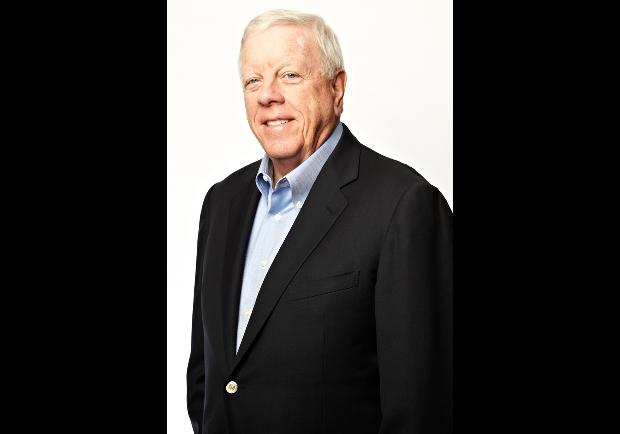
Rich Kinder, age 71 owns 11% of the company and was famous for paying himself only 1 USD salary during his time as CEO.

620x434

Read more

My 6 observations on Berkshire’s 2015 annual report

One general remark upfront: The 2015 annual report wasn’t that exciting in my opinion. Actually, I didn’t plan to write a post on it. However, after reading a couple of posts on the topic, I though maybe some readers are interested because I haven’t seen those points mentioned very often elsewhere.

  1. Bad year for GEICO

GEICO had a pretty bad year in 2015. The loss ratio (in percent of premium) increased to 82,1% (from 77,7%), the Combined ratio increased to 98% and the underwriting profit fell by -60%. Buffett talks about the cost advantage a lot in the letter, but the only explanation forthe increase in loss ratios are found in the actual report:

Read more

Guest post: Investment Theory: RoCE – some thoughts on a helpful, but sometimes misleading concept

I am happy to present one of the infrequent guest posts. This time a very interesting general post on RoCE (Return on Capital Employed) and Brand value by contributor Knud Hinkel.

Executive Summary:

The RoCE is an important ratio for value investors. However, as it regularly relies on balance sheet data, the concept is susceptible for at least two inconsistencies: (1) Items on balance sheet are not correctly reflected in the EBIT, and (2) items that contributed to EBIT are not reflected in the capital employed. My hypothesis is that the RoCEs of industries with significant self-created intangibles like consumer and software companies are subject to a systematic upward bias and this might light lead to a wrong judgment of (1) the underlying company performance, (2) acquisitions, and (3) the capital intensity of the business model.

Read more

Movado (MOV) – Is Fossil’s little cousin worth an investment ?

Movado is the second US-based company specializing in watches (see my previous posts on Fossil part 1 and part 2). The company has a quite interesting history. Cuban Refugee Gerry Grinberg founded the company in the 1960ties basically as a Swiss Watch importer. Later on they actually acquired the rights to the Movado brand with the iconic Museum Watch.

Read more

Fossil (FOSL) – Share buy backs & Management (part 2)

This is a follow-up to my first post on Fossil. The short summary:

Fossil has a good but not great business with some issues, among others the potential success of smart watches. The reason to dig deeper was the unusual combination of CEO/owner with zero salary and capital allocation with a focus on share buy backs.

Share buy backs

There is a great collection of articles on Teledyne and Henry Singleton “available at CS Investing. One absolute gem inside is a classification of stock buy backs in order of usefulness to shareholders from Hedge Fund Honcho Leon Cooperman:

Read more

« Older Entries Recent Entries »