Tag Archives: Stocks

Not aMUSEd: The UK “Portal Pain Basket” (Mony Group, Autotrader & Rightmove)

Disclaimer: This is not investment advice. PLEASE DO YOUR OWN RESEARCH

I actually started to write this post before the newest hype about “Muse”, the new AI Agent from META, really went mainstream. I decided to leave the old part and then update it instead of completely changing it.

As my DCC investment ends its “natural life” and I have begun to unwind it, I decided to have a look at a group of beaten up UK stocks that one could summarize as “Comparison portals” or “Two sided online market places”: : Mony Group (Insurance), Autotrader (cars) and Rightmove (real estate).

As the post became quite long, I also picked a track to keep you entertained while your LLM assistant is summarizing the post for you:

Green Day – Basket Case

Green Day – Basket Case [Official Music Video] (4K Upgrade)

Here a quick summary for each company: 

Mony Group SE

Mony Group, the former Moneysupermarket Group is a UK focused comparison portal where people go to compare quotes for Insurance policies, loans, broadband tariffs, electricity contracts. in addition they offer a referral shopping app/system that offers Cashbacks (discounts).

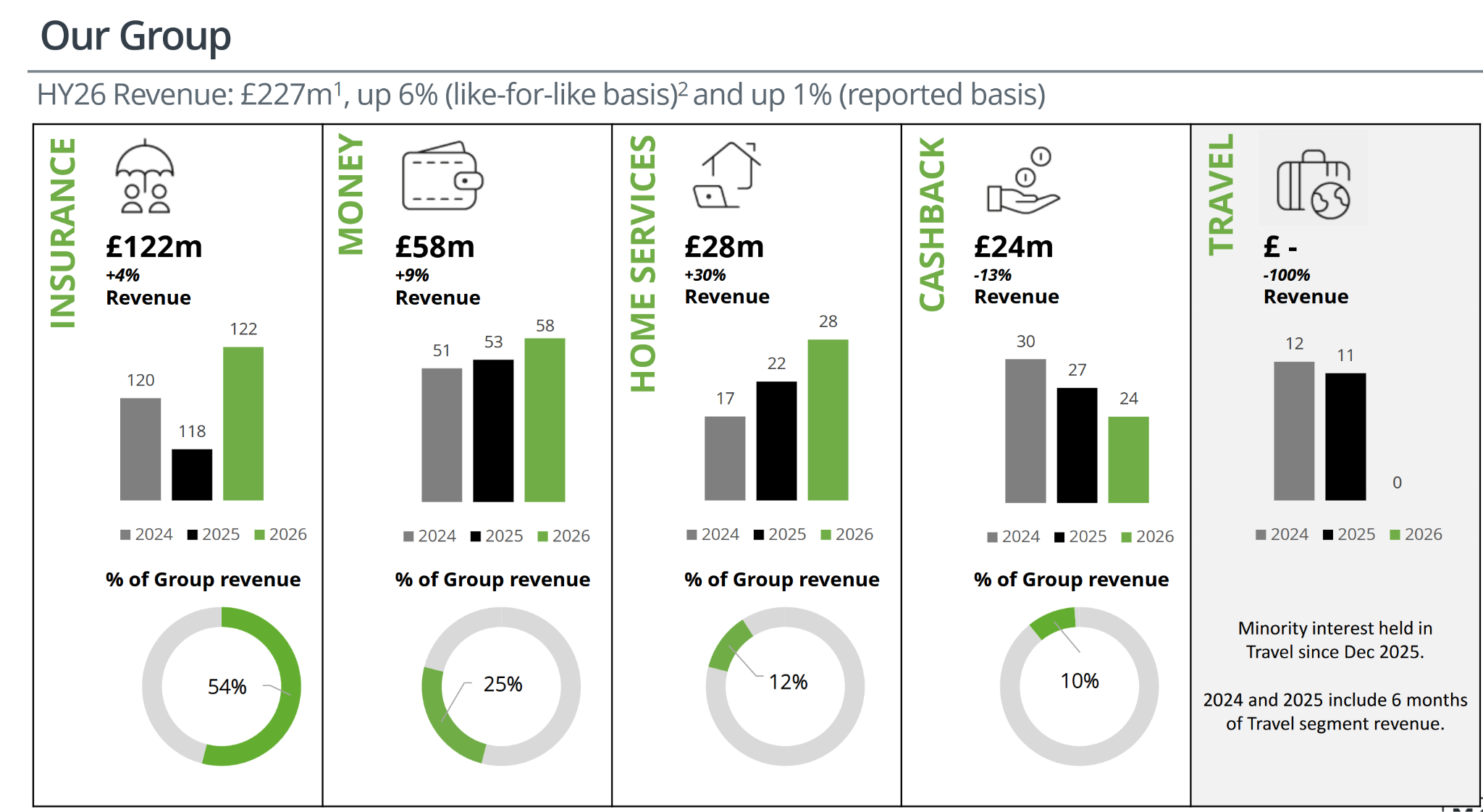
This is from the 6M Investor presentation with the distribution of sales::

We can see that insurance is over half and that they have disinvested travel related offerings in 2025.

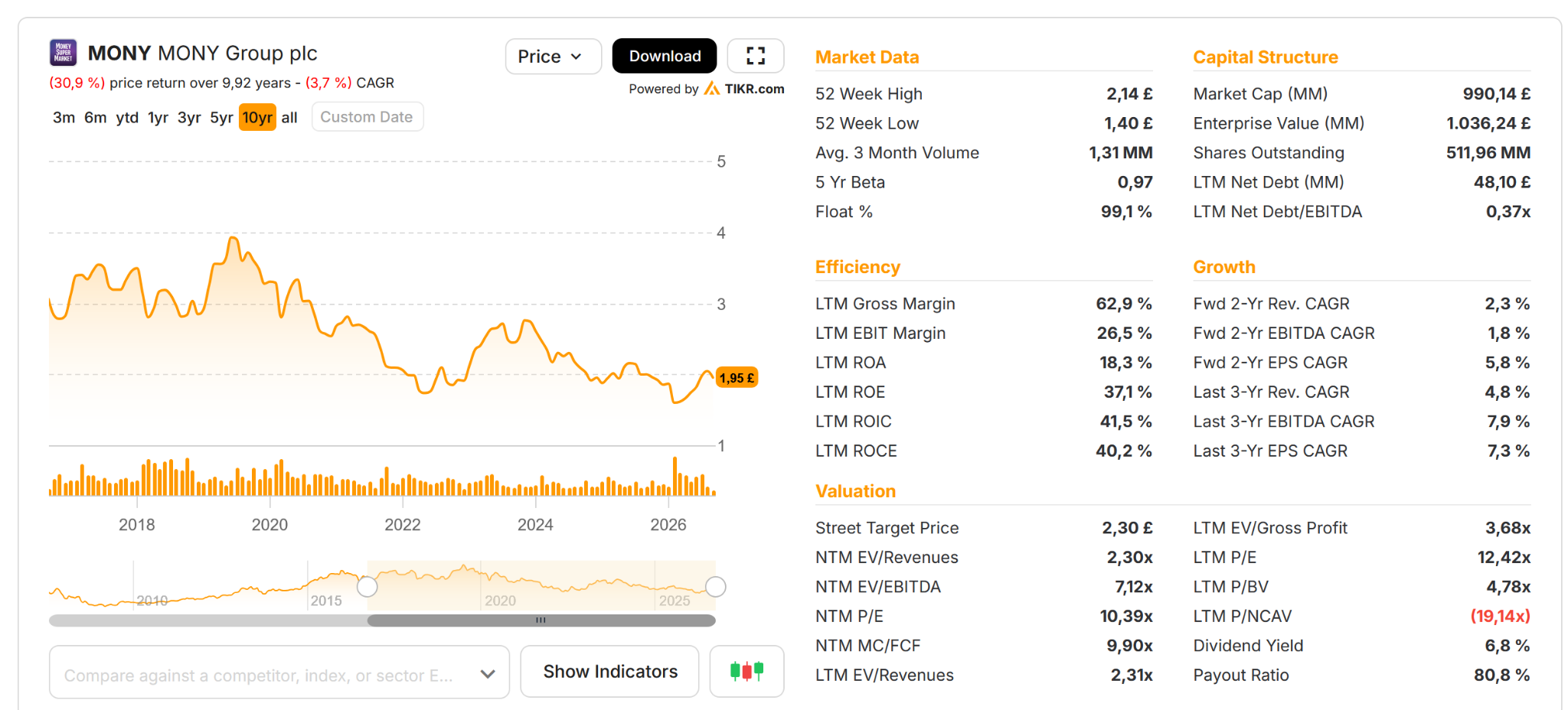
This TIKR Screenshot shows us that Mony’s stock was not a very good investment over the past 10 years:

However the share price seems to have stabilized to a certain extent and the stock is cheap. The business as such is very profitable and has been growing low single digits for the past 3 years or so.

Other than the next two companies, Mony is only the number two comparison portal in the UK, pretty far behind a site called “Compare the Market” but bigger than “go.Compare” and “Confused” which used to belong to Admiral.

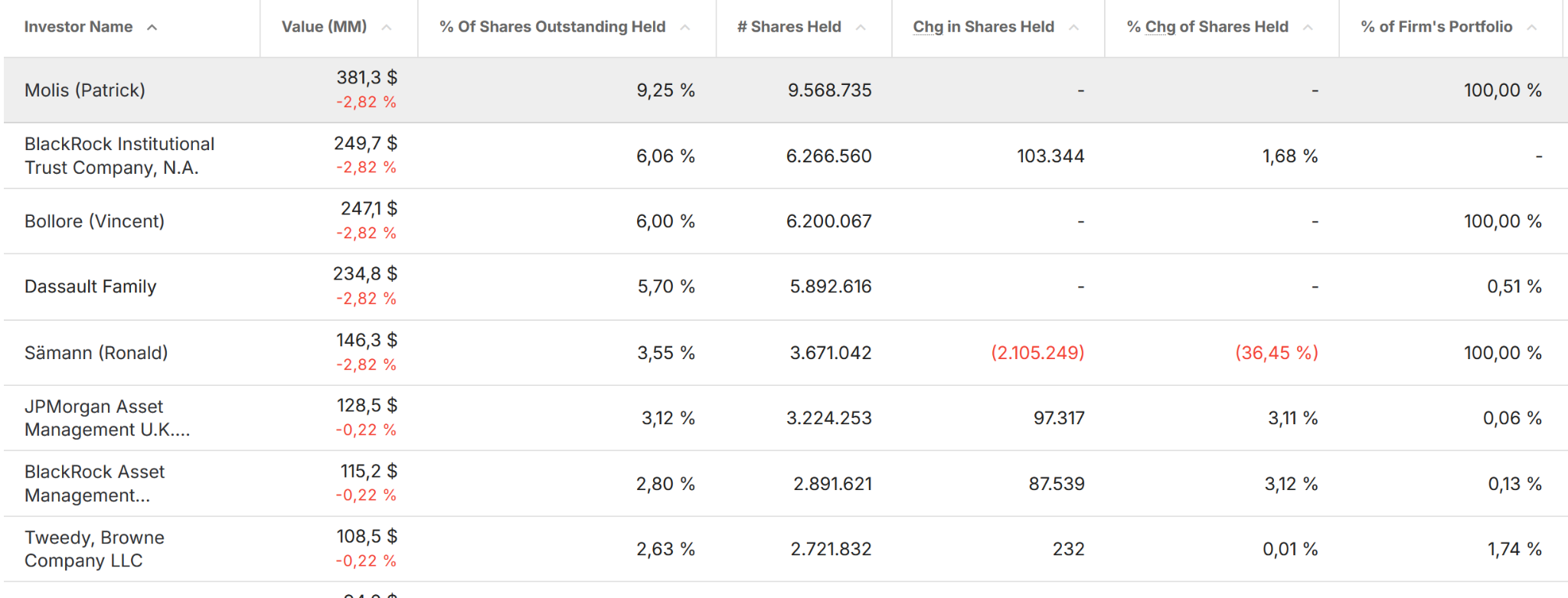
One important detail is that Italian Marketplace company Moltiply (former Mutui Online) is the largest shareholder with ~12% and they have been adding as recently as in June 2026.

Multiply has been collecting comparison marketplaces steadily, like Verivox in Germany or the non-UK sites from Admiral.

Autotrader

Autotrader is THE leading UK online car portal where both auto dealers and private customers are buying and selling mostly used cars. It used to be a print magazine but successfully transformed into THE dominant online market place in the UK.

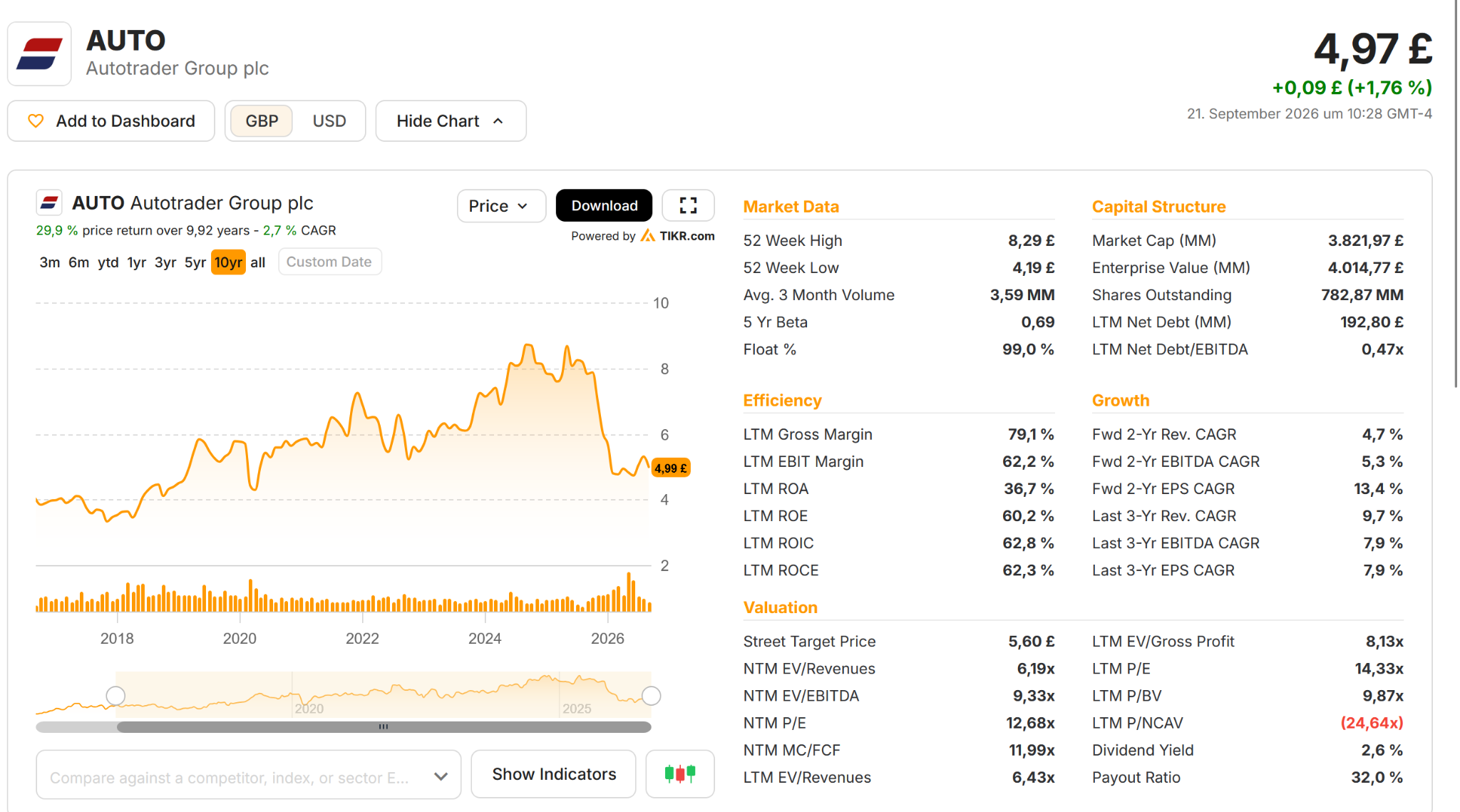
It is supposed to have a market share of 75-80% in the UK. Over the last 10 years, it has not done much especially after it got hit by “SAASocalypse” fears:

The stock is a little bit more expensive than Money Group, but almost absurdly profitable.

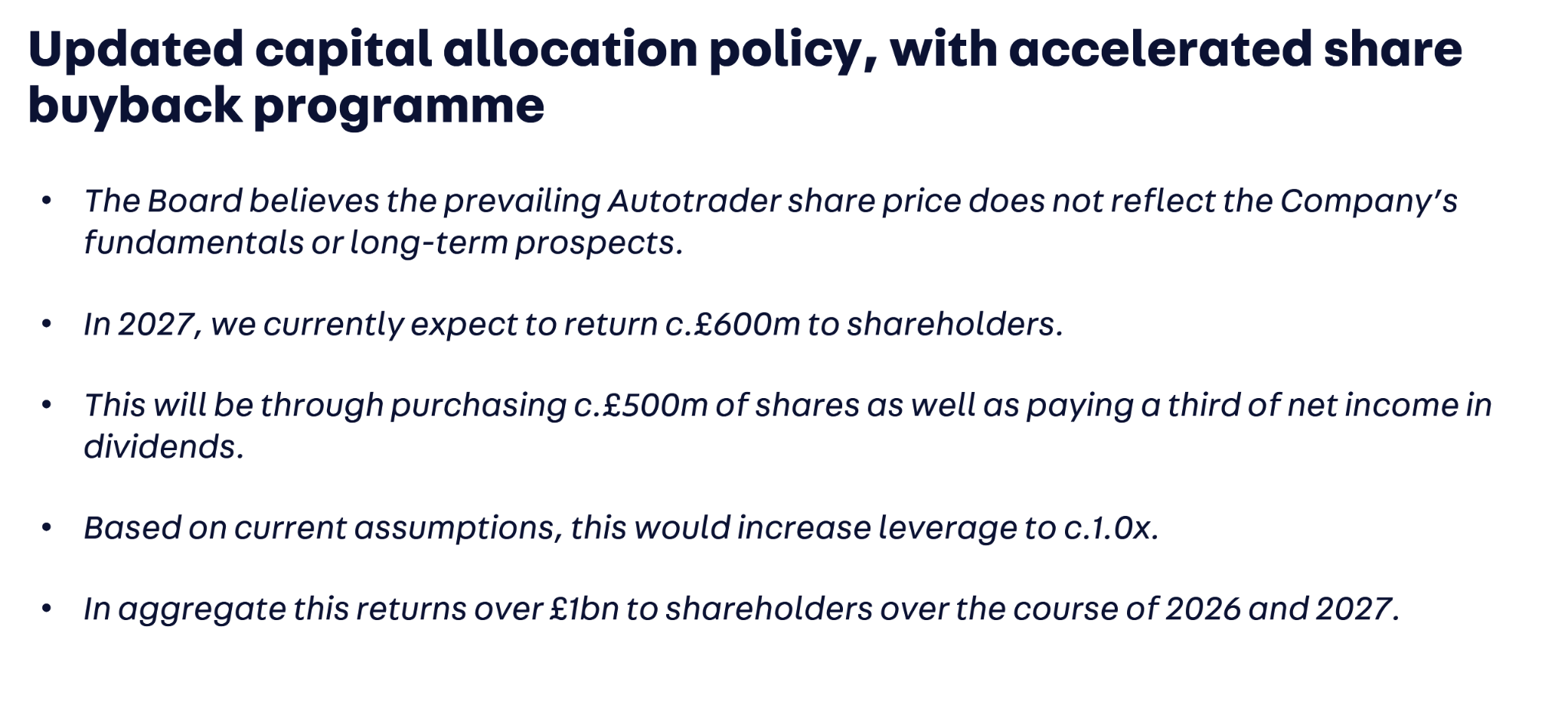
What is worth mentioning is that Autotrader has already started and committed to a massive share repurchase program:

One additional threat for Autotrade is that Amazon seems to be going for a piece of Autotraders cake and wants to enter the market still in 2026.

In the US, where Amazon is already in the market, success so far seems to be mixed at best. It reminds me a little bit about the auto tire business where Amazon started some years ago but didn’t succeed either.

Rightmove

What Autotrader is to cars, Rightmove is to real estate with the only exception that Brits are really obsessed about real estate. Almost any (friendly) Brit I know is using far too much time scrolling through right move listings.

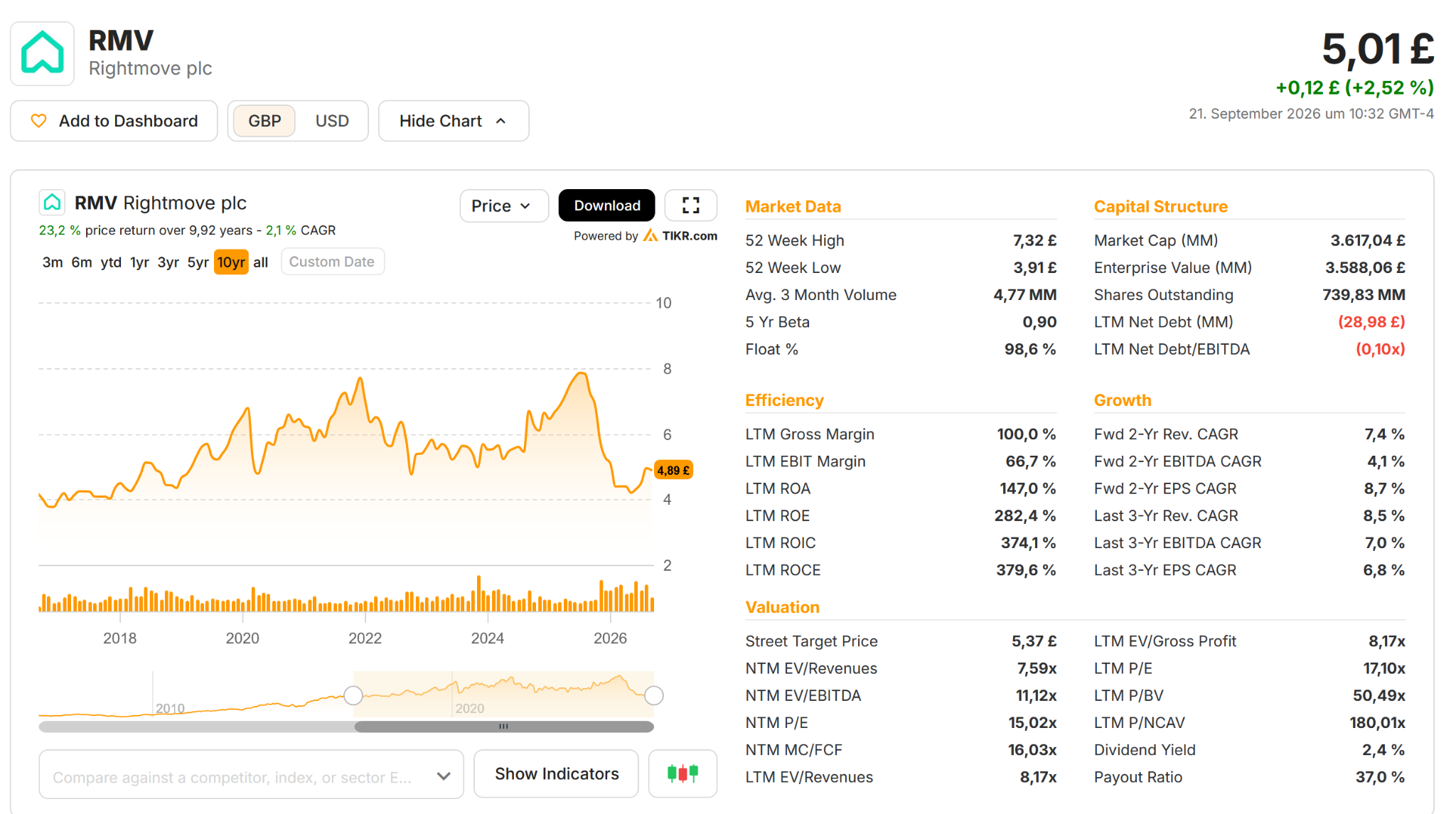
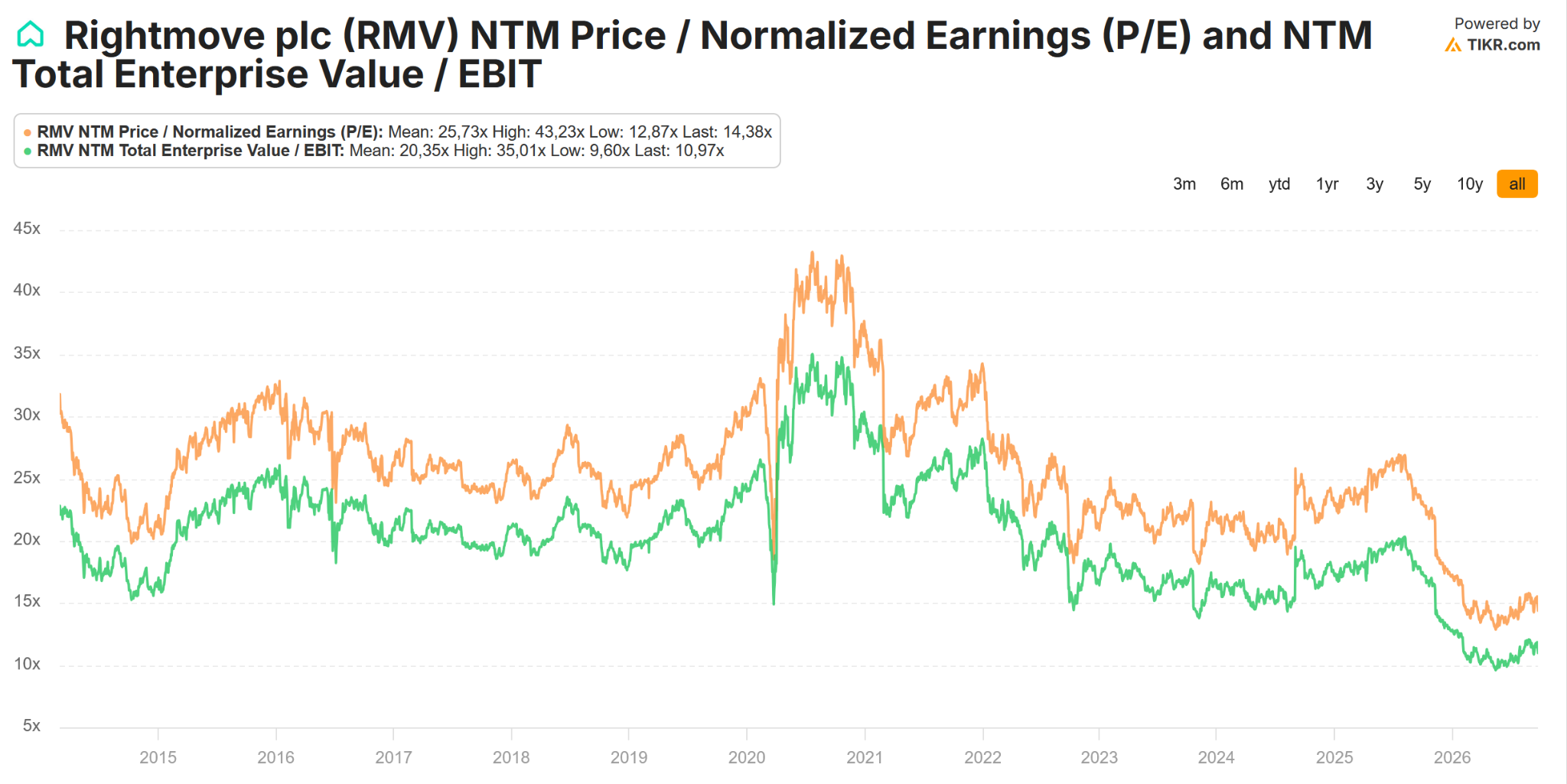
Rightmove is the most profitable of the three and also the most expensive at 15x next year P/E.

In 2024, REA, the “rightmove of Australia” tried to take over Rightmove at a final offer of 7,80 GBP/share but wasn’t successful.

Interestingly, earnings are up between 20-30% depending on which line you look at since then, but the stock is trading at a deep discount to that take-over bid.

The AI Threat:

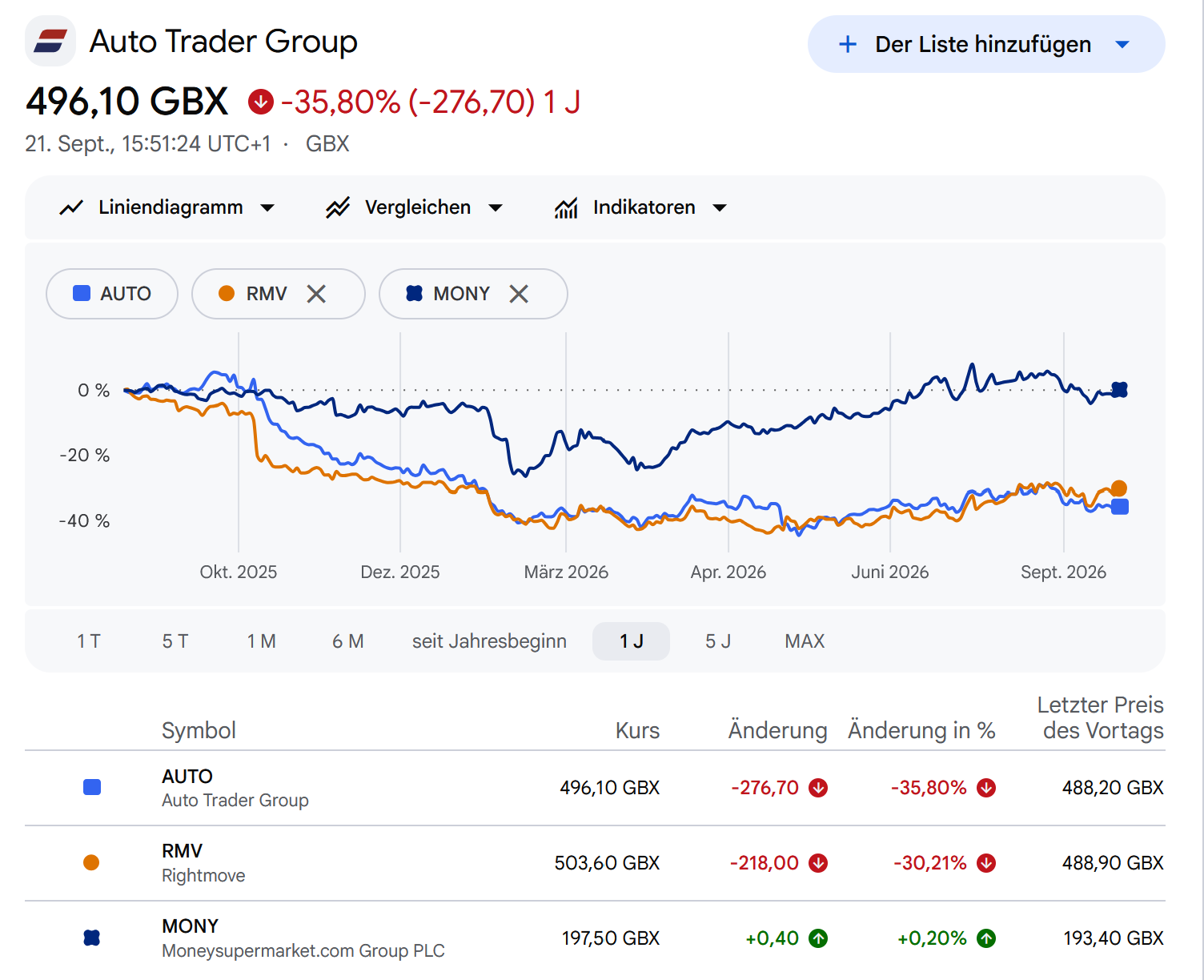
Looking at 1 year charts we can see that especially Autotrader and Rightmove were hit by AI fears, Moneysupermarket a little bit less so:

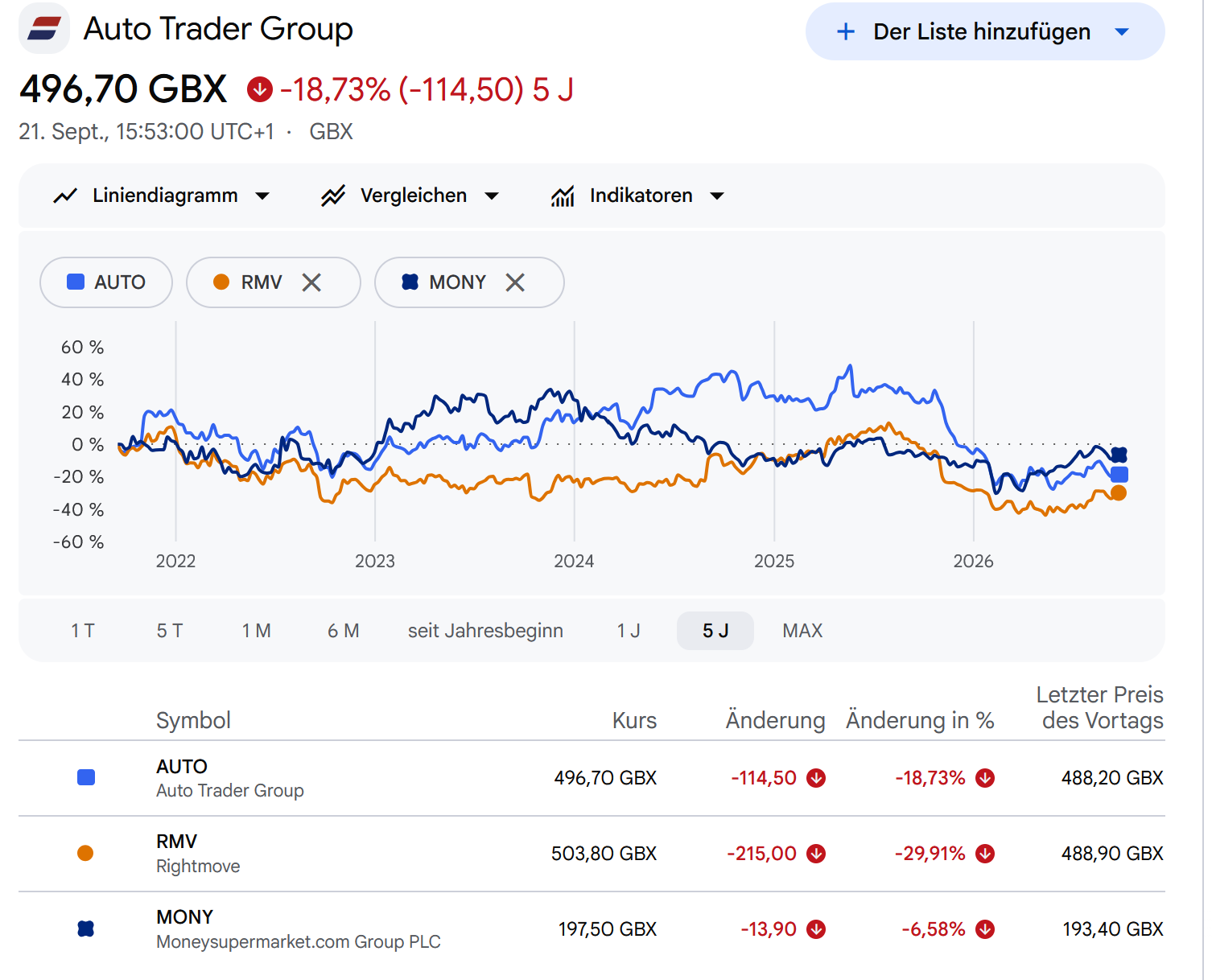
The 5 year chart shows that Moneysupermarket started to struggle earlier, in 2024:

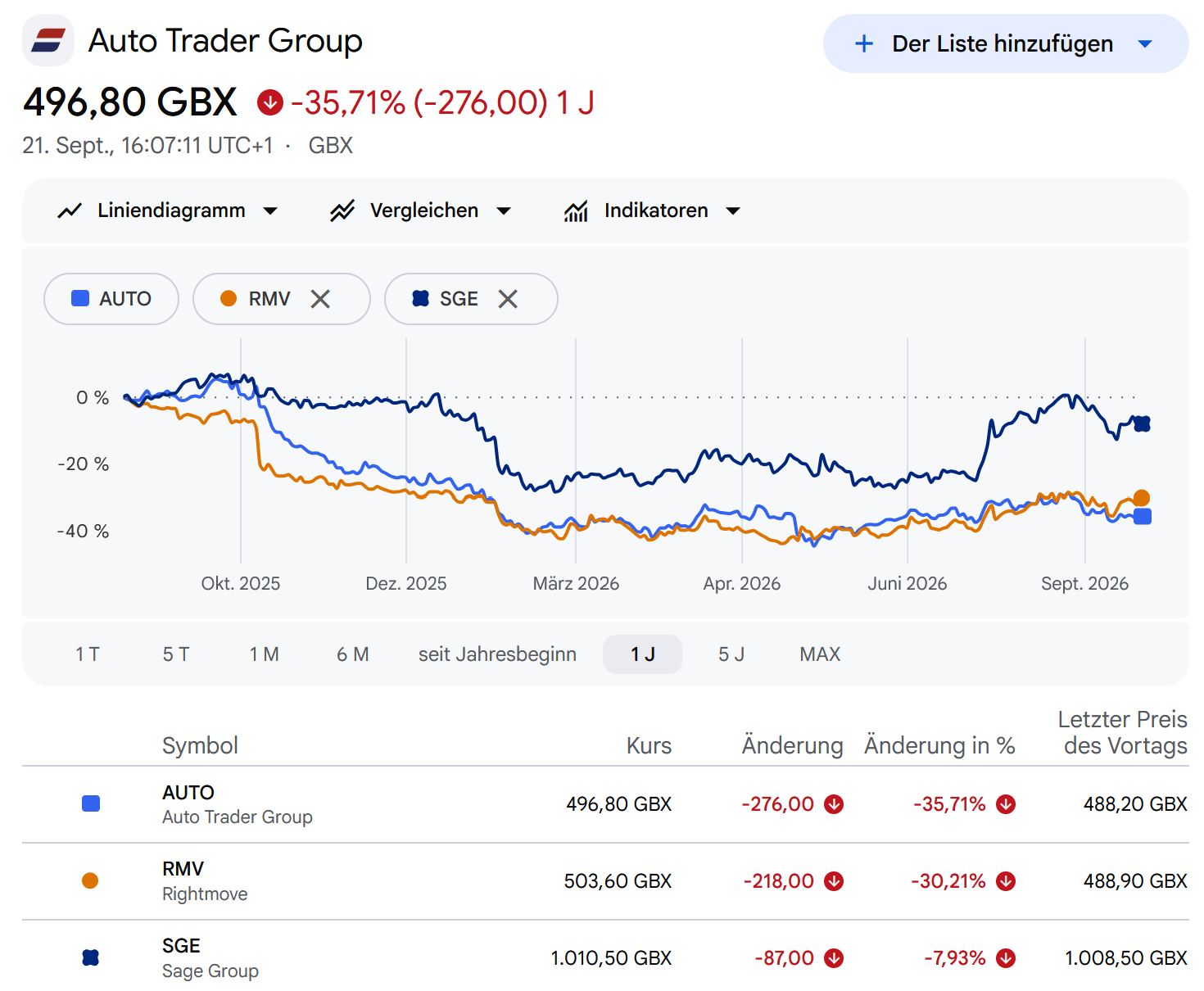
While we are having fun with charts, we can compare Autotrader and Rightmove with Sage, the listed UK Accounting Software company:

Interestingly, Sage has recovered most of its losses in the last 12 months, wile Autotrader and Rightmove so far have not.

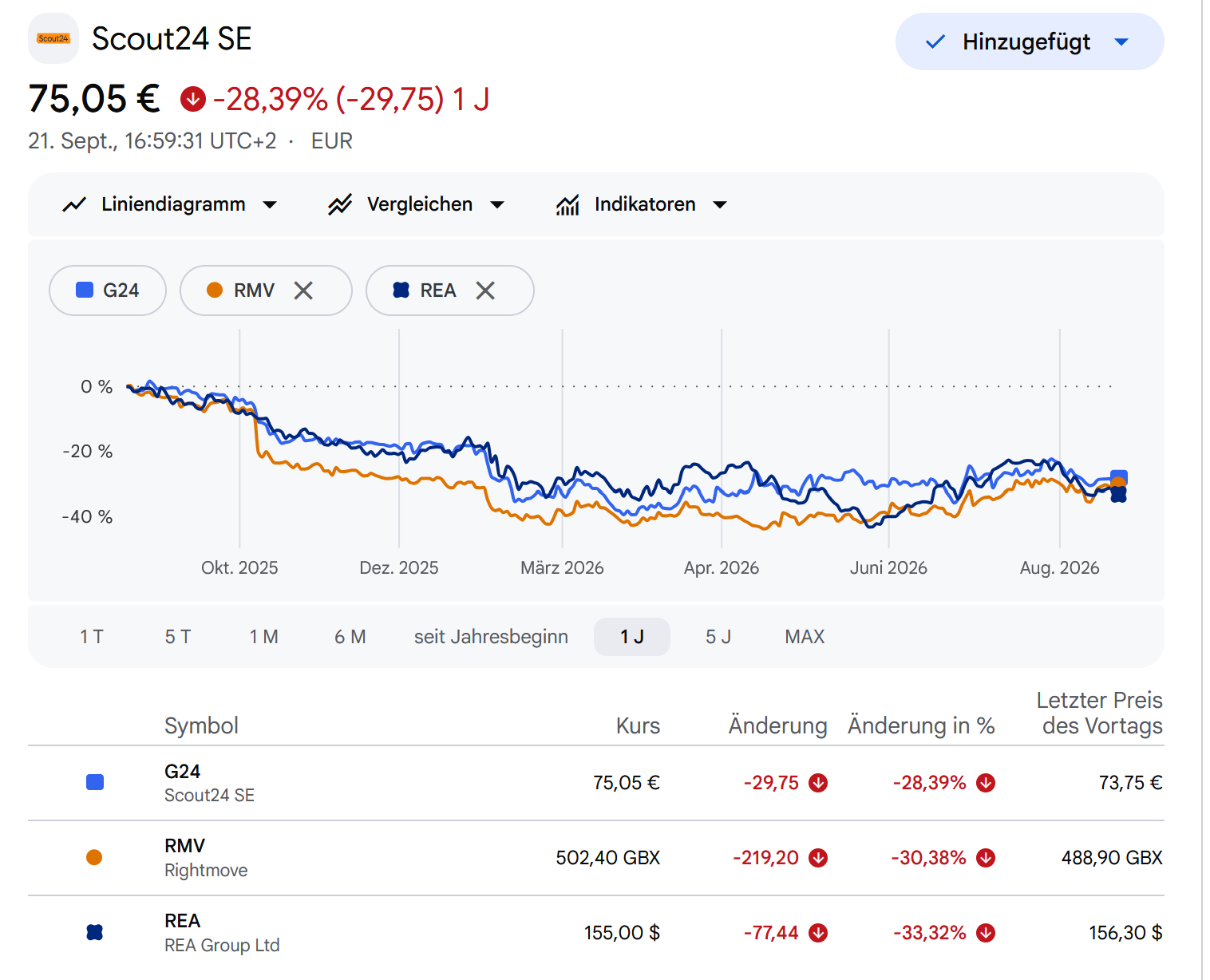
Now to our last Chart comparison. This time Rightmove with Scout24 from Germany and REA from Australia which shows that across geographies, the stock market is really sceptical vs. portals and that this is not only a UK thing:

So the Billion Dollar question here is clearly: Will AI (and especially agents) disrupt the “Two sided marketplace” model and if yes, how fast will this happen ?

Clearly, Vibe coding a new AutoTrader or Rightmove or Moneysupermarket is not so hard. However that leaves you with the main task:

  • how to you motivate, both, corporate and retail clients to move over to the new “platform” quickly ?

Or, will people just go to their favorite chatbot and type in: Please look for a new house and buy it for me ?

In my opinion, the audience of the current platforms could be quite sticky, especially in the case of Rightmove, which to my understanding is only partially about buying a new house and partially just entertainment.

And yes, there will be people going directly through agents but an agent in order to deliver the same result as a good comparison site/market place would need to have the same infrastructure, i.e. connections to companies in order to get the required updated information and access to actually do the transactions.

Not aMUSEd – the Update

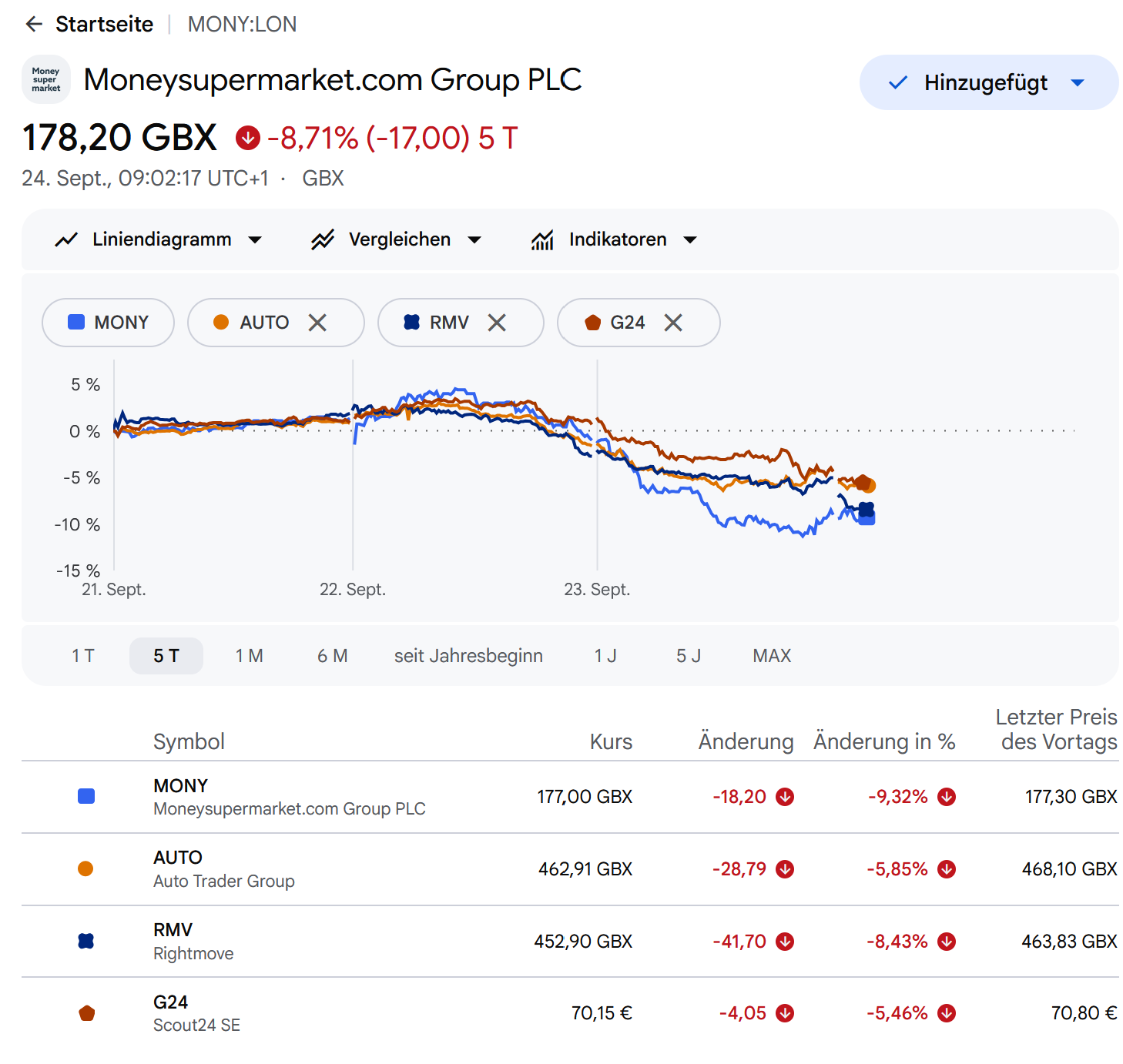
Now while I was writing the above and also starting to build my positions slowly, the share prices of all three stocks (and its peers) started to go down pretty dramatically, as this chart shows:

There was no individual news for those companies but rather the sudden “insight” that Meta’s launch and early success of its Agentic App “Muse” will be a problem for everyone who currently lives from comparing things online. 

Muse is currently only available in the US and has shot up to the number 1 downloaded App over there. 

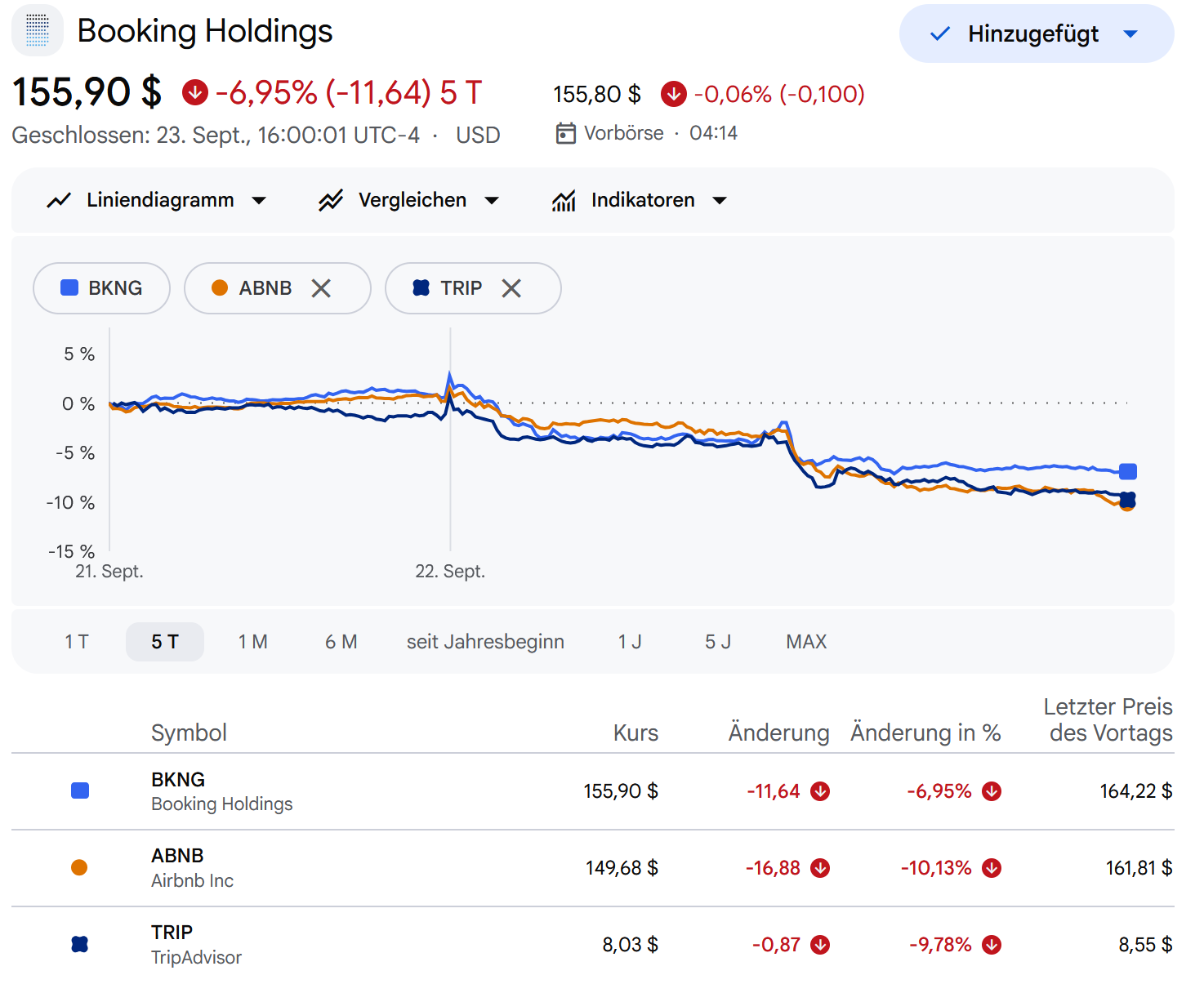
In the past few days, among other stocks, also travel related “aggregator” stocks went down significantly because of this:

The question is clearly: How real is that fear of (short term) disruption ?

I think it makes sense to look at a few “hurdles” for the agentic take-over:

  1. Consumer behaviour US vs. RoW

If we look at Mony Group for instance whose main product is insurance comparison: In the UK, more than 80% of insurance policies are closed/renewed through comparison portals. In the US, this business model is quasi non-existent.

To my understanding, Americans might maybe call one other carrier if they feel that their insurance contract is too expensive, but they would never make the effort to compare their insurance portfolio on a regular basis.

In the UK, this is normal, the same here in Germany. Normally, your favourite portal will know all your relevant details and will actively send you better offers before the old contracts expire. One click and you have cheaper insurance.

So for any active comparison portal user, there is very little to gain by using an AI agent, rather the opposite. And this is before the fact that insurance comparison is a regulated business (as insurance is).

  1. Real time capabilities of LLMs

One thing where at least I struggle a lot with LLMs is to make sure that they really use real time information and not some stale training data. Not sure how they solve it with agents, but I guess that that might still be an issue. Especially if you are looking for a used car or a flat to rent, you need to be really quick for the good deals.

Most portals already offer some kind of “alarm” function for interesting objects. I am not sure if and how AI agents can make sure to have access to the newest offers.

  1. Anti-agent measures 

The most interesting aspect in my opinion will be to see if and to what extent the existing owners of “comparison inventory” will allow AI agents onto their platform. Amazon for instance, has already blocked Muse, which is no surprise as Amaon’s Ad model would be jeopardized. 

Amazon is also smart enough, not to let Meta access its inventory and also its ship infrastructure. 

That’s maybe another point here: At least in the business world, Meta is not your partner of choice. Noone likes them, no one trusts them.

So we could go on and on, but I do not think and especially in “comparison crazy” UK, that AI Agents will be a super fast disruptive force that will make the incubents worthless over night.

But, and this is a big BUT: The stock market could act as this is the case for quite some time.

Whenever the overall AI narrative looks good and AI stocks go up, these stocks, that are perceived as AI losers will go down. No matter if the fundamentals shows something or not.

KPI overview:

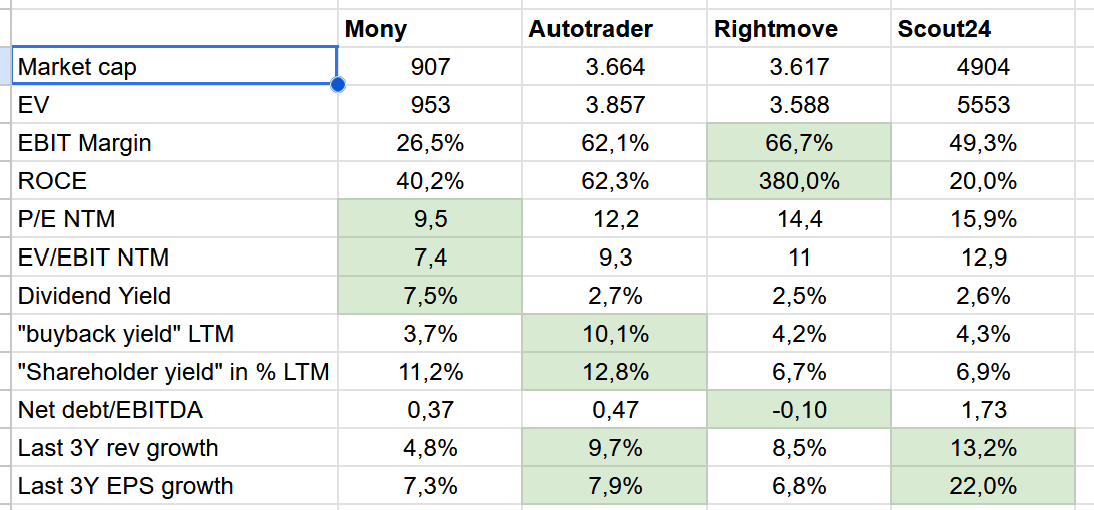
Here is a quick overview of some KPIs that I looked at, including German real estate portal Scout24 which is similar to Rightmove.

We can see that Mony is really cheap, whereas Rightmove is clearly the most profitable. Autotrader is in between with the biggest “buyback yield”.

Scout 24 is clearly more expensive, most likely because growth has been higher than for the UK players, but that is also a risk if AI Agent adoption happens faster than I assume. For this reason and because I wanted UK exposure, I didn’t include them in the basket (yet).

Multiple compression

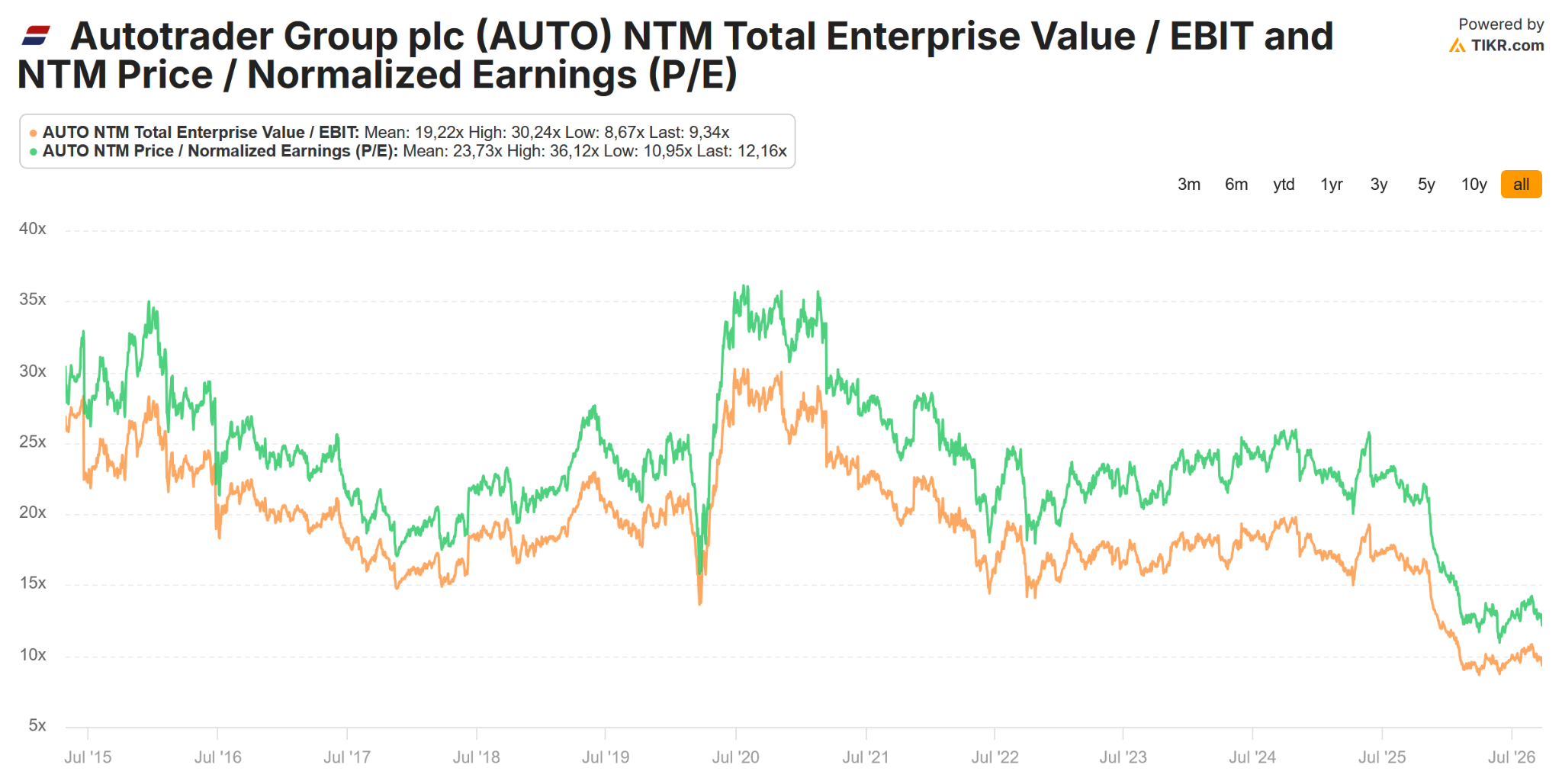
For all 3 stocks, valuation multiples have been compressed significantly. Let’s look at Autotrader first, which was only listed in 2015:

The P/E and EV/EBIT multiples are at absolute lows and at around1/2 of the historical mean.

For Rightmove, this looks very similar:

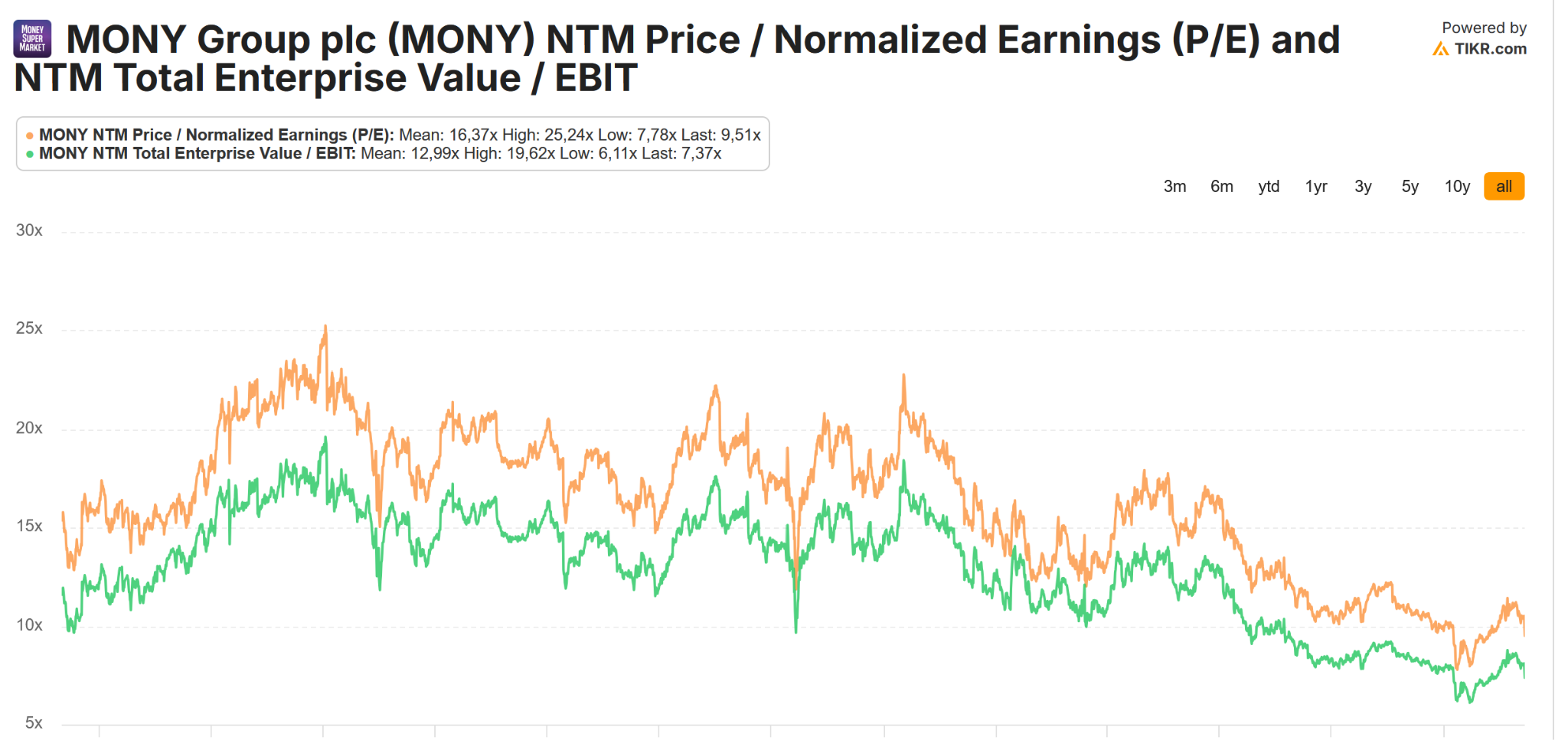
Money was never that expensive but is also now historically cheap:

While “mean reversion” is not a good investment case as such in a disruptive environment, it clearly shows that the stocks are at least cheap compared to historical valuations. Not that long ago, investors thought that a P/E of 30x is fair for Rightmove.

The Basket:

As a start, I allocated to each UK stock (Mony, Autotrader, Rightmove) 1% of the portfolio, making it a 3% position overall. As purchase price I assume an average price at ~5% above today’s closing price each.

I will need to decide going forward if I either increase the size per stock a little or add maybe a few other UK stocks to the basket. We’ll see. At the moment I might go to 1,5% per stock and have overall maybe 5 UK stocks in that basket.

My time horizon for this trade is  15-18 months and I am looking for an upside of 30-50% in total (including dividends) if some normalization kicks in.

As the performance of my “basket trades” so far was rather mixed (Freedom Energy basket was OK, freedom insulation less so), please wish me luck on this one.

Summary:

Investing into comparison portals aka 2 sided market places at the moment is clearly a “pain trade”. The risk of getting punched in the face short term is quite high.

On the other hand, many of these businesses are extremely high quality and as cheap as they have been for the last 10 or 15 years

For the UK players, based on what we have seen in other areas, the probability of M&A action is not zero and I am also convinced that especially for the UK, the fear of a quick take over through AI agents (Muse) is overblown.

Fundsmith 6M letter – Active vs. passive, Momentum & Style change

Management Summary:

In this post, out of pure self-interest, I looked a little bit deeper into Terry Smith’s controversial 6M Fundsmith report and focus on the “Active vs. Passive” debate, how Fundsmith’s Buys and Sells look under my own Momentum scoring and some thoughts on changes in investment management styles. 

Intro & Background

Terry Smith, the outspoken Boss of UK “Quality Value” Fund Manager Fundsmith dropped a quite unexpected 6M letter to investors where he basically communicated a pretty drastic pivot compared to what he said over the past 15 years.

In an “unprecedented” move, he switched ~50% of the portfolio within 6 months which is very unusual for his fund. In previous years, annual turnover of the portfolio was on average less than 10%. 

His mantra of “do nothing” was repeated in every letter and often repeated in his talks. 

In the most recent letter, he blames, as several times before, “passive ETFs” for market distortions and claims that those active managers that are currently successful are most likely “momentum chasers”.

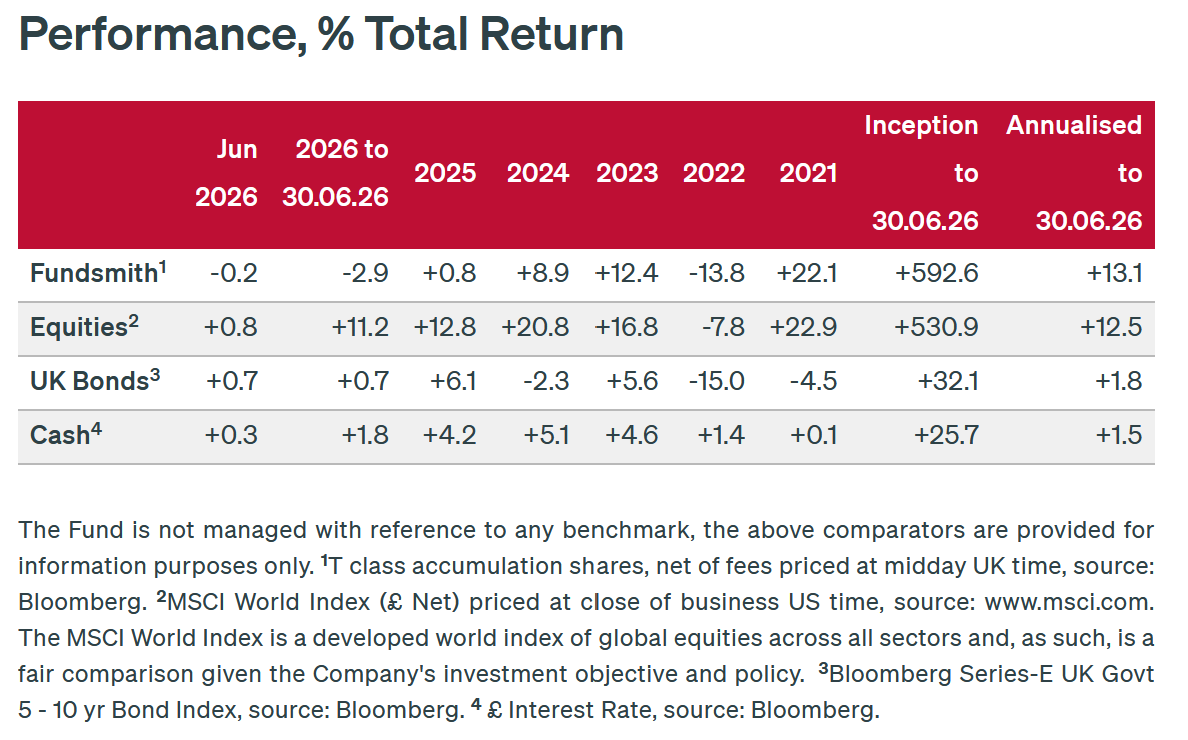
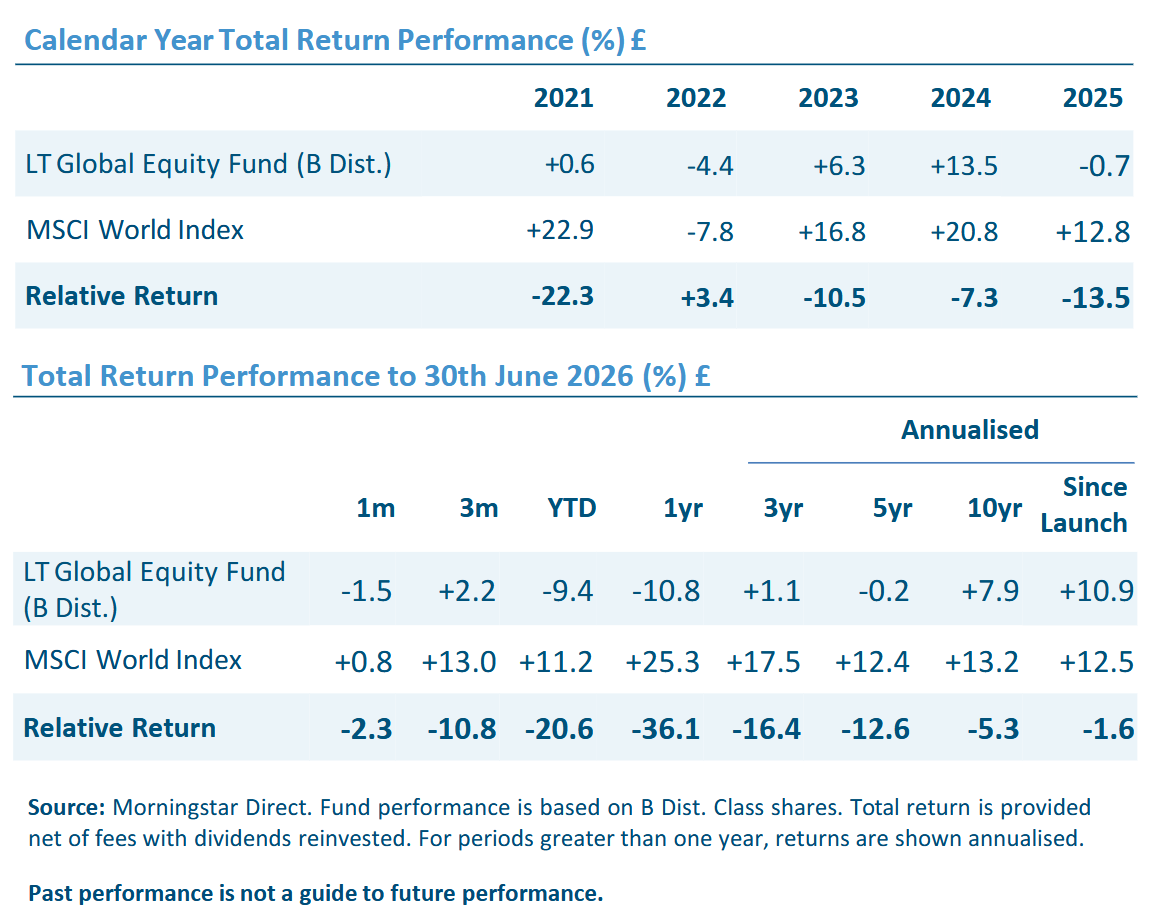
Fundsmith to be clear is not the worst active fund. With a TER of ~1% they are also not on the extremely expensive side and since inception, the track record is still pretty ok. However, a quick look at his recent fund factsheet shows that for the past 4 ½ years, the fund underperformed the MSCI World pretty drastically:

He underperformed both, in up markets and in the down year 2022. So it is clearly not a “low vol” effect.

Nevertheless I found that letter interesting due to the following aspects in which I will dive a little bit more:

  1. Active vs. Passive
  2. Smith’s somehow inconsistent treatment of “momentum” which is a factor I have been paying more attention to since some time now
  3. The question of how to generally shift/pivot/adapt an investment strategy (if at all)
  1. Active vs. Passive

I actually read the Substack post that Terry Smith referenced which can be found here:

It summarizes quite well the general view from many active managers why too much index investing is very dangerous and might end in a total collapse of the stock market. While there might be a (smallish) probability for this scenario, it sounds a little bit like the typical “Old man shouting to the clouds” cartoon.

On the other hand, the article also doesn’t really cover that as a whole, Active Management just has never really justified its rather significant cost.

In the “good old times”, active funds had been the gate keepers between individual investors and the stock market with the only alternative being stock brokers.

These days however, the ease of buying an ETF and the low cost is clearly a very attractive value proposition compared to “classical” funds where often still an intermediary is clipping an additional fee (and or the bank).

In the US, the largest market for funds globally, ETFs in general are also significantly more tax efficient than (active) Mutual Funds. 

Only claiming that there will be Doom with too many passive structures is not so convincing and rather looks like an attempt to scare regulators in protecting the still very profitable business of underperforming asset managers and wealth advisors. 

In my opinion, these days an active manager really needs to have a more convincing story than just that one from Mr. Evan-Cook. Your really need to offer something to investors that they can’t get through low cost Index ETFs which is not so easy.

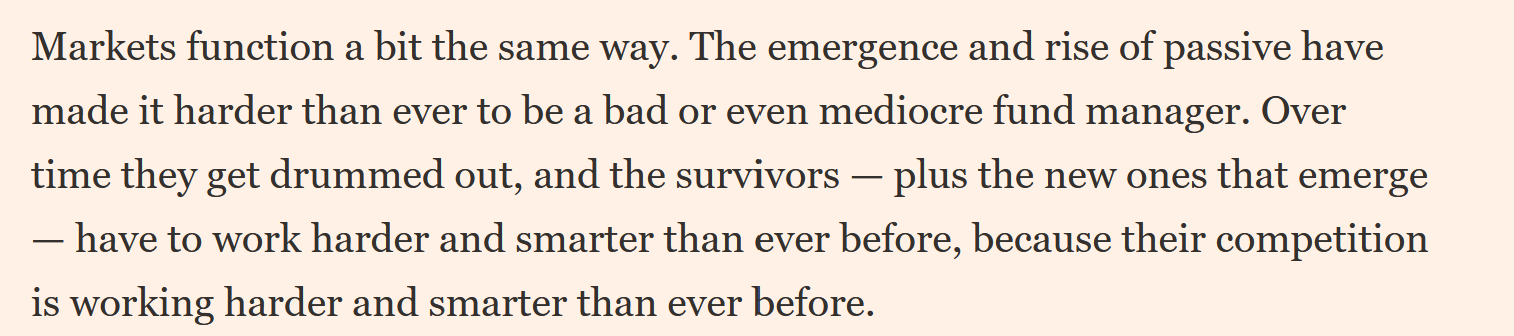
Just a few days ago, FT Alphaville tried to debunk another narrative: That if there are only a few active managers left, there will be a big bounty for those remaining managers.

They argue that the opposite is true: As the remaining ones are the smart ones, there are not enough “patsies” to make the “big hay”:

In any case, it will be interesting to see how the active vs. passive debate continues, but there won’t be a magic turnaround any time soon in my opinion. Index ETFs are here to stay and the Active Management industry really needs to find ways to create actual value for investors in some way.

2) Momentum

In the letter, it almost seems that Terry Smith has written parts without looking at the whole “enchilada”.

On page 3&4 he shows a chart that Momentum is dangerously high as last seen in 1999 before the Dotcom Boom. And then, only a few pages later he writes the following:

We will take more account of momentum — both fundamental and share price — in our investment decisions. In particular, we will be much less willing to deploy the time-honoured technique of buying quality companies when they hit a glitch

As some of my readers might remember, I did start to include momentum into my decision process a year ago. But  in a less drastic way than Terry Smith and more “gradual”.

In my comprehensive Scoring system, Momentum is reflected by 4 indicators as part of an overall score that also includes “Quality” and “Valuation”:

For “momentum” my crude assessment looks as follows:

  • Current EPS momentum (i.e. EPS LTM is higher than the previous year): 1 Point if Yes, 0 otherwise
  • Stock price is above the 200 day moving average 1 Point if Yes, 0 otherwise
  • The stock price performance of the last 6 Months (1 Month lag) is positive or negative (1 Point of Performance is > +5%, -1 point if Performance is <-5%, 0 points otherwise)
  • The stock price performance of the last 12 Months (1 Month lag) is positive or negative (1 Point of Performance is > +5%, -1 point if Performance is <-5%, 0 points otherwise)

So overall, my “momentum score” can go from  minimum of -2 to a maximum of +4 within a total score that can reach, including Quality and Valuation, scores a total score of 18.

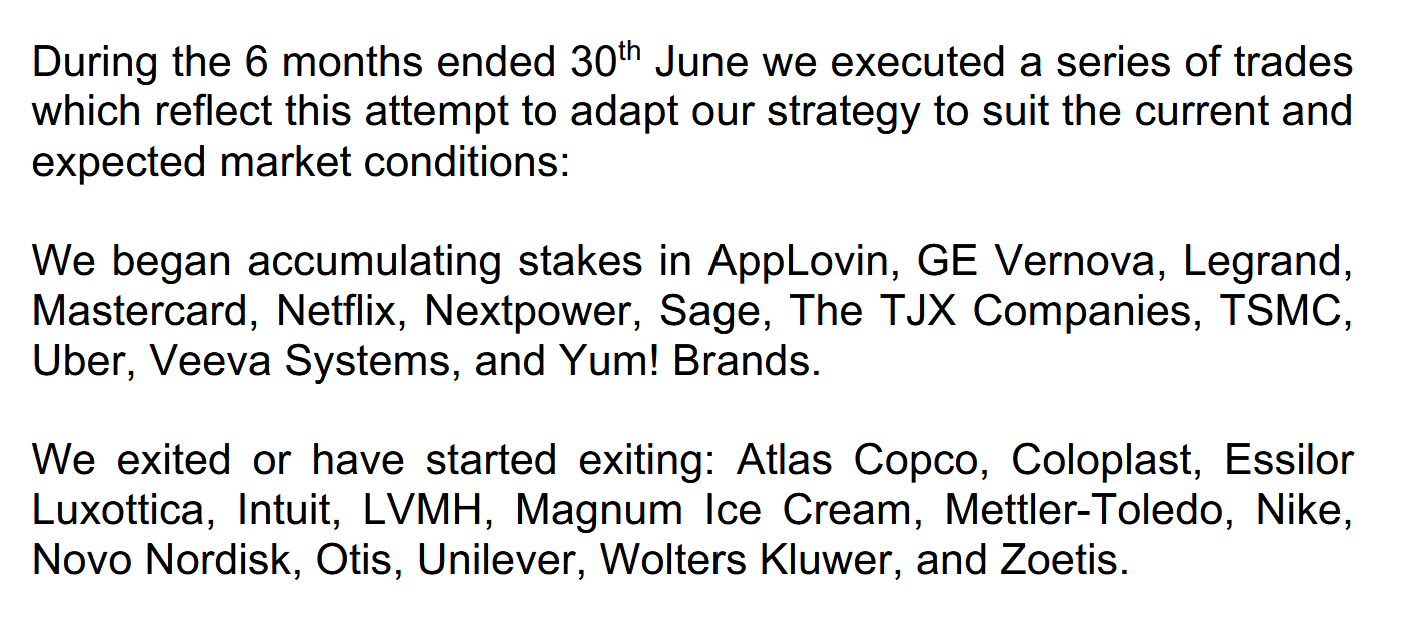
So for fun I just tried to score the stocks that Fundsmith sold and bought. Here is Terry’s summary:

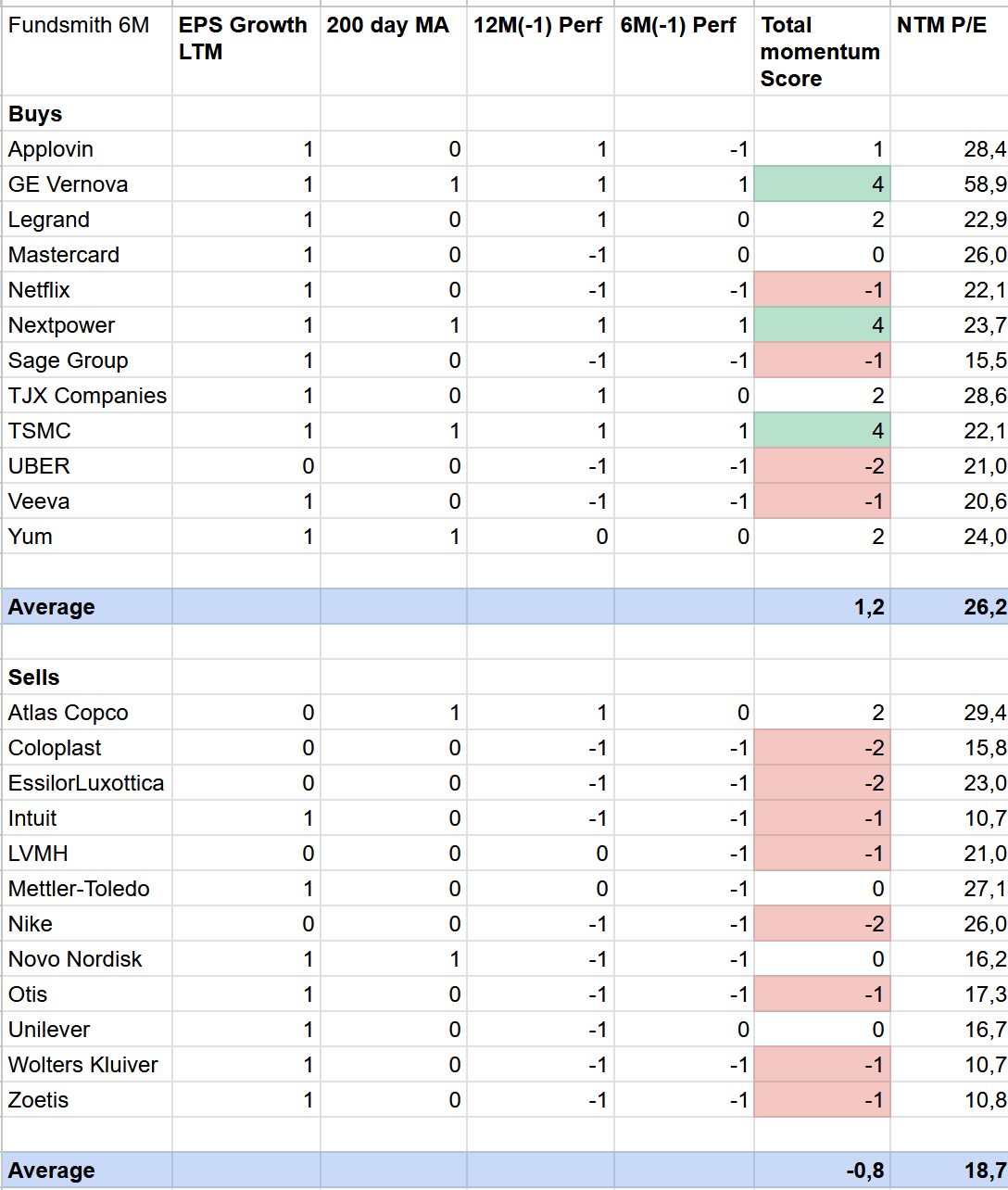
And here is the table scoring Terry’s stocks, both, the buys and sells with my crude momentum measure:

Two things stand out in aggregate:

The stocks that he sold, on average, look indeed worse from a momentum perspective than the ones he bought. And the stocks he sold are a lot cheaper than the ones he bought.

It’s also interesting that only 3 of the stocks he bought would get a maximum Momentum score in my system (GE Vernova, TSMC and Nextpower). Some of the stocks have rather negative Momentum under my definition (Uber, Netflix & Veeva).

It’s also obvious that he wanted to have some exposure to the Datacentre /AI theme via TSMC, GE Veronica, NextPower, Legrand and maybe UBER.

Overall it looks to me that he still focuses on fundamentals but looks for more “positive fundamental momentum”. 

One question I have been asking myself is why he didn’t sell some of these stocks earlier. One example which I have looked into under another context is Essilor Luxottica. Here is the chart of the implicit NTM PE over the past 10 years:

We can see that until the end of 2025, the stock was valued at 40x NTM P/E, far above the average.

If we look at the margin and Return on Capital ratios over time we can see that after the merger between Essilor and Luxottica, margins never recovered there previous level and Return on Capital was a depressing mid single digit.

That begs the question why you would want to own such a stock at such a valuation in the first place.

Anyway, Terry Smith clearly now wants to avoid “unloved” stocks and is looking to invest more into stocks that do at least from a fundamental perspective well, even if the new stocks are on average significantly more expensive than the sold ones.

With such an approach, in my opinion, his “do nothing” mantra won’t work, because in the current environment, fundamentals can change ven more quickly than before.

It will be interesting to see if and how fast he will turn over his portfolio going forward.

3) If and how to shift/pivot/adapt an investment strategy 

One “peer” to Terry Smith is Nick train from Linsell Train funds who has a similar “quality focused” approach. In his 6M letter (Global Fund) however, he is rather adding to his losers than selling them. One prominent example is Intuit:

But buying a consensus AI loser stock today doesn’t mean arguing no risk from AI (or anything else we haven’t yet seen coming). It means taking a calculated risk, based on

likelihood and the trade-off with price, and accepting the emotional discomfort of appearing unconventionally wrong. To give a pertinent example, Intuit was easily the Fund’s worst performer in June, declining 21% in USD terms, down now nearly two-thirds from last year’s highs. Whilst 2025’s valuation was arguably steep at a c.2.5% free cash flow yield, the collapse to what is now over 10% feels egregious. As above, we think it likely that the prior

bullishness resulted from the general extrapolation of past successes – with, it must be said, some justification: Intuit has grown revenues organically at double-digit rates every year this decade, whilst its EPS is up 4.5-fold versus FY2016. But the forward bearishness, predicated we assume on acute (but typically unsupported) fears of AI disintermediation, feels disproportionate. The non-GAAP multiple on next year’s EPS (which management still guide to grow at c.16-18%!) is now down to 11x. To achieve a normal nominal return (say the US market’s historic 9% p.a.) now implies negative forward earnings growth. As little as a year ago, analyst debate focused on whether Intuit could sustainably hit 20% revenue growth versus the prior mid-teens rates

I think the Nick Train vs. Terry Smith “contest” is an interesting case study on the merits of changing your investment approach abruptly.

One needs to mention that Nick Train’s track record for this fund is even worse than Terry Smith’s, underperforming the MSCI World by a pretty wide margin since inception in 2011:

Overall, I think in every long investment career, it will be necessary to change and adapt one’s approach to investment in order to stay relevant.

The most famous example here is Warren Buffett who changed his approach fundamentally at least 2 times. From Graham Deep Value to Quality to “Full scale take-over conglomerate” investing. With his initial approach, he would never had been able to reach the size that he has reached today. The same with listed-minority investments in general.

From what I have seen, a rapid increase in AUMs for any manager is often in the end much more a curse than a blessing. Yes, you earn a lot more fees but unless a manager significantly adjusts the strategy, returns will suffer after a certain increase almost inevitably.

The question is clearly how to do this in a way that does not create confusion on the investor side and is hopefully constructive for the future results.

In Terry Smith’s case, I am struggling a little bit with his previous mantra that “do nothing” is the one and only thing and then abruptly change that within a 6 month period. My feeling would have been that he should have toned down the language a little bit earlier already, unless he really did this pivot on short notice.

In Nick Train’s case, doing nothing (or not much) after now being down since inception is maybe also not 100% optimal. 

For a lot of institutional investors, 3 years are maybe the maximum they can tolerate underperformance before they pull the trigger. Both Fundsmith and Lindsell &Train are clearly past that mark.

From my perspective, every active fund manager should realize that luck is a big part of the game and when things are good, one should give some credit to good luck instead of claiming all the outperformance due to superior skills. I guess that might make things a little bit easier when inevitably things don’t look so great.

In any case, I do think that a shift in strategy should be prepared and executed including relevant and documented changes in process and also personnel.

What you clearly also need is some patience. Don’t expect that a structural change will improve performance on day one. This will need time.

In any case, as mentioned above, Active Equity Management is facing a lot of headwinds any way, which makes it even more difficult to dig yourself out from an “performance hole”.

Summary:

It is obviously too early to tell if and what we can learn from Terry Smith’s recent actions, but on the surface they look a little bit like a “panic move”.

Going forward, Lindsell & Train will be a good comparison because they seem to keep doing what they have been doing and are even doubling down on their losers.

In any case, for me personally it is clearly some kind of evidence that completely ignoring “momentum”, being fundamental or purely stock price driven is not a good idea. “Do nothing” in my opinion is harder than ever and maybe not the dominant strategy going forward. In my opinion, using momentum as an additional factor in stock picking and portfolio management can clearly improve the process to a certain extent.

Notes & impressions from Omaha 2026

This year, after a 7 year break, I once again went to the US to attend the Berkshire AGM. Just for clarification: I don’t own Berkshire shares and unfortunately never did because I always thought that they were too expensive.

Attendance:
As mentioned elsewhere, attendance was clearly lower than in the past. The arena was only half full, the overflow rooms almost empty. On the positive side, with less people it was much more relaxed. On the negative side, prices in Omaha during the weekend are still sky high. Hotel rooms have been very expensive and Steaks in the city steakhouses cost around 60-70 USD (plus sides, taxes and obligatory tip). Most restaurants were only half full. It also seems that hotel prices for the weekend were much lower just before the weekend.

Paying 21 USD for a pretty miserable “Lunch box” during the AGM was not big fun either.

I wonder if Omaha hotels and restaurants will still be able to charge those sky high prices next year.

AGM Content:

Greg Abel is clearly not Warren Buffett. He is much more a “normal”, more operative CEO than Buffett. He also  gave more air time to the other Berkshire business CEOs.

What I liked is that they clearly said that BNSF and Geico still have a lot of work to do, in order to become as good as their competitors. Another plus was that the Q&A session was not too long.

On the other side, Greg Abel clearly did not offer any philosophical insights on capital markets. This was different when Warren and Charlie were running the show and attracted the masses.  And I think it is a good thing that he didn’t even try to do it.

Buffett himself appeared twice, once in a video and then in a half time break interview with Betty Quick. This interview was actually a little bit “cringe” especially when he mentioned that Greg Abel, a Canadian would become American soon and how special an American Passport is. As a Canadian Berkshire investor, I would be pretty pissed off by those comments as it kind of implies that being a Canadian is not good enough to run Berkshire. In any case, I found it super hard to actually understand what Buffett was saying during the interview. 

From an “actionable idea” point of view, the only inspiration I took away from the AGM is the  Tokio Marine Insurance investment. This was clearly Ajit’s idea and despite showing his age, this guy knows what he is doing in insurance. It was also interesting that this was mentioned very prominently despite being a rather small position for Berkshire.

Overall it will be interesting to see how this will develop over the next few years. Will Omoha still remain a meeting point for investors from around the world or will there be another kind of Omaha elsewhere ? We’ll find out eventually.

Berkshire Stock

For Berkshire, I do think the biggest risk is that the company will be seen as a “normal” HoldCo or a normal Insurance company. Normal Holdco’s often trade at steep discounts to their “sum-of-the-part” value. Berkshire so far could always count on the “Buffett factor”, but it will be interesting if and for how long this lasts, especially as it is not easy to really understand who owns what (Insurance, Non-insurance) at Berkshire.

Another aspect is that Berkshire in the past was also seen as a good proxy for the overall US economy due to its significant diversification. These days, this is no longer the case as the portfolio lacks exposure mainly to Big Tech/Cloud/KI and Defense which have been the strongest performers over the previous years.

Maybe that will be an advantage going forward but Berkshire is clearly not a good proxy for the overall US economy anymore.

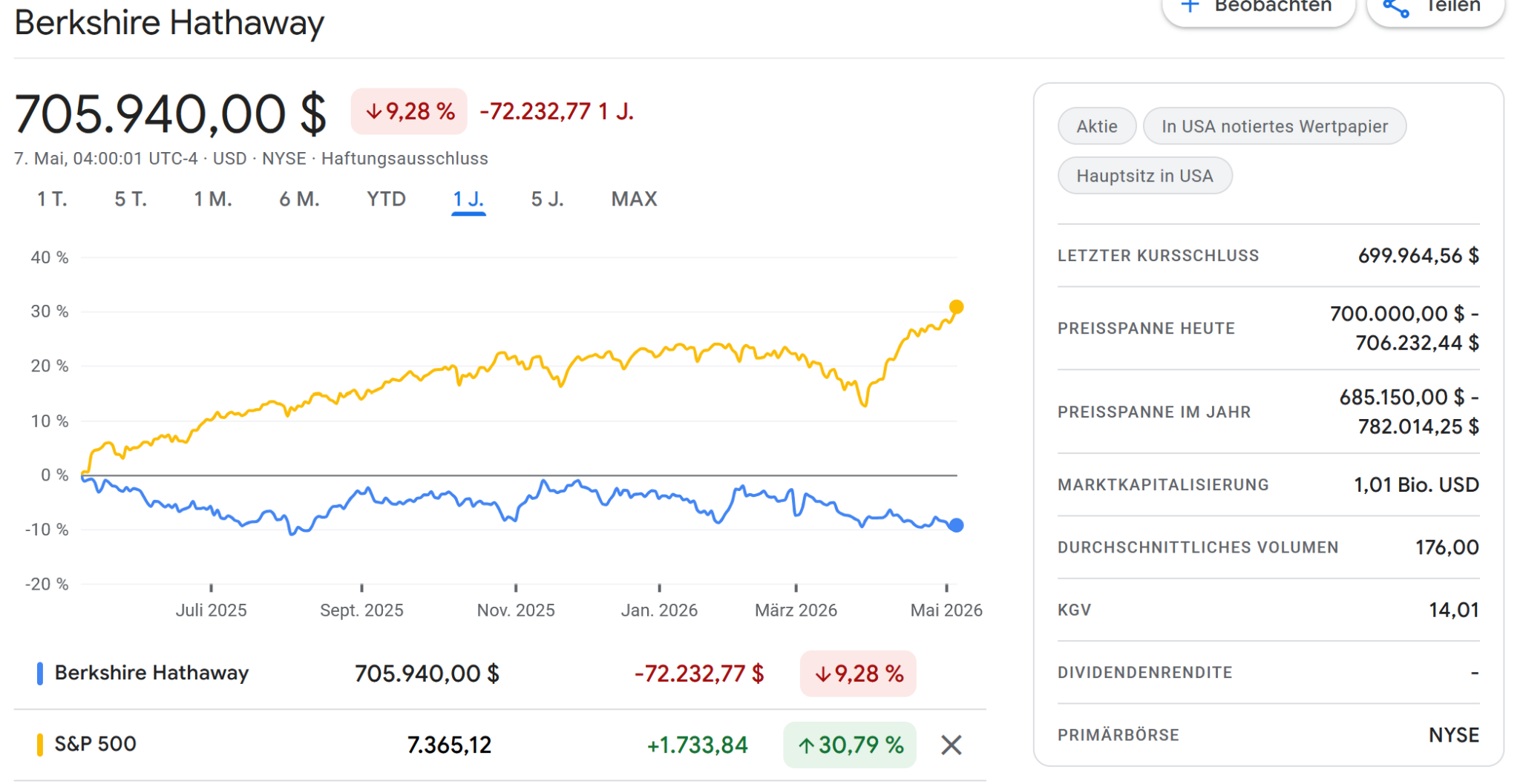
As I mentioned, I was never a shareholder, but at the moment I would be really cautious with the stock. The market seems to think in similar ways:

The most interesting question is clearly, what Greg Abel will do with the cash pile at Berkshire. The AGM provided very little insight into this unfortunately. 

General observations:

As in the past, for me the reason to go there is mostly the network of investors and the pre-AGM events. I was again able to attend a two day meeting of German Speaking investors in Omaha and before that did some company visits in Dallas with a group of German “investor friends”. As in the past, the actual Berkshire AGM was always only the cherry on the top.

I actually contemplated for some time if I should go to the US at all because of all the political noise and scary stories about the immigration. However, in my case, immigration was super easy and even kind of friendly (Dallas airport).

As in the past, in all private encounters, Americans are always super friendly. We were often asked by random people in the Supermarket or elsewhere where we come from and when we said “Germany” everyone was super friendly and mentioned relatives or previous visits. So on a personal level, at least the Americans that I met, were as friendly as they always were.

However, in most business settings it was clear that Americans are obviously avoiding to say anything negative about the current US Administration. We never pressed the topic but it is really interesting that no one seems to be willing to say anything critical at all.

In Dallas, one could see quite a lot of Waymos driving around plus some of the autonomous Ubers.

Price levels in general are clearly higher than in Europe. Restaurants, apart from basic Fast food places, are at least 50% more expensive than even in my very expensive hometown Munich, especially if you include taxes and the more or less obligatory 20% tip. It is also interesting how aggressively tipping is demanded even for basic non-service offerings like in airports or coffee shops. Unfortunately this is now much more common in Germany, too.

Another cost factor is that there is very little in the form of public transportation. You either need a rental car or pay for an Uber. Over can be sometimes quite expensive. In Denver, where I had a forced overnight stop-over, I paid almost 60 USD for a 15 minute ride, with Uber charging almost 50% of the total fee at 11 pm.

A final observation is that flying domestically in the US is also a pretty miserable experience. If you don’t pay extra, you will need to wait longer at Security and will board last. Boarding is always a “high stress” event as many Americans travel with the maximum allowed onboard luggage, so compartments fill up very quickly.

My personal highlight was the visit to a real Rodeo outside of Omaha. I have never been to such an event but it was great fun and even good “value for money”.

Will I go there again ?

Currently I am not sure. Overall, it is quite an expensive trip and the main attraction is to meet people that in theory, I could meet much easier in Europe than in far away Omaha. In addition, I had a pretty exhausting trip back.

From a pure financial perspective, going to Omaha is clearly not “great value”. However, on a personal level it was clearly a net positive. experience.

Quick Updates: EVS Broadcast, Thermador, Eurokai and Sixt

The last few days are super busy with 8 (or more ?) of my companies reporting 2025 numbers. That’s why I do only the first 4 right now, the others (Jensen, SFS, Bois Sauvage and Italmobiliare) will follow soon.

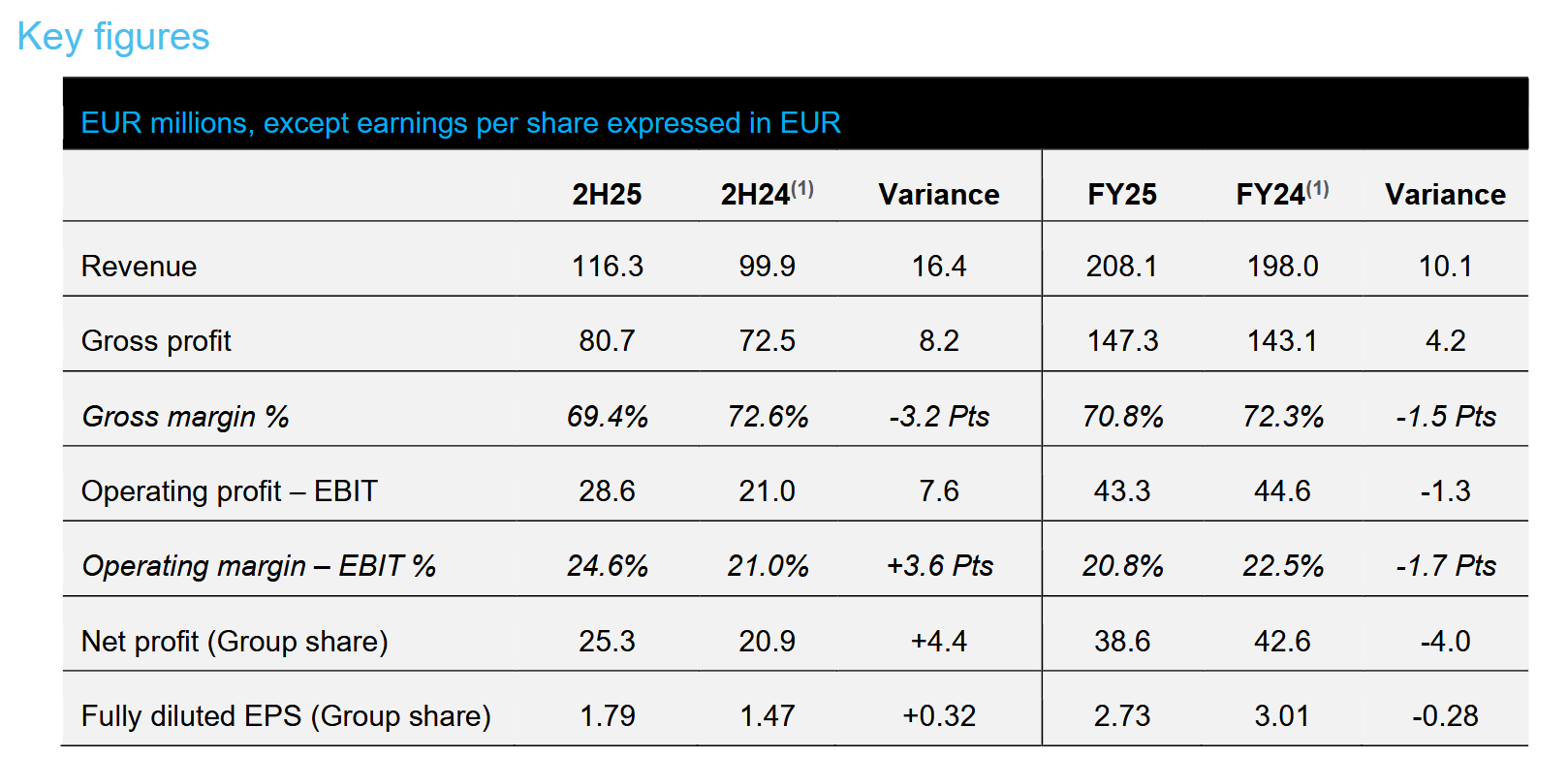
EVS Broadcast 2025 preliminary results

EVS released preliminary numbers last Friday. At first sight, they were a little bit of a “mixed bag”. Revenue was up which is good for an “odd” year, EPS slightly down. 

EVS explained that that they have invested into people to penetrate especially the US market. The second half of the year was really good, the first 6 months were weaker, mainly because of the “Tarif tantrum” from Uncle Donald.

The outlook for 2026 was quite good:

In the call, the CFO mentioned that for 2026 they don’t plan big additional investments into staff and that more M&A could be possible.

According to TIKR, analysts expect EPS of 3,36 for 2026. So far, the development is roughly within the initially expected case from 2024. Knowing EVS, there is also a good chance that they will revise 2026 numbers upwards during the year.

The 1,20 EUR dividend will compensate for waiting a little bit longer although Belgian withholding tax is not nice.

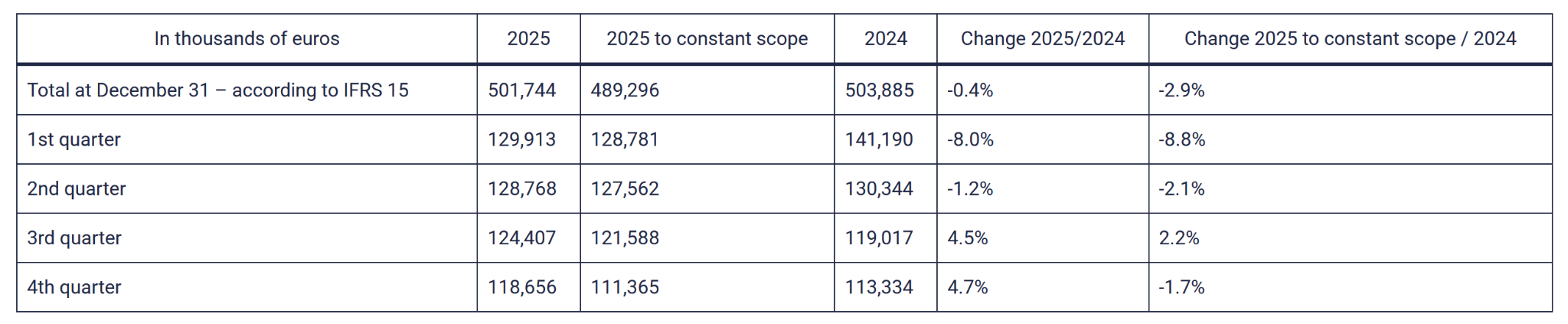
Thermador 2025 preliminary results

Thermador followed this week with 2025 results. As to be expected, sales were slightly negative y-oyy as construction and modernization is still weak in France:

What I find very surprising is how well the result kept up:

They managed to reduce working capital so they have a decent net cash position which should allow them again some M&A. And maybe, maybe the sector looks a little bit better in 2026. Analysts are quite positive. Thermador itself mentions a couple of Government programs which could be positive for them.

Thermador is a “hold” for me at the moment. Nothing to change here.

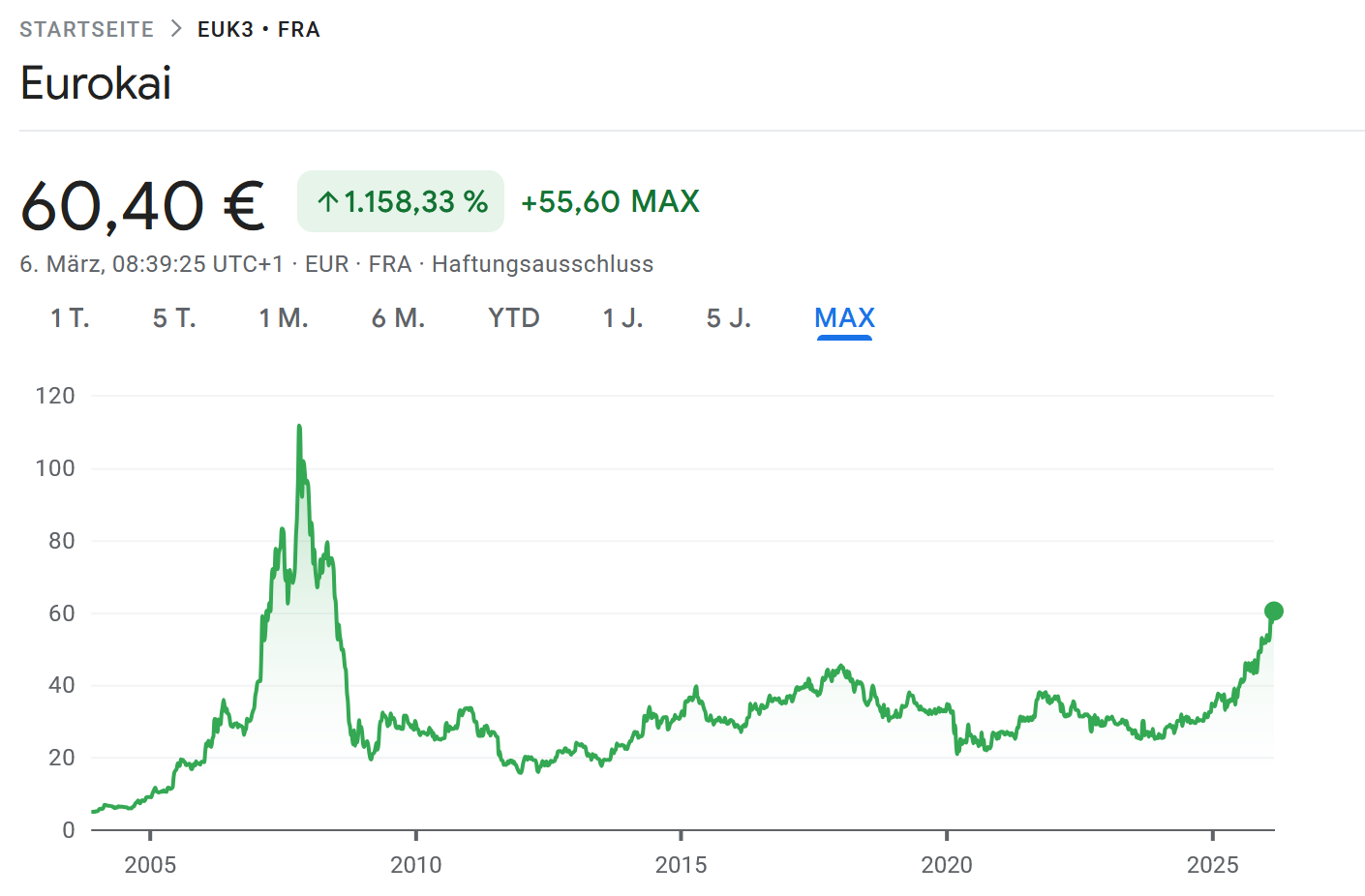
Eurokai preliminary results 20025

Eurokai also came out with an “Estimate” of the 2025 result. Typically for Eurokai, the result for 2025 will be significantly better than the revised estimates during the year.

They estimate now that 2025 Earnings will be above the 2024 earnings of 88 mn EUR (which included a 19 mn Non-cash positive one off).

Depending on what allocation the Golden share gets at Holdco level, this could result in an EPS of up to 6 EUR . Which means that despite the significant increase in the share price, Eurokai is still very cheap.

Investors should prepare once again for a very cautious outlook for 2026, although in my opinion, there are a lot of factors which indicate that 2026 could be once again better than 2025, even before any “juicy” one-off profits from partial sales to Container shippers.

The share price is now slowly approaching the historical ATHs from 2006/2007.

Eurokai is now by far my largest position but I leave that one untouched. 

Sixt Preliminary results 2025

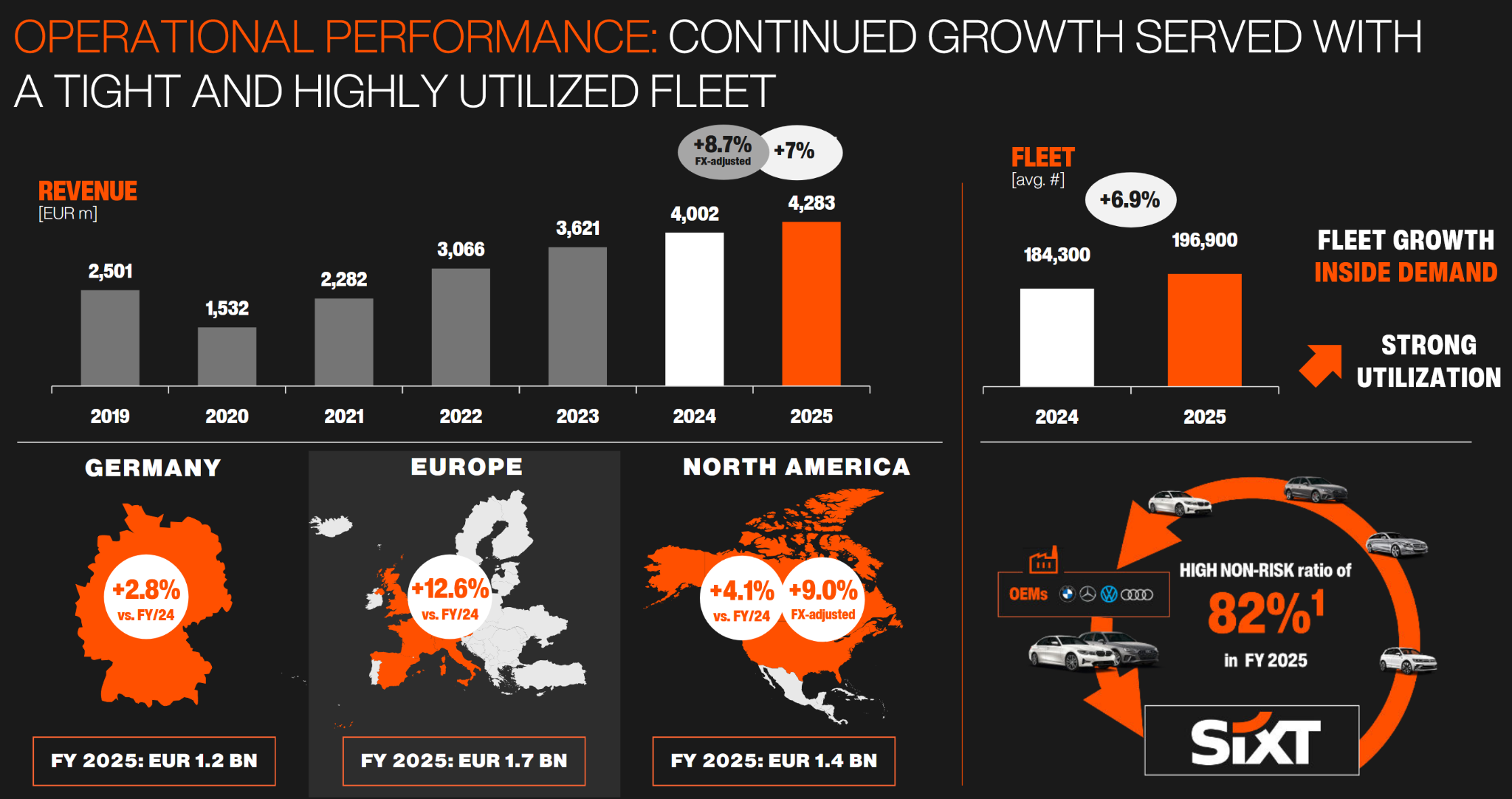
Sixt was the fourth company that week that released 2025 results. Although the results ended up to be a little bit below the forecast from Q3, it clearly seems that analysts have expected worse as Avis and Hertz both showed huge losses and declining revenues.

Sixt in contrast managed to grow also in the US:

And a significant increase in Profits:

What analysts seemed to have really liked was a quite optimistic outlook for 2026:

That seems to have surprised analysts and led to a “decoupling” of the share price from those of the weaker US competitors:

With a trailing P/E of 9 and a dividend yield of 5,8%, the pref shares are really “good value” in my opinion.

To be continued soon….

The Anatomy of a 100 Bagger – How a Canadian Investor managed to hold Google for 21 years

A few weeks ago, fellow blogger Govro from the Wintergems Substack casually mentioned on Twitter/X that he has now realised his first 100 bagger with Google/Alphabet.

I found this fascinating for several reasons. First, he is the only guy I know who has been holding Google/Alphabet for 20 years. Secondly, I had often pondered investing into Google/Alphabet but always found it too expensive. And thirdly, I never managed to hold a well performing stock for so long.

In addition, I also think that there are a lot of private investors out there, who are not famous, but from which one can learn maybe more than from “Super Stars” like Warren Buffett or Bill Ackman.

Therefore I was highly interested to learn better how he managed to do so and maybe this is kind of interesting for other investors as well.  

I sent him a list of questions and he answered them in detail. Below you’ll find the Q&A. The first questions are about his general investment approach, the second half on the Google position.

In any case, I highly recommend to follow his Substack (it’s 100% free).

My summary and learnings follows:

  1. Govro is an experienced, self-taught investor who identified Google early as a stock that was showing great growth at a reasonable valuation.
  2. He invested also in not so great tech stocks like Ebay and Yahoo, but managed to get out of them and keep the compounder
  3. As a “quality growth”  investor, he seems to be able to invest based on a pretty long time horizon (3-5 years at any time).
  4. His approach of diversifying between Fast and Slow compounders is quite unique. The slow compounders provide some stability and allow him to create liquidity in general market drawdowns/panics in order to increase his best performing positions
  5. He does deep research and concentrates on certain industries only, but on a global level
  6. He is able to hold a quite concentrated portfolio, allowing a single position to go up to 20% of the portfolio, or in the case of GOOG even 33%.
  7. His deep research and conviction also allow him to double down in a general market panic like 2008
  8. Besides Google, he owns another stock that is already up 50x. So Google/alphabet might not be just a “one hit wonder” for him

Compared to my approach, I think the main difference is clearly the strong focus on mid term growth, allowing for higher starting PE’s and the nerves to let a position run to 20% (or more) of the portfolio.

So far, I only “copied” two stocks from his portfolio, Bombardier and Logistec, which were great successes. I will clearly pay very high attention to what he is doing in the future. 

Here is the detailed Q&A with Govro:

Performance review Q2 2025 – Comment: “Just keep going or reflect & adapt ?”

In the first 6 months of 2025, the Value & Opportunity portfolio gained  +5,8% (including dividends, no taxes) against a gain of +15,6% for the Benchmark (Eurostoxx50 (25%), EuroStoxx small 200 (25%), DAX (30%), MDAX (20%), all TR indices).

Links to previous Performance reviews can be found on the Performance Page of the blog.

Performance review:

As mentioned in Q1, in relative terms 2025 turned out to be a tough year. Despite my traditional overweight in European stocks, I didn’t have enough exposure to performing sectors (Financials, Defense) but instead too much exposure to weak sectors like Oil/Energy related (ATD, DCC), Alcohol (TFF) or construction (Thermador, Samse etc.). I also had no expsoure to takeovers or buy outs.

The only positive news is that June was a relatively good month, in relative terms the best month since December 2023 and the first few days in July looked quite good as well.

Read more

My 23 (+1) stocks for 2025

Following an annual tradition since 2013, by the end of the year, I review my portfolio by writing/updating very short summaries for each individual position.  17 of the 23 positions from last year are still in the portfolio and I have added 6 new positions. That turnover has been mostly driven by reviews (Admiral, ABO Energy), or the price target had been reached (DEME) and by finding new ideas. A more comprehensive Performance review will follow in early January 2025.

A short user guide:
My preferred style of investing is a bottom up approach, focusing on 20-30 small/midcap stocks that in my opinion have a good return/risk profile over the next 3-5 (or more) years. Many of these stocks are not household names and are unlikely to make spectacular gains in any single year. Many of them look interesting only after the second or third glance and are rather boring, which is exactly what I am looking for. So if you are looking for a “Hot stock for 2025”, this post won’t help you much.

And always remember: THIS IS NOT INVESTMENT ADVICE. PLEASE DO YOUR OWN RESEARCH.

As last year, I have created a portfolio overview chart based on holding periods which I proudly present here:

Read more

All Belgian Shares Part 1 – Nr. 1-20

Hello Belgium, here I am !!!
As in my previous series, a random number generator will determine in which order I will look at the roughly 210+ shares.

One initial remark on the “Expert Market” Segment: This is a very illiquid segment of stocks that are traded only once a week (Tuesdays) in an Auction. Some stocks haven’t traded for years. Sometimes very little or no information is available for these companies. In this series, I will only take a closer look at those Expert market stocks that have been trading at least once in 2023. The others I will only mention briefly. As the Expert market is almost 50% of the universe, there will be a lot of very short reviews.

Let’s go !!!

  1. TPF Contracting (Expert Market)

TPF Contracting SA provides design, management and supervision, and asset management services for public and private clients in Europe, the Americas, Asia, and Africa. It offers its services for transport and mobility, buildings and cities, and environment and water sectors.

Read more

Scoring-Modell: Unser Koordinatensystem für den “Wert” eines Unternehmens

Da wir in zahlreichen Artikeln von einem ominösen “Scoring-Modell” gesprochen haben, wollen wir hier vorstellen wie wir zu unseren “Zielkursen”, bzw. “Fair Values” kommen. Dabei sollte aber immer bedacht werden, dass der echte Wert eines Unternehmens natürlich unbekannt ist und unser Modell nur einen strukturierten Prozess der Annäherung an den “inneren Wert” ermöglichen soll. Die Gewichtung und der “Hintergrund” der in das Modell eingepflegten Kennzahlen und Gewichtungen ist sowohl aus klassischer Forschung zum Thema abgeleitet als auch selbst gestrickt.

Das Scoring-Modell arbeitet eigentlich relativ simpel: Wir geben dem Modell Werte für Unternehmenskennzahlen vor, die wir als “fair” erachten und bei deren Vorhandensein wir bereit sind ein Unternehmen zu kaufen. Das Modell ist so ausgelegt, dass Sollvorgaben getroffen werden und positive Abweichungen den “Wert” des Unternehmens erhöhen, negative Abweichungen den “Wert” verringern. Ein wichtiger Aspekt des Scoring Modells ist, dass sich stark negative Ausreißer in bestimmten Kennzahlen expotentiell schlecht auswirken, positive Ausreißer jedoch nicht expotentiell einschlagen sondern nur linear positiv wirken. Ziel ist es einen soliden und günstigen Kennzahlenmix bei stabilen und “soliden” Unternehmen zu erhalten.

Bei allen Unternehmen werden soweit möglich die 10-Jahreszahlen betrachtet. In das Scoringmodell gehen zahlreiche Variablen ein. Da wären bspw:

KGV: (Mischkalkulation verschiedener KGV’s – KGV, KGV3, KGV10)
Pi mal Daumen ist alles bis KGV10=15 und KGV3=12, KGV=10 bei 100%. KGV’s über diesen Werten müssen durch positive Werte in anderen Kategorien etwa Bilanzstärke, nachhaltiges Wachstum oder Margen ausgeglichen werden.

Eignerrendite: Dividenden+Aktienrückkäufe abzgl. Kapitalerhöhungen sollten pro Aktie > als 75% der aktuellen 10jährigen Anleiherendite sein. Neben der aktuellen Dividende fließen auch Dividendenkontinuität (stabile Ausschüttungsquote) und Kapitalerhöhungen in das Modell ein.

Cashflow: sehr wichtiger Punkt KCV, Kurs/FreeCashflow auf Jahres, und 3-5 Jahresebene.

KUV, “mittlere Marge” und “Minimum Marge“: KUV und Gewinn bei 1) niedrigster 2) durchschnittlicher Marge der vergangenen 10 Jahre.
Ansatz: Reverse to the mean. So wird ein Unternehmen mit unterdurchschnittlichen Margen (im 10-Jahres-Schnitt) begünstigt, während ein Unternehmen mit historisch exorbitanten Margen etwas bestraft wird. (hier ist z.B. immer ein Ansatzpunkt für die spätere “Feinarbeit” –> Warum sind die Margen aktuell besonders hoch?)

KBV: unbereinigt und bereinigt um Goodwill

klassische Graham Valuation: KBV*KGV= < 22

Piotroski F-Score:
8 Punkte = 100%, Abzüge bei weniger Punkten.

EK-Rendite, ROCE etc. 10 JahresEK-Rendite, “geforderte EK-Rendite”: Die geforderte EK-Rendite ergibt sich aus einer einfachen Überlegung. Hat ein Unternehmen eine durchschnittliche EK-Rendite von 7% darf es ein KBV von 1 haben. Hat ein Unternehmen eine deutlich höhere durchschnittliche EK-Rendite von bspw. 15% p.a. “darf” es ein KBV von knapp 3 haben. Hat also ein Unternehmen eine längerfristige EK-Rendite von 10% und ein KBV von 1 ist es “besser” und bei einem KBV von 2 schlechter. “Gedanken zu diesem Thema” (Auch hier ist bei der Feinarbeit auf den operationellen Hebel der Unternehmung zu achten!)

Großer Bewertungspunkt Bilanzqualität: EK-Quote, Zinsdeckung, Gearing/Cashflow, Liquidität, Umlaufvermögen/Kurzfristige Schulden, Goodwill.

Kleinerer Punkt Gewinnwachstum: also Gewinnwachstum inkl. zwischendurch angefallener Verluste, Stetigkeit der Gewinne, Stetigkeit des Cashflows, Auswirkung der nicht ausgeschütteten Cashflows, insbesondere der Punkt ob die einbehaltenen Gewinne effektiv angelegt wurden. –> Stabiler CFROI oder abnehmender CFROI im Zeitablauf?

“Enterprise Value” Magic Formula: EV/Ebit, EV/Ebit3 und EV/Ebitda

Aus diesem Wust kommt ein Kennzahlenmix heraus, bei dem jeder Wert jeweils um 100% schwankt. Wenn ein Unternehmen in der Summe der Kennzahlen genau 100% hat – ist es fair bewertet – so der Gedanke. Damit findet man dann einen Preis für das Unternehmen, bei dem der Screener sagt “100%” fair bewertet. Wenn man dann ein Unternehmen findet, dass mit einem größeren Abschlag auf diesen fairen Wert gehandelt wird, könnte man eine “Margin of Safety” vor sich haben…

So ist z.B. bei Bijou Brigitte trotz hohem KBV und KUV durch die starke Bilanz, dass historisch ordentliche und stetige Gewinnwachstum, den soliden Cashflow und die hohen Ausschüttungen der “fair Value” höher als es ein reiner Kennzahlenmix aus KUV/KGV und KBV vermuten ließe. Hingegen gibt es zahlreiche Unternehmen wo die Verschuldung und der Goodwill die günstigen Kennzahlen von Dividende, KGV, KUV und Gewinnwachstum zunichte machen. Auf der anderen Seite gibt es auch einige “Zigarettenstummel” wie Tsakos Energy, bei denen Kurs-Buchwert und Co. so schreiend billig sind, dass selbst zahlreiche Mali im Modell ein positives Ergebnis erzielen.

Jegliches Scoringmodell hat natürlich Schwächen, der wir uns aber sehr bewusst sind. Das Scoring ist natürlich nur ein Einstieg ohne “weiche Faktoren” wie Wettbewerbsvorteile oder Marktstellung, deren Betrachtung nicht standardisierbar ist. Insgesamt wird man aber durch die immer ähnliche Betrachtung auf bestimmte Aspekte von Unternehmen hingewiesen, die interessant bzw. gefährlich sein könnten. Für Finanzunternehmen (Banken etc) funktioniert das Modell hingegen nicht, vor allem wegen der geringen EK-Quote und der Cashflow-Problematik.

Dieses Scoring Modell ist auf “hoher See” von unschätzbarem Wert. Anders als bei relativen Rankingmethoden ist das Scoring-Modell absolut orientiert. In den 2000er Jahren wäre es wahrscheinlich sehr schwierig gewesen große Massen kaufbarer Unternehmen zu finden. (Backtesting wg. hohem manuellem Aufwand nur Anhand von US-Unternehmen über SEC-Daten möglich). Hingegen konnten Ende 2008, Anfang 2009 zahlreihe Unternehmen mit großer Sicherheitsmarge gefunden werden. Mit diesem Scoring-Modell haben wir in den vergangenen Jahren mehrere hundert Unternehmen gescreent. Die Ergebnisse des Screenings entsprechen bisher in etwa dem, was man aus den klassischen O’Shaughnessy bzw. Tortoriello Daten erwarten darf. Wenn es zukünftig und langfristig auch nur halb so gut funktioniert wie bisher, wären wir schon ausserordentlich froh! Interessant ist vor allem, wenn man den Screener bei klassischen Frauds, bzw. Busts der Vergangenheit anwendet. Sowohl Enron, als auch MCI-Worldcom, aber auch Thielert wären jeweils nicht als “Kauf” durch das Modell gekommen. Bzw. als der Kurs soweit gesunken war, dass es ein Kauf gewesen wäre, hätte der gesunde Menschenverstand schon von einer Investition abgeraten.

« Older Entries