Category Archives: Uncategorized

Australian Stocks (1): DWS Ltd – Cheap but any good ?

First of all a big “thank you” to all readers who either posted their suggestions as comments or sent me Emails. It definitely looks like that Australia is an interesting stock market and I will have a lot to do and too learn…..

dwslogo

DWS, an Australian IT consulting company is the first Australian company which I found interesting. Why ? There are some aspects which I like and which have worked for me in the past:

Read more

Australian stocks: Contrarian opportunity or too early ?

kaenguruh2

Up until now, I only looked at one single Australian stock: Australian Vintage two years ago. I didn’t like it mainly because I thought the interests between Management and shareholders were not aligned. Interestingly the stock jumped in the last weeks after doing nothing for 2 years.

Australian stock market facts

Let’s start with some facts about the Australian stock market. According to Bloomberg, there are 2.059 Australian companies listed on the Australian stock exchange, total market cap is 1.59 tn AUD.

Read more

Some links

No quick fixes for American Express ? And a good post from Punchcard blog on Amex and competition.

Interested in Australian stocks ? Try the Forager Fund blog and the fund reports.

Good post on Italian stocks (Finmeccanica, Piaggio, CIR)

Damodaran on negative interest rates and valuation

The story of “fracking pioneer” Aubrey McClendon

Muddy Waters has updated its Casino short thesis (h/t Valuewalk)

American Express (AXP) – Cheap “Buffett” Blue Chip or Value trap ?

Executive summary: Although American Express looks cheap based on their historic profitability, the company is subject to rapid technological change and fierce competition in the payment industry. To me it is not clear how this will work out going forward, so for the time being I will not invest but look deeper into the industry.

american-express

American Express is well known in value investment circles because Buffett owns ~15% of the company and made a lot of money with it.

Recently the stock price came under pressure mainly because:

  • they lost a big co-branding contract (Costco) which will materialize in 2016
  • EPS shrank for the first time since 2001
  • lost a court case (vendors steering clients to cheaper cards)
  • “fintech hype”: mobile payment & peer-to-peer lkoan platforms as disruptors

The stock price clearly has suffered and is down more than -40% from its peak in late 2014 /early 2015:

Read more

My 6 observations on Berkshire’s 2015 annual report

One general remark upfront: The 2015 annual report wasn’t that exciting in my opinion. Actually, I didn’t plan to write a post on it. However, after reading a couple of posts on the topic, I though maybe some readers are interested because I haven’t seen those points mentioned very often elsewhere.

  1. Bad year for GEICO

GEICO had a pretty bad year in 2015. The loss ratio (in percent of premium) increased to 82,1% (from 77,7%), the Combined ratio increased to 98% and the underwriting profit fell by -60%. Buffett talks about the cost advantage a lot in the letter, but the only explanation forthe increase in loss ratios are found in the actual report:

Read more

Special situation quick check: Syngenta & ChemChina

Syngenta ChemChina offer

After the failed attempt of Monsanto to buy Syngenta last year, Chinese conglomerate ChemChina made an offer for Syngenta a couply of weeks ago. Other than with Monsanto, the Syngenta board already approved the take over.

The offer itself is as follows:

ChemChina will pay 465 USD. On top of that, anyone who buys Syngenta shares now, will receive the normal dividende of 11 CHF and a 5 CHF special dividend.

If we expect closing at the end of the year, the potential return would be (in CHF) at a current price of 400 CHF:

-400+(465*0,994)+11+5= +77,75 CHF or a potential 19,4% return for 10 months.

This looks very attractive. However the merger arbitrage/event  market is a very competitive one and those spread usually don’t come “for free”. So why is there such a large spread ?

US regulatory risk

I guess the most obvious reason is that investors fear that US regulators will try to kill the deal. Syngenta has a signifcant US business. There are several rumors around why the US authorities might challenge the deal, most recently some in connection with the Zika Virus.

The Committee on Foreign Investment in the US (CFIUS) will review the deal because Syngenta, through its US research and production facilities, plays a key role in the US food industry.

The Zika virus problem could force CFIUS’s hand, sources said.

“CFIUS focuses solely on whether an acquisition represents a national security risk,” a Beltway CFIUS expert not involved in the merger told The Post. “I certainly think Zika will be a factor.”

From what I found on the net, the problem is that the CFIUS never really explains their actions, so it is very difficult to judge as an “amateur” what the chances will be. A professional hedge fund clearly has the money to pay for advice, most likely from former members of the CFIUS. This is clearly an information disadvantage form me as small investor.

China FX issues

Another problem I could see is the fact that ChemChina needs to come up with around 44 bn USD in USD financing and this could be difficult if there would be really turmoil in China in the meantime.

They haven’t even refinanced their Pirelli bridge loan yet and at least in the Pirelli case they don’t seem to guarantee those loans:

The new refinancing will be non-recourse to ChemChina, but will have elements of support from Pirelli’s Chinese owner, bankers said.

So I guess the ~20% discount is basically a mixture of regulatory risk and financing/China turmoil risk.

On the plus side, even if the ChemChina deals would fall through, there still could be other players interested such as German chemical Giant BASF.

Is Syngenta then an interesting special situation investment ?

What is bothering me is the following: As I said before, this area is very competitive and Syngenta is a liquid stock (50-100 mn CHF a day) and I do not have any special insights into the situation.As discussed before, I guess I have even an information disadvantage.

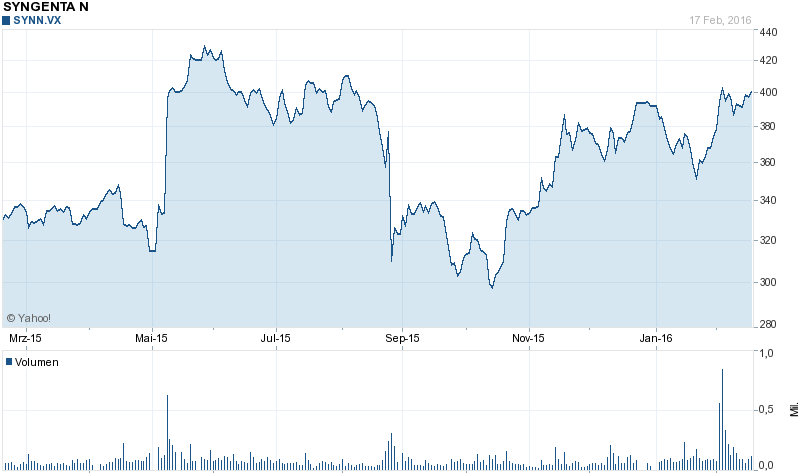
The potential downside for a failed bid is at least -25% when we look at what happened after the Monsanto bid:
syngenta

So if I assume a simple 50/50 probability, my expected value is negative.

Every “event driven” fund is clearly looking at Syngenta which in turn means that they seem to price the risk at the current price and assume a slightly better chance than 50%.

However I clearly have no basis to assume any higher percentage for a succesful outcome.

All in all, in the past it never had paid out to invest into such a situation with an information disadvantage, so I will stay away from this one.




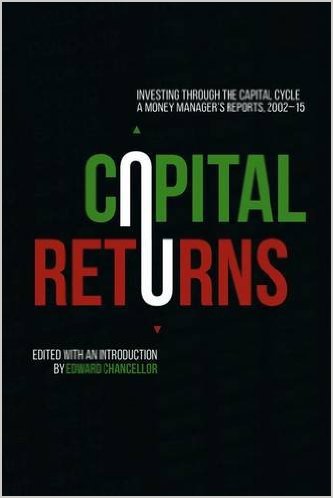
Book review: “Capital Returns” – Edward Chancelor / Marathon Asset Mgt.

41nijcbufal-_sx331_bo1204203200_

“Capital Returns” is an edited collection of investor letters from UK based Marathon Asset Management. Before reading the book,I actually didn’t know much about Marathon.

On their website, they summarize their strategy as follows:

At the heart of Marathon’s investment philosophy is the capital cycle approach to investment.  It is based on the idea that the prospect of high returns will attract excessive capital (and hence competition), and vice versa.  In addition, an assessment of how management responds to the forces of the capital cycle and how they are incentivised are critical to the investment outcome.

This capital cycle approach is very interesting. As mentioned above, the book has no direct narrative. The investor letters are however clustered together in chapters with similar main topics:

  • Capital cycle, sectors (automoblie, commodity, cod fishing, beer, oil)
  • Growth (Colgate, Geberit, Intertek, Amazon, digital moats, Rightmove, Baidu)
  • Management (incentives,  pro cyclicality, capital allocation, Sampo, Scandinavia, family ownership, Richemont, management meetings, culture)
  • Crisis (Anglo Irish, securitizations, private equity, Spanish property, German banking, Northern Rock, Handelsbanken)
  • After the crash (Spanish construction, Bank of Ireland, PIIGS, low interest rates
  • China
  • Funny “Greedspin” Christmas letters

The book is not so easy to read because the letters themselves, despite very well written, are very condensed with a lot of deep insights. I always had to take a kind of a mental break after one or two letters in order to digest everything

Overall, I would characterize their approach as follows:

  • International with an European focus
  • generalist approach, all sectors, differenent business models
  • transformation from “cheap” to “quality” over the years
  • they also invest into financials
  • the invest relatively diversified


Essential personal learning experience

The main take away for me was that their supply focused capital cycle model enabled them to see and avoid many of the problems (CDOs, housing, commodities, PIIGS, China) well in advance. Most analysts focus on the demand side only and forget about supply.

This is something to keep in mind for the future. As a bottom up investor, I think their approach can improve decision making without going into useless macro analysis. If you just look at single companies, one might miss some of the overarching issues in the sector (TGS Nopec…..).

Marathon Track record

The question always is: Talk is cheap, how about their returns ? At least from their website, it seems that their funds made 3-5% outperformance p.a.  constantly  on a 3, 5, 10 and 20 year basis. This is very remarkable for a manager with a couple of billion under management.

For me it was also interesting to see that they not only share many of my personal opinions about investing, but that there is also a nice overlap of companies I find interesting and what they found interesting, for instance Lloyds Banking, Admiral, Handelsbanken and Koc as a well managed family owned company. Clearly there is some “confirmation bias” at work from my side, but still interesting.

Recommendation:

Overall, the book is an essential”MUST READ” for any investor. The major drawback is that it is currently only available as hard cover at around 37 EUR.

The “value option” is to be found on their webpage where they published some of their investor letters for free.

There is also a similar book on the time period from 1993-2002 called “Capital Acocunt” which costs around 80 EUR on Amazon.

Overall, for me Marathon is clearly one of the “Gurus” in investing and it makes a lot of sense to pay attention to what they are doing. Especially if and when they re-enter oil and commodities.

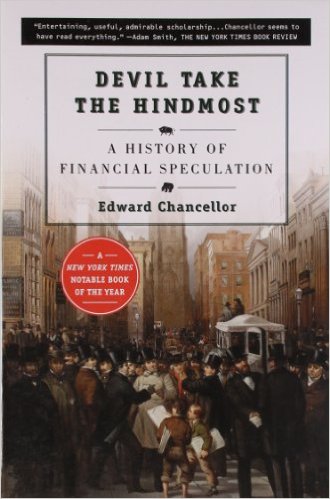
P.S.: the editor, Edward Chancelor has also written one of my all time favourite financial books: “The Devil took the hindmost” from 2000. If you like financial history, this is also a “must read”:

51-cgsquhml-_sx328_bo1204203200_


David Einhorn: Nice Q4 letter but E.On as a long pick ? Really ? C’mon !!!

As this has turned out to be a very long post, a quick “Executive Summary”:

David Einhorn has published that German utility E.ON is one of his major new long positions. Based on what I have written in the past about E.On, I do think his summary investment rational has some serious flaws,  mainly:

  • buying management’s “spin” that the recent share price decline was only caused by uncertainties about nuclear provisions
  • assuming a quick and very benefitial (for E.ON) solution for nuclear liabilities

To me it looks like that he tries to come up with some short term, rather risky “bets” in order to make good on his horrible 2015 performance as quickly as possible.

As a new shareholder in Greenlight Re I have to seriously rethink if I want to stay invested, however as a German tax payer I might also be biased in this case.

Read more

Movie review: “The Big Short”

thebigshortcsheader


This is a clearly a first for the blog: A movie review and not a book review.

I had read the book from Michael Lewis a couple of years ago and it was clearly the best of many books trying to explain the sources of the “financial crisis” 2008/2009.

Honestly, I could not imagine how you can  make a Hollywood movie out of this book.

The  story is mainly about a couple of  fund managers who discovered at the same time around 2006/2007 that the US mortgage market was deeply flawed especially in the subprime area and that it was only a matter of time until everything would break down.

Most of those fund managers were “ousiders”, so not mainstream super star hedge fund managers but strange guys like Michael Burry, the now famous medical doctor turned fund manager with the Asperger Syndrom or the 2 guys who founded their fund as students with 100k start capital in a garage.

Another important role was played by a Deutsche Bank investment banker Greg Lippmann (in the movie the guy is called Jared Venett) who tried to sell the instruments to bet against sub prime mortgages.

Overall I found the movie extremely entertaining and very good. Why ?

First of all the actors are really really good. Especially Christian Bale (M. Burry) and Ryan Gossling (DB trader) play extremely well.

Secondly, the movie gets surprisingly almost all the facts right. They do explain the underlying concepts very well and often in surprisingly funny ways. One of my favourite scenes is when Selena Gomaz and Richard Thaler explain the conceptof CDS/CDOs at a Las Vegas Black Jack table.

thaler

Of course they made some compromises to turn it into a Hollywood movie. Nevertheless I do think that the movie actually shows a pretty acurate picture of investment banking back in the heydays of 2006/2007.

Best learning experience: negative carry & patience

Of course the characters in the book and the movie were not the only ones who predicted the subprime crisis. Back then a lot of people were sceptical with regard to mortgages banks etc.

But I think what the movie really showed was how difficult it is to actually bet significantly on a “doomsday prediction”. Betting against subprime CDOs required those  guys to pay signifcant amounts of “insurance premium”. In Michael Burry’s case, the “negative carry” was something like -20% p.a. for the full portfolio. In all cases the managers were not credit specialists and investors clearly  didn’t like what they saw at first and in Burry’s and Iceman’s case tried to force them out of their positions because very few people are willing and able to sacrifice yield in order to make big returns.

It is very similar to what I wrote a couple of months ago: A great idea or a great strategy alone is worth exactly nothing. Yes, you can maybe sell some books as the guy “who predicted the last 5 crashs”. But if you manage money you have to actually execute it well in order to create value.

And I do think that this is the main lesson form the book and from the movie: It takes a lot of guts and a kind of “outsider” status to actually be succesful when you bet against the overall consensus. Talk is cheap, actions matter.

The second lesson was that patience also plays a big role in actually scoring big. All the portrayed fund managers were early with their trades and the position went against them at first. In Eismann’s case all his partners for instance wanted to sell quickly after they were back in the green, but he insisted on waiting.

Another good example of this rare persistence in adverse situation was Bill Ackman who at the same battled mortgage guarantee company MBIA on their role within suprime mortgage business. Hi fought them over years until he had finally his big pay off. There is a good book about this story as well, “Confidence Game”

51azlkey-xl-_bo2204203200_pisitb-sticker-arrow-clicktopright35-76_aa300_sh20_ou03_


So my recommendation for anyone at least partially interested in finance is clear: Go and see the movie !!!!

I actually think the movie should be a mandatory part of any finance course at schools and universities like the original “Wall Street” movie.


« Older Entries Recent Entries »